The best synthetic sleeping bags balance dependable warmth, manageable weight, weather resistance, and easy maintenance. They are practical choices for campers who expect damp conditions, frequent use, or simple machine washing.
This roundup compares 10 options across temperature ratings, shapes, sizes, insulation, portability, and value so you can choose a bag that fits your trips and sleeping style.
Best 10 Synthetic Sleeping Bags Picks for 2026
Lightweight Trail Pick
Kelty Cosmic Synthetic 40° Sleeping Bag

- 2 lb 6 oz total weight
- Cirroloft synthetic insulation
- Integrated compression stuff sack
Best For: Three-season backpacking and warmer camping trips
Cold-Weather Comfort
Coleman Heritage Big & Tall 10°F
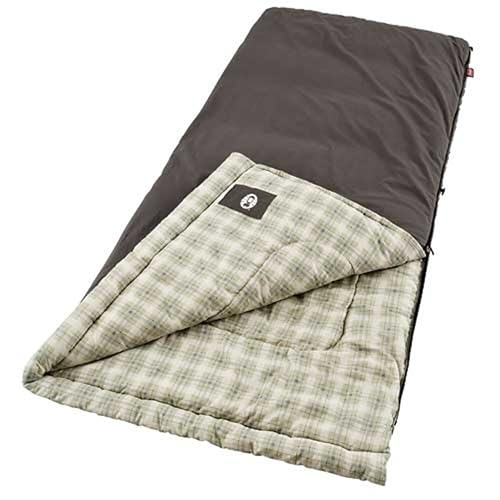
- 10°F rating with Holofill 808 fill
- 40 x 84 in. big-and-tall fit
- Machine washable flannel-lined design
Best For: Tall campers, car camping, and guest use
Best Versatile Pick

- Roomy tapered cut suits side-sleepers
- Converts into a blanket with full side zipper
- 30°F rating with recycled insulation
Best For: Side-sleepers and versatile camping, fishing, or travel use
Best for Comfort
TETON Celsius 25°F Sleeping Bag

- 25°F cold-weather rating
- Soft flannel lining with roomy rectangular shape
- Draft tubes and double-layer construction retain warmth
Best For: Comfort-focused car camping and family outings
Best All-Season Value
MalloMe 3-Season Synthetic Sleeping Bag

- 50°F–80°F comfort range for mild three-season camping
- Waterproof polyester shell with easy-care construction
- About 3 pounds and includes a compression sack
Best For: Family camping and mild-weather backpacking
Best Cold-Weather Mummy
TETON Sports 20°F Synthetic Sleeping Bag

- 20°F survival rating for colder camping conditions
- Mummy hood, draft tube, and vaulted footbox retain warmth
- 2.9 pounds with loft-focused microfiber insulation
Best For: Cold-weather backpacking and hiking
Best Short-Length Pick
TETON Sports Short 20°F Synthetic Sleeping Bag
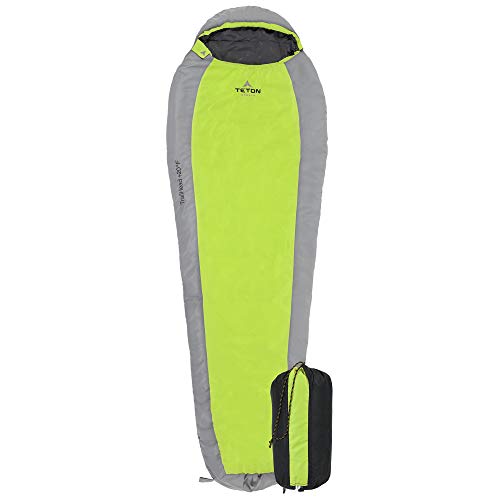
- Short 75-inch length for a more compact fit
- 2.4 pounds with compressible microfiber insulation
- Includes stuff sack and anti-snag zippers
Best For: Shorter sleepers seeking a lighter hiking bag
Lightweight Trail Pick – Kelty Cosmic Synthetic 40° Sleeping Bag
For hikers seeking synthetic sleeping bags with practical trail packability, the Kelty Cosmic Synthetic 40° combines a 2-pound, 6-ounce total weight with an integrated compression stuff sack. Its Cirroloft insulation is designed to retain loft in cold and damp conditions, while the spacious footbox adds room for movement.
Best For: Three-season backpacking, campground trips, and sleepers up to 6 feet tall who prioritize compact storage.
Pros:
- Lightweight 2-pound, 6-ounce regular-size design
- Cirroloft synthetic fill provides coverage without cold spots
- Integrated compression sack and exterior stash pocket
- Spacious footbox and soft taffeta liner
Cons:
- The 40°F rating is intended for milder conditions than colder-weather bags
- Regular size fits sleepers up to 6 feet
Choose this Kelty when low weight, synthetic insulation, and easy packing matter more than deep-cold performance. Its 40°F rating makes it a practical option for warmer backpacking seasons and general camping.
Cold-Weather Comfort – Coleman Heritage Big & Tall 10°F
Among synthetic sleeping bags for cold-weather camping, the Coleman Heritage Big & Tall stands out for its generous 40-by-84-inch rectangular shape and five pounds of Holofill 808 insulation. The cotton cover and synthetic flannel liner emphasize comfort, while the machine-washable design simplifies cleanup.
Best For: Tall adults, car camping, hunting trips, guest use, and cold-weather outings where packed size and weight are secondary.
Pros:
- 10°F temperature rating with five pounds of Holofill 808 insulation
- Extra-large 40-by-84-inch dimensions for users up to 6 feet 7 inches
- Soft synthetic flannel liner and heavy-duty cotton cover
- Machine washable with a five-year limited warranty
Cons:
- At 8.9 pounds, it is much heavier than backpacking-oriented options
- Its larger rectangular design is less compact for transport
This Coleman is best viewed as a spacious cold-weather camping bag rather than a lightweight hiking model. Its insulation, roomy fit, and washable construction suit vehicle-based trips and indoor guest use.
Cool-Weather Backpacking Value – Kelty Cosmic Synthetic 20°
The Kelty Cosmic Synthetic 20° is a versatile choice among synthetic sleeping bags for backpacking in cooler conditions. Its Cirroloft fill, 20D nylon shell, and included compression straps help balance warmth and portability, while the regular fit accommodates sleepers up to 6 feet.
Best For: Backpackers who need a 20°F-rated mummy bag with synthetic insulation and a compressible stuff sack.
Pros:
- 20°F temperature rating for cooler overnight conditions
- Cirroloft synthetic insulation maintains loft in damp conditions
- Compression straps and stuff sack support compact packing
- Spacious footbox and exterior stash pocket add convenience
Cons:
- The regular version fits sleepers up to 6 feet
- Its listed total weight is 2 pounds, 13 ounces, before any additional gear
This is the stronger Kelty choice when a lower temperature rating is more important than shaving every ounce. It retains the Cosmic line’s practical features while offering more warmth than the 40°F model.
Versatile Mummy Design – Bessport 15–45°F Sleeping Bag
For shoppers comparing synthetic sleeping bags for hiking and general outdoor use, the Bessport Mummy Sleeping Bag offers a broad stated comfort range of 32°F to 50°F and an extreme-use rating down to 15°F. Its microfiber insulation, water-repellent polyester taffeta lining, and compression bag provide warmth and transportability.
Best For: Adults wanting a roomy mummy-style bag for travel, hiking, and three- to four-season outdoor activities.
Pros:
- Comfort range listed at 32°F to 50°F, with 15°F extreme use
- Double-layer synthetic microfiber insulation
- Water-repellent, breathable rip-stop polyester taffeta lining
- Compression bag and anti-snag zipper slider included
Cons:
- At 4.4 pounds, it is heavier than ultralight backpacking bags
- The 15°F figure is an extreme-use rating rather than the stated comfort range
The Bessport makes sense for buyers who want a versatile, washable synthetic option without committing to a highly specialized ultralight bag. Pay close attention to the distinction between its comfort range and extreme-use temperature.
Best Versatile Pick – Sea to Summit Boab 30-Degree
For campers comparing synthetic sleeping bags, the Sea to Summit Boab stands out for its roomy tapered shape and adaptable full-length zipper. It is rated to 30°F and can also convert into a blanket for changing camp conditions.
Best For: Side-sleepers, campers, anglers, and travelers who want one versatile bag.
Pros:
- Roomy tapered design offers extra comfort for side-sleepers.
- Full side zipper converts the bag into a blanket and supports adjustable ventilation.
- Uses recycled insulation and RCS-certified recycled materials, with a non-PFAS DWR finish.
- Draft tube and YKK zippers help limit cold-air entry and snagging.
Cons:
- At about 3.1 to 3.4 pounds, it is not the lightest option for weight-focused backpacking.
- The 30°F rating may be more warmth than needed for mild summer camping.
The Boab is a strong choice when comfort and flexibility matter as much as warmth. Its blanket conversion and roomy cut make it especially practical for varied outdoor trips.
Best Budget 3-Season Option – Lightweight Waterproof Camping Bag
This affordable option is among the more practical synthetic sleeping bags for casual camping and family trips. Its rectangular shape, weather-resistant shell, and compact compression size provide straightforward versatility for mild three-season use.
Best For: Budget-minded campers, children, car campers, and emergency vehicle storage.
Pros:
- Roomy rectangular dimensions accommodate users up to about 5 feet 11 inches.
- Weather-resistant, waterproof, and breathable polyester outer fabric helps with damp conditions.
- Hood drawstring and foot zipper allow added warmth or ventilation.
- Includes a compression bag and weighs about 3.3 pounds.
Cons:
- The 50°F to 68°F design range is aimed at milder conditions rather than cold-weather camping.
- Its roughly 3.3-pound weight may be bulky for backpacking.
- Supplied materials information refers to hollow fiber or hollow cotton, so insulation specifications are less precise than on some alternatives.
With its low price, useful hood, and easy-clean construction, this bag is best suited to occasional outings where compact packing and basic weather resistance are more important than ultralight performance.
Best for Comfort – TETON Celsius 25°F Sleeping Bag
The TETON Celsius is a comfort-oriented synthetic sleeping bag for campers who prefer generous space and a soft lining. Its polyester fiber fill, double-layer construction, draft tubes, and 25°F rating make it the warmest-focused choice in this group.
Best For: Car camping, family camping, and adults who prioritize warmth and room to spread out.
Pros:
- Soft poly-flannel lining and a roomy rectangular shape support comfortable sleeping.
- Half-circle mummy hood helps retain warmth and keeps a pillow clean.
- Double-layer construction, fiber fill, and draft tubes help keep cold air out.
- Heavy-duty stuff sack simplifies packing, and a limited lifetime warranty is included.
Cons:
- At 5 pounds, it is substantially heavier than bags intended for lightweight backpacking.
- The bulky rectangular design is better suited to car camping than compact trekking.
- Its warmth and flannel lining may feel excessive in mild summer conditions.
The Celsius makes the most sense for campers who value warmth, softness, and space over minimal packed weight. Its included stuff sack and durable construction add convenience for repeated camping trips.
Best All-Season Value – MalloMe 3-Season Synthetic Sleeping Bag
For casual camping, family trips, and mild-weather backpacking, this synthetic sleeping bag combines a waterproof polyester shell with a compact compression sack. Its stated comfort range of 50°F to 80°F makes it a practical choice for spring, summer, fall, and cool-weather use.
Best For: Adults and children needing a versatile, easy-care bag for mild three-season camping.
Pros:
- Waterproof outer shell with double-layered S-shape stitching.
- Lightweight design at about 3 pounds with a compression sack.
- Machine-washable construction and a wipe-clean exterior.
- Drawstring hood, snag-free double-sided zippers, and a securing Velcro strap.
Cons:
- Its 50°F to 80°F comfort range is not intended for serious cold-weather camping.
- The rectangular shape may be less thermally efficient than a mummy design.
This is a flexible synthetic sleeping bag for campers who prioritize easy maintenance, weather resistance, and family-friendly usability over extreme-temperature performance.
Best Cold-Weather Mummy – TETON Sports 20°F Synthetic Sleeping Bag
This synthetic sleeping bag is built for colder camping and backpacking trips, with a 20°F survival rating, a mummy hood, and insulation designed for loft and compressibility. The draft tube and vaulted footbox add coverage where cold can enter.
Best For: Adults and kids who need a warmer mummy-style bag for backpacking, hiking, and cold-weather camping.
Pros:
- 20°F survival rating, with comfort expected 20–30 degrees higher.
- Mummy hood, zipper draft tube, and vaulted footbox help retain warmth.
- Microfiber insulation offers loft, compressibility, and a 2.9-pound weight.
- Includes a durable compression sack and soft, breathable liner.
Cons:
- Its 20°F rating does not make it a substitute for a lower-rated winter bag.
- Mummy styling provides less room than a rectangular sleeping bag.
Among these synthetic sleeping bags, this TETON model is the stronger pick for colder conditions when warmth-focused features and packability matter more than maximum interior space.
Best Short-Length Pick – TETON Sports Short 20°F Synthetic Sleeping Bag
For shorter sleepers, this compact synthetic sleeping bag offers the same 20°F rating category with a shorter 75-inch length and a 2.4-pound weight. Its microfiber insulation, roomy footbox, and draft tube target warmth without adding unnecessary bulk.
Best For: Shorter adults or campers who want a lighter mummy bag for hiking and camping.
Pros:
- Short 75-inch design and 2.4-pound weight suit compact packing.
- Synthetic microfiber fill provides loft and compressibility.
- Roomy footbox, zipper draft tube, and soft liner improve comfort.
- Includes a stuff sack, anti-snag zippers, and hang loops for storage.
Cons:
- The short length may not accommodate taller users comfortably.
- It is rated to 20°F, so conditions and personal sleep warmth still matter.
This is a sensible synthetic sleeping bag for hikers who fit its shorter dimensions and want to reduce carried weight while retaining cold-weather-oriented features.
How We Picked the Best Synthetic Sleeping Bags
We focused on the features that matter most outdoors: stated temperature range, insulation type, packed size, weight, construction, zipper design, size options, and care requirements. We also considered whether each bag suits backpacking, car camping, family camping, or cold-weather use.
Temperature ratings are useful for comparison, but they are not guarantees of comfort. Your clothing, sleeping pad, shelter, metabolism, and weather conditions all affect warmth. When two models are similar, a roomier design may be more comfortable, while a mummy shape usually conserves heat more efficiently.
Quick Comparison
- Best for backpacking: Kelty Cosmic and Sea to Summit Boab models offer practical compact designs for carrying on the trail.
- Best for large sleepers: The Coleman Heritage Big & Tall provides extra length and a roomy rectangular shape.
- Best for cold-weather flexibility: Teton Celsius and Teton mummy bags are available in multiple temperature ratings.
- Best for family value: MalloMe and general-purpose adult-and-kid options are suited to casual camping and travel.
- Best for easy care: Washable synthetic insulation is convenient for regular use and damp environments.
Key Buying Factors for Synthetic Sleeping Bags
Temperature Rating
Choose a rating based on the coldest conditions you expect, not the average forecast. A 20°F or lower bag may be appropriate for colder shoulder-season trips, while a 30°F to 40°F model is often better for mild summer camping. If you sleep cold, consider extra margin rather than relying on the limit rating.
Shape and Fit
Mummy bags reduce empty air space and typically provide better heat retention for backpacking. Rectangular and tapered designs allow more room to move, making them appealing for car camping or sleepers who dislike restrictive bags. Check the listed height and shoulder dimensions before ordering.
Weight, Packed Size, and Durability
Backpackers should prioritize low weight and a compact stuff sack, while car campers can favor roominess and heavier materials. Compression straps can make storage easier, but avoid storing a sleeping bag compressed for long periods because it can reduce loft over time.
Weather Resistance and Care
Synthetic fill generally handles humidity and occasional moisture better than down and dries more readily. Look for a draft tube, hood, adjustable footbox, durable shell, and snag-resistant zipper when cold-weather performance matters. Follow the manufacturer’s washing and drying instructions to protect insulation.
Who Should Buy Which Synthetic Sleeping Bags?
Backpackers should choose a lightweight mummy or tapered bag with a temperature rating matched to their season. Car campers may prefer a wider rectangular design, generous length, and softer lining. Cold sleepers should select a lower-rated model and pair it with an insulated sleeping pad. Families and occasional campers can prioritize affordability, washable materials, and flexible sizing over the smallest packed dimensions.
Before buying, verify the actual model’s dimensions, fill weight, temperature standard, packed size, and return policy. The right Synthetic Sleeping Bags choice is the one that provides enough warmth for your conditions without adding unnecessary bulk or restricting your sleep.