Reaction time training equipment can turn repetitive drills into sharper, more engaging practice sessions. Whether you’re coaching a team, training at home, or rehabbing coordination, the right tool can help build faster responses and better focus.
Below, we’ve rounded up 10 options that cover smart light systems, catch-and-react tools, drop-stick trainers, and reflex balls so you can choose the best fit for your sport, age, and budget.
Best 10 Reaction Time Training Equipment Picks for 2026
Smart Pod Reaction Training

- 4 smart pods with app access and charging base
- Built for speed, agility, balance, and cognitive drills
- Splashproof design for solo or group training
Best For: Athletes, trainers, therapists, and coaches
Color-Cue Catch Trainer

- Uses color and audible cues for quick reactions
- Soft foam build is safe for youth and adult use
- Includes online training videos and app access
Best For: Coaches and athletes wanting lightweight multi-sport reaction drills
Light-Pod Reflex Trainer
Reflexx RLT 2.1 Reaction Lights

- Five light pods with controller, chargers, and case
- Random mode and 0.5-6 second interval control
- Sound control plus indoor/outdoor flexibility
Best For: Fitness, rehab, seniors, and athletes needing customizable light drills
Random Bounce Reflex Trainer

- Six-sided rubber design creates random bounces
- Works on hard surfaces or walls for solo drills
- Lightweight, compact training aid for quick reps
Best For: Baseball and softball players wanting a simple reflex ball
Premium All-Rounder
HECOstix RGB Hand Eye Coordination Training Tool

- Removable legs make it compact and easy to travel with.
- Lightweight EVA foam helps keep catches safer and more comfortable.
- Call-out drills build reaction speed, tracking, and decision-making.
Best For: Coaches and athletes wanting a versatile reaction drill tool for many sports.
Budget-Friendly Game Pick
RVOGJP Reflex Drop Sticks Challenge Game

- Three speed settings make it easier to match different ages.
- Compact design is easy to move, store, and set up.
- Falling-stick gameplay keeps reflex practice fun and interactive.
Best For: Families and casual players who want an adjustable reflex-catching game.
Simple Training Essential
CHAMPKEY Hand Eye Coordination Trainer

- Lightweight PU foam is flexible, waterproof, and easy to handle.
- Targets reaction time, tracking, reflexes, and decision-making.
- Works for warmups and drills across many sports.
Best For: Athletes wanting a basic, lightweight trainer for warmups and reaction work.
Solo/Dual Reflex Trainer
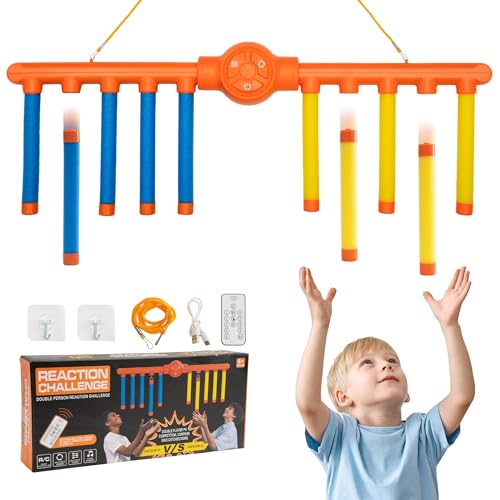
- Single-player practice or 2-player matches
- 3 speed modes for different skill levels
- Voice prompts and sensors support fair play
Best For: Families and players who want portable competitive reflex training
Neuro-Visual Sports Ball
Vector Ball S Neuro-Visual Reaction Ball

- Targets quickness, focus, and reaction time
- Color changes add a decision-making challenge
- Durable, waterproof build for intense drills
Best For: Youth athletes and multi-sport training drills
Portable Catching Sticks Trainer
3-Speed Catching Sticks Trainer

- 3 speed settings for progressive practice
- English voice cues guide the challenge
- Lightweight EVA foam build with hanging hooks
Best For: Adults and teens seeking portable reaction drills
Smart Pod Reaction Training – BlazePod 4-Pod Starter Kit
BlazePod is a strong choice for reaction time training equipment if you want a measurable, app-driven setup that works across sports and therapy. The 4-pod starter kit is built for speed, agility, balance, and cognitive drills, with a smart app that gives you access to hundreds of expert-created workouts and progress tracking.
Best For: Athletes, trainers, therapists, and coaches who want app-based reaction drills and trackable progress.
Pros:
- Includes 4 smart pods, USB-C charging base, travel case, and app access.
- Supports solo or group training for reaction time, balance, and mental focus.
- Used in multi-sport and physical therapy settings.
- Tough, splashproof pods are designed for training anywhere.
Cons:
- Requires app-driven setup to get the most out of the system.
- More advanced than a simple no-tech reflex trainer.
Overall, this kit stands out for users who want training to be structured, measurable, and adaptable. It brings together hardware and guided drills in one package, making it a versatile option for performance-focused sessions.
Color-Cue Catch Trainer – SKLZ Reactive Catch
This SKLZ tool is a practical pick for reaction time training equipment when you want athletes to respond quickly to color and audible cues. Toss it up, call out a color, and the player has to react fast, which helps build hand-eye coordination, decision making, and game-speed reflexes.
Best For: Coaches, parents, and athletes who want a lightweight reflex trainer for multi-sport drills.
Pros:
- Color and audible cues train fast decision making under pressure.
- Works for baseball, basketball, football, soccer, lacrosse, hockey, volleyball, and softball.
- Soft polyurethane foam construction is safe for youth and adult athletes.
- Includes access to online training videos and the SwitchedOn app.
Cons:
- Single-item design is less versatile than a full pod-based system.
- Focuses on catch-and-react drills rather than a wide range of sensor-based modes.
For simple, portable reaction work, this trainer keeps sessions fast and easy to run. It is a good fit if you want a low-bulk tool that still adds structure and pressure to practice.
Light-Pod Reflex Trainer – Reflexx RLT 2.1 Reaction Lights
Reflexx RLT 2.1 is reaction time training equipment built around adjustable light-pod drills, making it useful for athletes, rehab users, and seniors alike. The kit includes five agility light pods, a controller, chargers, and a carrying case, with random mode and customizable intervals to simulate game-like response training.
Best For: Users who want customizable reaction light drills for fitness, rehab, or athletic training.
Pros:
- Includes five light pods, controller, chargers, and carrying case.
- Adjustable intervals from 0.5 to 6 seconds with random mode.
- Sound on/off option supports focused or distraction-free training.
- Long battery life and a single charger for all pods.
Cons:
- More setup involved than a single-piece reaction trainer.
- Best suited to users who want structured light-based drills.
This kit is a strong fit if you want a flexible light system with enough control to tailor sessions to different goals. Its mix of portability, battery life, and interval options makes it especially useful for repeat training.
Random Bounce Reflex Trainer – SKLZ Reaction Ball
If you want a simple piece of reaction time training equipment, the SKLZ Reaction Ball delivers instant, unpredictable bounce feedback. Its six-sided rubber design creates random hops on hard surfaces or walls, which is useful for improving hand-eye coordination, agility, and reflexes in baseball and softball drills.
Best For: Baseball and softball players who want a simple reflex and agility training ball.
Pros:
- Random bounce pattern gives instant reaction feedback.
- Works against walls and other hard surfaces for solo training.
- Compact, lightweight, and easy to bring to practice.
- Simple tool for hand-eye coordination and agility drills.
Cons:
- Limited to a basic training style with no electronics or app features.
- Designed mainly for baseball and softball use.
This is the most straightforward option in the group and is ideal for athletes who want repeated reaction reps without extra setup. It is best when simplicity, portability, and unpredictability matter more than technology.
Premium All-Rounder – HECOstix RGB Hand Eye Coordination Training Tool
If you want reaction time training equipment that works across sports and skill levels, HECOstix is built for fast visual tracking, catching, and decision-making drills. Its three color-coded legs make it easy to run call-out exercises that challenge hand-eye coordination, reflexes, and focus without adding much bulk to your bag.
Best For: Athletes, coaches, and trainers who want a portable, versatile tool for solo, partner, or team reaction drills.
Pros:
- Removable-leg design packs down quickly for travel and storage.
- Lightweight EVA foam build is soft, waterproof, and designed for safer catching drills.
- Works for call-out training that combines visual cues, audio prompts, and quick reactions.
- Useful across many sports, from basketball and baseball to tennis, soccer, hockey, and more.
Cons:
- Sold as a single trainer, so it may be limiting for larger group setups.
- Best drills rely on a coach, partner, or structured call-out routine.
Overall, HECOstix is the most flexible pick here if you want a durable, easy-to-carry reaction training tool that can scale from beginner warmups to more demanding cognitive drills.
Budget-Friendly Game Pick – RVOGJP Reflex Drop Sticks Challenge Game
This reaction time training equipment option leans more toward game-style practice, with falling sticks that challenge players to catch quickly and stay engaged. Three speed settings make it easier to match the pace to different ages and skill levels, which is helpful if you want something fun for home use or casual training.
Best For: Families, kids, and casual players looking for a simple reflex game with adjustable speed.
Pros:
- Three speed levels help accommodate different ages and comfort levels.
- Compact size makes it portable and easy to store.
- Rounded edges and sturdy materials are designed for safer, repeated play.
- Six hooks create an engaging catching challenge for reflex practice.
Cons:
- Listed as a kid-focused product, so serious sports training may be less direct.
- Requires a clear space around the game to avoid accidents during play.
In practice, this is a fun, approachable way to work on hand-eye coordination and reaction time, especially if you want an interactive game rather than a sport-specific trainer.
Simple Training Essential – CHAMPKEY Hand Eye Coordination Trainer
For a straightforward reaction time training equipment choice, CHAMPKEY focuses on the basics: catching, tracking, reflexes, and decision-making. The lightweight foam construction is meant to be durable and flexible, making it a practical option for warmups, solo work, or sport-specific drills without much setup.
Best For: Athletes who want a lightweight, general-purpose trainer for pregame warmups and reaction drills.
Pros:
- Lightweight polyurethane foam is non-toxic, waterproof, and flexible.
- Designed to improve reaction time, hand-eye coordination, reflexes, tracking, and decision-making.
- Suitable for many sports, including football, basketball, baseball, and team training.
- Good for pregame warmups and game-like scenarios at any skill level.
Cons:
- Single-item design keeps the setup simple, but limits variety compared with multi-part trainers.
- Less feature-rich than adjustable or multi-mode reaction systems.
If you want a no-frills tool that covers the core skills of catching and reaction speed, CHAMPKEY is an easy fit for everyday training use.
Solo/Dual Reflex Trainer – Solo/Dual Play Reflex Trainer
If you want reaction time training equipment that feels more like a game than a drill, this Reflex Drop Sticks Challenge Game is built for quick sessions and competitive play. It offers solo practice or two-player head-to-head matches, plus three speed modes so beginners and advanced players can train at a comfortable pace.
Best For: Families, kids, and adults who want a portable reflex game for solo practice or competitive reaction battles.
Pros:
- Solo and dual play modes support both practice and head-to-head contests.
- Three adjustable speed settings help match the challenge to different skill levels.
- Voice prompts and smart sensors keep rounds clear and consistent.
- Compact, travel-friendly design with a storage bag for easy transport.
Cons:
- Requires a battery and charging setup, so it is not completely plug-free.
- Primarily a fast-paced reflex game, not a multi-exercise training system.
This is a good pick if you want reaction time training equipment that supports short, repeatable sessions and family-friendly competition. Its combination of guided play, speed options, and portable design makes it easy to keep using over time.
Neuro-Visual Sports Ball – Vector Ball S Neuro-Visual Reaction Ball
For reaction time training equipment aimed at sports quickness, the Vector Ball S focuses on neuro-visual processing, hand-eye coordination, and agility. Its color-changing response system adds a decision-making element to wall-ball, shuttle, and ground-ball style drills, making it useful for athletes who want a more dynamic training tool.
Best For: Youth athletes and multi-sport players who want a durable reaction ball for quickness and coordination drills.
Pros:
- Designed to improve quickness, focus, reaction time, and hand-eye coordination.
- Color-changing impact response adds a decision-making challenge to drills.
- Durable, waterproof build supports intense training sessions.
- Works across many sports, including basketball, baseball, football, tennis, boxing, and MMA.
Cons:
- More specialized for athletic drills than casual play.
- Best results depend on using it with structured training routines.
This is a strong option if you want reaction time training equipment that fits into sport-specific practice. The ball’s size, durability, and color-triggered reactions make it better suited to focused drills than general entertainment.
Portable Catching Sticks Trainer – 3-Speed Catching Sticks Trainer
If you need reaction time training equipment for focused practice, this Reflex Drop Sticks Game keeps the formula simple: catch the falling sticks, react quickly, and build coordination. Three speed levels and English voice cues make it easy to scale from beginner drills to more demanding reaction challenges.
Best For: Adults and teens who want a compact, fast-paced catching game for reaction and coordination practice.
Pros:
- Three speed modes let you adjust the challenge as skills improve.
- English voice cues help guide each round.
- Lightweight EVA foam construction is designed for a comfortable, safe grip.
- Compact form with hanging hooks makes it easy to carry and store.
Cons:
- Built mainly for adults and older players, not young children.
- Limited to catching-stick style drills rather than broader skill training.
This model is a practical choice if you want reaction time training equipment that is quick to set up and easy to take anywhere. Its adjustable speeds and portable design make it well suited to repeat practice at home, outdoors, or while traveling.
How We Picked These Reaction Time Training Equipment Options
We focused on tools that are practical for repeat use, easy to understand, and versatile enough for athletes, trainers, and recreational users. Priority went to products with clear reaction-focused drills, adjustable difficulty, durable construction, and training styles that support hand-eye coordination, speed, and decision-making.
We also looked at whether each option fits solo training, partner drills, or coached sessions, since the best Reaction Time Training Equipment depends on how and where you’ll use it.
Quick Comparison
Smart light systems are best for structured, data-driven drills. Catch-and-react tools work well for general coordination and agility. Drop-stick trainers add randomness and fast decision-making, while reaction balls are the simplest option for sport-specific reflex work and portability.
Key Buying Factors for Reaction Time Training Equipment
Training Goal
Choose a device that matches your priority: pure reaction speed, hand-eye coordination, cognitive processing, or sport-specific quickness. Baseball and softball athletes may prefer reaction balls, while team sport athletes often benefit from light-based or randomized cue systems.
Adjustability and Difficulty Levels
Look for adjustable speed, random modes, and multiple difficulty settings. These features help the equipment stay useful as your skills improve and make it easier to tailor drills to beginners or advanced users.
Durability and Portability
If you’ll train indoors, outdoors, or on the go, choose lightweight gear that can handle repeated impacts and transport easily. Water resistance, strong plastics, and compact designs are useful for regular practice.
Feedback Style
Some Reaction Time Training Equipment uses lights and sounds, while others rely on unpredictable motion. Visual and auditory cues can help train faster recognition, but simple catch-and-react tools may be enough for basic agility and reflex work.
Who Should Buy Which Reaction Time Training Equipment?
Athletes who want measurable, structured training should lean toward smart pods or light-based systems. Coaches and trainers may prefer versatile tools that work with groups and multiple drill formats. For younger users, casual training, or budget-conscious buyers, reaction balls and drop-stick games offer a simple way to build coordination without a steep learning curve.
If you want the most well-rounded setup, think about combining one structured trainer with one portable reflex tool. That approach gives you both repeatable drills and unpredictable practice, which is often the best mix for improving responsiveness over time.