Weighted running sleds are a simple way to build acceleration, power, and work capacity without complicated setup. They’re popular for athletes, coaches, and home gym users who want versatile conditioning tools.
Below, we’ve narrowed the field to 10 strong options that balance durability, adjustability, and training value so you can choose the right sled for your goals and surface.
Best 10 Weighted Running Sleds Picks for 2026
Arc-Track Strength Sled
Compact Steel Plate-Loaded Trainer

- Fits 1" and 2" plates
- Curved bottom for varied surfaces
- Adjustable shoulder straps included
Best For: Plate-loading athletes training speed, power, and agility
Sandbag Sprint Sled

- Three fillable sandbags included
- 360-degree belt ring for movement
- Works on grass, turf, or wood floors
Best For: Sprinters and field athletes wanting adjustable sandbag resistance
Curve-Base Speed Sled

- Fits 1" and 2" plates
- Soft shoulder pads and safety belt
- Assembles in about 10 minutes
Best For: Athletes wanting a durable, easy-assembly plate sled
ModLoad Sand Sled
4-Bag Adjustable Resistance Trainer

- Four removable sandbags included
- 10-40 lb adjustable load range
- 360-degree belt ring for drills
Best For: Athletes who want an adjustable sandbag sled for speed and explosiveness
Dual-Plate Power
GanFindX Weight Sled with 1" and 2" Plate Compatibility

- Fits both 1" and 2" plates
- 350 lbs max load capacity
- Includes harness and pull strap
Best For: Users who want a versatile sled for progressive loading
Sandbag Adjustability
Soulchen Adjustable Sandbag Weight Sled
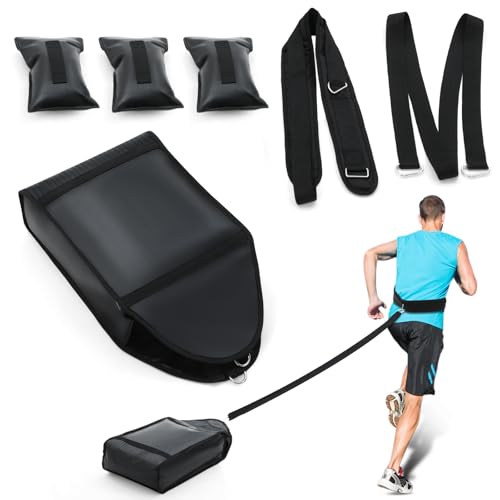
- 3 fillable sandbags, 10 to 30 lb range
- 360-degree belt loop for movement variety
- PVC build with stainless steel carabiners
Best For: Athletes seeking lighter adjustable sled training
Compact Field-Ready
LIONSCOOL Compact Weight Sled with Pulling Belt

- Fits 1" and 2" plates
- Supports up to 150 lb
- Compact size for transport and storage
Best For: Users who want a smaller sled with an included pulling belt
Adjustable All-Around Handle Sled
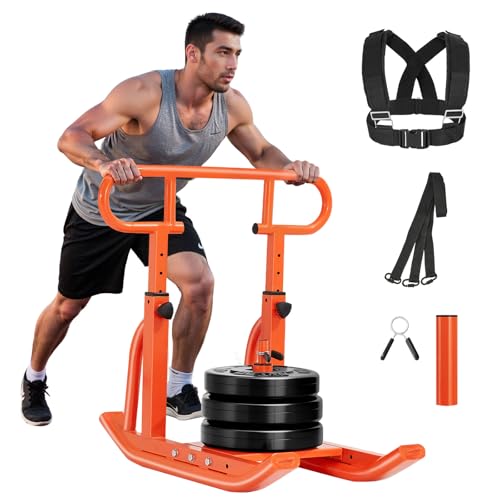
- 5-height handle for varied push/pull angles
- Fits 1-inch and 2-inch weight plates
- Powder-coated steel frame rated to 276.6 lbs
Best For: mixed push-pull conditioning with standard plates
Waterproof Twin-Sled Resistance
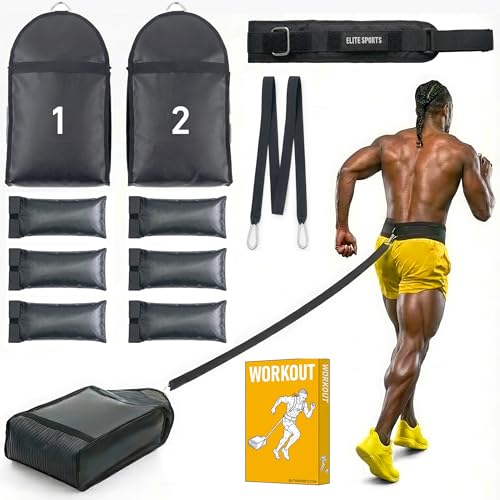
- 6-level resistance from 10 lb to 60 lb
- Ships empty so you can fill it with sand
- Waterproof build with adjustable padded waist strap
Best For: portable running resistance and field conditioning
Steel Plate-Loaded Runner

- Supports pushing, pulling, and dragging drills
- Fits 1-inch and 2-inch weight plates
- Fully welded steel frame rated to 276.6 lbs
Best For: compact full-body speed and strength training
Arc-Track Strength Sled – Compact Steel Plate-Loaded Trainer
If you want weighted running sleds for speed work and strength sessions, this Kipika model is built around a simple plate-loaded setup. It accepts 1-inch and 2-inch weight plates, uses a curved bottom design to move across varied surfaces, and is aimed at athletes who want resistance training for sprinting, agility, and power.
Best For: Athletes and everyday trainers who want a durable, plate-loaded sled for speed, football, and general resistance work.
Pros:
- Accepts both 1″ and 2″ weight plates for flexible loading.
- Arc-style bottom is designed to help it move through uneven areas and protect turf better.
- Adjustable shoulder straps add support during dragging drills.
- Works on lawn, carpet, and other sports surfaces, and disassembles for storage.
Cons:
- Weight plates are not included.
- Best suited to plate users rather than sandbag-style loading.
This is a practical choice if you want a straightforward sled that focuses on resistance, speed development, and easy transport between training spots. Its steel build and surface-friendly shape make it a versatile option for regular conditioning work.
Sandbag Sprint Sled – Adjustable 10 to 30 lb Runner
Among weighted running sleds, this sandbag-based trainer stands out for users who want simple load changes without plates. It includes three fillable PVC sandbags, so you can adjust resistance from 10 to 30 pounds and use it for sprinting, directional changes, and lower-body conditioning on grass, turf, or wood floors.
Best For: Soccer players, sprinters, and athletes who want an adjustable sandbag sled with multi-direction training options.
Pros:
- Comes with 3 fillable sandbags for 10-30 lb total loading.
- 360-degree belt ring supports multi-direction training.
- Moisture-resistant PVC and stainless steel carabiner are built for regular use.
- Compatible with wooden floors, grass, and turf.
Cons:
- Sand or other filler is not included.
- Maximum load is modest compared with plate-based sleds.
This sled is a good fit if you want a compact, adjustable setup for agility and explosive-power drills. The lower load range makes it especially approachable for athletes building up sled work or mixing in varied movement patterns.
Curve-Base Speed Sled – 1" and 2" Plate Trainer
This GanFindX sled is aimed at athletes who want weighted running sleds with a plate-loaded design and a surface-friendly shape. The curved bottom and flat oval tubes are meant to move through runways, gym areas, and lawns, while the adjustable safety belt and shoulder pads help make resistance work more comfortable.
Best For: Users who want a sturdy plate sled for speed work, lower-body strength, and straightforward assembly.
Pros:
- Supports 1″ and 2″ weight plates for customizable resistance.
- Curved bottom and flat oval tubes are designed for use across multiple venues.
- Adjustable safety belt and soft shoulder pads add comfort.
- Includes a hex spanner and instructions for about 10-minute assembly.
Cons:
- Weight plates are not included.
- Best for users comfortable with a plate-based sled setup.
If you want a durable training sled that is quick to assemble and easy to maintain, this one covers the basics well. Its rust-resistant surface and simple storage-friendly design make it a solid pick for repeat training sessions.
ModLoad Sand Sled – 4-Bag Adjustable Resistance Trainer
If you prefer weighted running sleds that rely on fillable bags instead of plates, this NAIZEA trainer offers a simple adjustable setup. It includes four removable sandbags, lets you build resistance from 10 to 40 pounds, and is built for grass, turf, or wood floor training with a 360-degree belt ring for movement drills.
Best For: Sprinters, football players, and athletes who want a higher-adjustable sandbag sled for lower-body speed work.
Pros:
- Four removable bags allow 10-40 lb loading.
- 360-degree belt ring supports multi-direction training.
- Velcro-secured straps help keep the bags in place.
- Designed for use on grass, turf, and wood floors.
Cons:
- Sand is not included.
- Load range may be limiting for heavier strength work.
This model makes sense if you want a flexible sled that can grow with your training. The higher top-end load and included accessories make it a practical option for athletes focused on speed, explosiveness, and change-of-direction drills.
Dual-Plate Power – GanFindX Weight Sled with 1" and 2" Plate Compatibility
If you want weighted running sleds that can grow with your training, the GanFindX model is built for flexible resistance work. It accepts both 1″ standard plates and 2″ Olympic plates, so you can scale load without changing equipment. The heavy-duty steel frame and smooth base make it a practical choice for push, pull, and drag drills on different surfaces.
Best For: Athletes and home gym users who want a sled that works with both standard and Olympic plates.
Pros:
- Fits both 1″ standard and 2″ weight plates for flexible loading
- Heavy-duty steel construction with a 350 lbs maximum load
- Includes adjustable harness and pull strap with locking carabiners
- Suitable for indoor gyms, tracks, lawns, and sports courts
Cons:
- Assembly is required, even though the brand says it takes about 10 minutes
- No included plates, so you’ll need your own weights
This sled is a strong fit if you want one piece of gear for progressive sprint and strength work. Its compatibility and high load rating make it especially useful for users who expect to increase resistance over time.
Sandbag Adjustability – Soulchen Adjustable Sandbag Weight Sled
The Soulchen sled takes a different approach to weighted running sleds by using fillable sandbags instead of plate loading. Each of the three PVC bags can hold up to 10 pounds, giving you a total adjustable range from 10 to 30 pounds. With its belt loop design and multi-direction setup, it’s aimed at athletes who want a more varied conditioning tool.
Best For: Athletes who want an adjustable sandbag-style sled for sprint and conditioning drills.
Pros:
- Three fillable sandbags allow 10 to 30 pounds of adjustable resistance
- 360-degree belt loop supports multi-directional training
- Made with thickened stainless steel carabiners and PVC materials
- Works on wooden floors, grass, and artificial turf
Cons:
- Sand is not included, so you’ll need your own filler material
- Lower weight range than plate-loaded sleds
This is a good option if you want a lighter, more portable sled setup with easy resistance changes. It makes the most sense for training that values movement variety over heavy loading.
Compact Field-Ready – LIONSCOOL Compact Weight Sled with Pulling Belt
The LIONSCOOL sled is a compact option among weighted running sleds, combining a steel frame with a plate-loading design for speed and strength work. It accepts both 1″ and 2″ plates and supports up to 150 pounds, while the included pulling belt gives you a ready-to-use setup. Its smaller footprint also makes it easier to move between a home gym, garage, or outdoor field.
Best For: Athletes who want a compact, plate-loaded sled with a belt included.
Pros:
- Accepts both 1″ standard and 2″ Olympic plates
- Supports up to 150 lb for progressive training
- Includes pulling belt set with straps and metal carabiners
- Compact size makes storage and transport easier
Cons:
- Lower max load than some heavier-duty sleds
- Style is listed with pulling belt only, so harness options are limited to the included setup
This sled is a practical pick if you want straightforward plate loading and a smaller form factor. It focuses on stability and portability rather than maximum capacity.
Adjustable All-Around Handle Sled – VEVOR Push-Pull Training Sled
If you want a versatile option in weighted running sleds, this VEVOR model is built for push, pull, and drag work on turf, tracks, and gym surfaces. The 5-height adjustable handle, four-corner pull hooks, and plate-compatible frame make it easier to tailor training without overcomplicating setup.
Best For: Athletes who want a steel sled for mixed push-pull conditioning and standard plate loading.
Pros:
- 5-height adjustable all-around handle supports different push and pull angles.
- Fits both 1-inch and 2-inch weight plates with double metal sleeves.
- Steel frame with outdoor powder coating is rated for up to 276.6 lbs/125 kg.
- Designed to glide on gyms, artificial turf, and track surfaces.
Cons:
- Weights are not included.
- At 38.8 lb, the sled itself is fairly substantial to move and store.
This is a practical pick if you want one sled that can handle multiple training styles and standard plates. The adjustable handle and stable dragging setup make it a flexible choice for outdoor conditioning.
Waterproof Twin-Sled Resistance – Elite Twin Sand Bag Sled
Among weighted running sleds, this Elite twin-sled trainer stands out for adjustable resistance and a strap-based format that turns simple runs into harder conditioning sessions. It ships empty, so you can set the load with sandbags and use the 6-level 10-60 lb range to match your training goal.
Best For: Runners and field athletes who want a lightweight, adjustable resistance sled trainer for outdoor conditioning.
Pros:
- 6-level resistance setup lets you vary training from 10 lb to 60 lb.
- Waterproof PU-PVC-coated polyester is built for rough outdoor use.
- Adjustable padded waist strap supports running, sprinting, and agility work.
- Twin-sled design aims to keep the load balanced and stable.
Cons:
- Ships empty, and sand is not included.
- Depends on sandbag filling, so setup takes extra preparation.
If you want a portable resistance trainer rather than a plate-loaded sled, this is a smart option. The adjustable load range and weather-ready build make it well suited to speed, endurance, and sport-specific work.
Steel Plate-Loaded Runner – VEVOR Push-Pull Sled
This VEVOR sled is a straightforward choice for weighted running sleds when you want push, pull, and drag training in one compact frame. It uses a steel build, a Y-shaped drag setup, and compatibility with standard plates to support full-body conditioning on turf, tracks, and gym floors.
Best For: Users who want a compact steel sled for full-body speed, strength, and explosiveness training.
Pros:
- Multiple training modes support pushing, pulling, and dragging.
- Fits 1-inch and 2-inch weight plates with double metal sleeves.
- Rated for up to 276.6 lbs/125 kg with a fully welded steel frame.
- Includes a harness, pulling strap, and installation accessories.
Cons:
- Weights are not included.
- More compact than the other VEVOR sled, so the footprint is smaller but less handle-focused.
For athletes who want a durable plate-loaded sled without a lot of extra complexity, this model keeps the essentials front and center. It is built for versatile conditioning and easy transport between training locations.
How We Picked the Best Weighted Running Sleds
We focused on practical features that matter in real training: resistance adjustability, build quality, compatibility with different surfaces, ease of loading, and whether the sled supports both push and pull drills. We also prioritized models that suit a range of users, from beginners building basic speed to experienced athletes doing heavier strength work.
Quick Comparison
Use lighter, more adjustable sleds for sprint mechanics, warm-ups, and agility work. Choose heavier-duty options with higher resistance capacity if you want progressive overload, resisted acceleration, or full-body conditioning. If you train on grass, turf, or mixed surfaces, look for good traction and a stable base. For indoor or garage use, maneuverability and floor compatibility matter more.
Key Buying Factors for Weighted Running Sleds
Resistance Range
A wider resistance range gives you more flexibility. Lower loads are better for speed development and technique, while heavier loads are better for power and strength. Adjustable systems are usually the most useful because they grow with your training.
Loading Style
Some Weighted Running Sleds use sandbags, while others rely on plates or unfilled bags. Sandbag-style sleds are convenient for simple load changes, while plate-compatible designs can be easier if you already own weight plates.
Surface and Durability
Check whether the sled is meant for turf, grass, asphalt, or indoor flooring. A strong frame, protective feet, and weather-resistant materials help extend the life of the sled and reduce drag problems during training.
Handle and Harness Setup
Comfortable grips, solid attachment points, and a secure harness or pulling belt make workouts safer and more effective. If you plan to alternate between pushing and pulling, choose a model that supports both without awkward transitions.
Who Should Buy Which Weighted Running Sleds?
Athletes focused on sprint speed should lean toward lighter, adjustable Weighted Running Sleds that allow precise resistance control. Strength-focused users and field sport athletes may prefer heavier-capacity sleds for harder pushes and pulls. Beginners and home gym users often do best with a simple, stable model that’s easy to load and store. If you train multiple people or need one sled for many drills, versatility should be the deciding factor.
In short, the best choice is the one that matches your training surface, resistance needs, and long-term progression plan.