Choosing the right recumbent cross trainer for rehab can make daily movement safer, more comfortable, and easier to sustain. The best options reduce joint stress while still training both the arms and legs.
In this roundup, we focus on machines that suit recovery-minded users, from adjustable seating and smooth resistance to stable frames and easy step-through access.
Best 10 Recumbent Cross Trainer for Rehab Picks for 2026
Rehab-Focused PT Stepper
Teeter FreeStep with Patented Physical Therapy Stride

- Patented natural stride modeled after commercial PT steppers
- Zero-impact seated motion helps reduce joint and back stress
- Dual-power design trains arms and legs together
Best For: Users seeking a physical-therapy-inspired recumbent cross trainer for rehab
Comfortable App-Connected Trainer
Sunny Health & Fitness Elite Recumbent Cross Trainer

- 16 resistance levels for gentle recovery or harder training
- Moveable handles and pedals support full-body workouts
- Easy-adjust seat and mesh backrest add comfort
Best For: Users who want a comfortable, low-impact recumbent elliptical with app workouts
PT-Style Recumbent Stepper
Teeter FreeStep SE2001 Recumbent Stepper

- Patented natural stride for a PT-like feel at home
- Zero-impact seated motion reduces joint and back stress
- Dual-action design works arms and legs
Best For: Shoppers who want Teeter’s rehab-oriented motion in a simpler package
Heavy-Duty Full-Body Trainer
Recumbent Bike with Arm Exerciser and 400 lb Capacity

- Full-body arm-and-leg motion supports coordinated training
- 8 smooth magnetic resistance levels for easy progression
- Thick padded seat and backrest improve comfort
Best For: Seniors and rehab users who want a sturdy, comfort-first trainer
Physical Therapy Pick
Teeter FreeStep Recumbent Cross Trainer Stepper

- Patented natural stride for gentler rehab-style motion
- Dual-action arms and legs with 13 magnetic resistance levels
- Includes free trainer app and mat bundle
Best For: Rehab-minded users who want a PT-style, low-impact full-body trainer
Budget-Friendly Full-Body
ECHANFIT Recumbent Bike with Arm Exerciser

- Low-impact recumbent design aimed at rehab and seniors
- 8 magnetic resistance levels with quiet belt drive
- Extra-wide padded seat, backrest, and resistance bands
Best For: Budget-conscious users who want gentle full-body exercise at home
Premium Rehab-Grade
NuStep Recumbent Cross Trainer

- 360-degree swivel seat and easy-access frame
- Adjustable arms, legs, and 10 resistance levels
- Fully assembled and rated up to 400 lb
Best For: Users who need the most accessible, therapy-oriented trainer
Rehab-Friendly Full-Body Cross Trainer
Recumbent Bike with Arm Exerciser

- Hand-cranked arm exerciser for upper-body work
- Zero-impact recumbent design for joint comfort
- 8 magnetic resistance levels for easy progression
Best For: Seniors and rehab users needing low-impact full-body movement
Heavy-Duty Rehab Cross Trainer
Recumbent Bike with App Connectivity

- Moveable arm handles for full-body training
- 400-lb-rated steel frame for stability
- Bluetooth and app compatibility for tracking
Best For: Users wanting a sturdy rehab bike with smart features
Balanced Home Rehab Cross Trainer
MERACH Recumbent Elliptical Bike
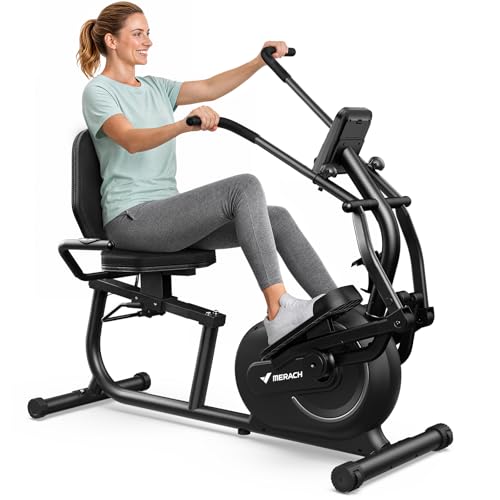
- 2-in-1 recumbent elliptical design
- 4-position adjustable handles for upper-body work
- 8 resistance levels with app compatibility
Best For: Users wanting rehab-friendly variety with guided workouts
Rehab-Focused PT Stepper – Teeter FreeStep with Patented Physical Therapy Stride
If you want a recumbent cross trainer for rehab that feels closer to physical therapy equipment than a standard exercise bike, the Teeter FreeStep is built around that idea. Its zero-impact stepping motion, seated position, and patented stride are designed to reduce stress on the joints while still giving you a full-body cardio session.
Best For: People recovering from injury or managing joint-sensitive conditions who want a gentler, PT-inspired cardio machine at home.
Pros:
- Patented natural stride is licensed from commercial physiotherapy steppers.
- Zero-impact design aims to reduce stress on knees, hips, ankles, and back.
- Dual power motion works upper and lower body, with the option to isolate arms or legs.
- 13 levels of whisper-quiet magnetic resistance for light to more intense sessions.
Cons:
- Costs more than a basic recumbent bike-style trainer.
- Assembly is still required, even with the BILT app guidance.
- Maximum rated user weight is listed at 300 lb in the supplied details.
Overall, this is the most rehab-focused option in the group if you value joint-friendly motion and a physical-therapy feel. It’s especially appealing for users who want a seated machine that still trains both the upper and lower body.
Comfortable App-Connected Trainer – Sunny Health & Fitness Elite Recumbent Cross Trainer
This recumbent cross trainer for rehab focuses on low-impact movement with plenty of adjustability for home use. The seated design, moveable handles, and elliptical-style pedals let you work the whole body while the 16 resistance levels make it easy to keep sessions gentle or progress gradually.
Best For: Home users who want a comfortable, app-connected recumbent elliptical with flexible intensity and full-body training options.
Pros:
- 16 levels of electromagnetic resistance support both recovery sessions and harder workouts.
- Moveable handles and foot pedals allow upper-body, lower-body, or full-body training.
- Easy seat adjustment and mesh backrest improve comfort during longer sessions.
- Free SunnyFit app includes trainer-led workouts and virtual scenic tours.
Cons:
- Not as explicitly PT-specific as the Teeter model.
- Maximum weight capacity is listed at 300 lb.
- More features may mean more setup and learning than a simpler machine.
This is a strong pick if you want rehab-friendly low impact plus modern app support. It gives you a good balance of comfort, workout variety, and gradual progression.
PT-Style Recumbent Stepper – Teeter FreeStep SE2001 Recumbent Stepper
If your priority is a recumbent cross trainer for rehab with a strong physical therapy angle, this Teeter FreeStep model is built for that purpose. It uses the same patented natural stride and zero-impact seated motion as the newer version, making it a practical option for people who need gentler cardio and coordinated upper-lower body movement.
Best For: Buyers who want Teeter’s PT-style stride and joint-friendly design in a straightforward recumbent cross trainer.
Pros:
- Patented natural stride is designed to feel closer to commercial physiotherapy steppers.
- Zero-impact seated motion helps reduce stress on joints and back.
- Dual power motion can engage arms and legs together or separately.
- Whisper-quiet magnetic resistance and integrated device holder support home use.
Cons:
- Fewer premium convenience features than the newer Teeter version.
- Still limited to a 300 lb user rating in the supplied details.
- Only 13 resistance levels, which may be enough for rehab but not for everyone seeking heavy resistance.
This model is a solid choice if you want the core Teeter rehab experience without focusing on extras. It keeps the PT-style stride and low-impact feel front and center.
Heavy-Duty Full-Body Trainer – Recumbent Bike with Arm Exerciser and 400 lb Capacity
This recumbent cross trainer for rehab is geared toward comfort, stability, and full-body movement. The arm exerciser, recumbent seating, and low-impact elliptical-style motion make it a useful home option for seniors, beginners, and people easing back into exercise after injury.
Best For: Users who want a heavy-duty, comfort-first recumbent trainer with arm motion and a high weight capacity.
Pros:
- Full-body synchronized workout uses both arms and legs together.
- 8 levels of smooth magnetic resistance are easy to adjust.
- Joint-friendly design reduces impact on knees and supports post-injury recovery.
- Thick padded seat, backrest, and lever-style seat adjustment add comfort.
Cons:
- Supplied details list mixed resistance/drivetrain information, which may be confusing.
- It lacks branded app workouts or built-in program variety.
- The product details show inconsistent weight-capacity wording, so buyers may want to verify specs carefully.
If you want a straightforward, comfort-oriented machine with a sturdy frame and arm exerciser, this one makes sense. It’s especially appealing for home rehab users who care more about stability and ease of use than high-tech extras.
Physical Therapy Pick – Teeter FreeStep Recumbent Cross Trainer Stepper
If you want a recumbent cross trainer for rehab that feels close to the gentle motion used in physical therapy, the Teeter FreeStep is built for that purpose. Its patented natural stride, seated position, and zero-impact design are aimed at reducing stress on the joints and back while still giving you a total-body cardio session.
Best For: People recovering from injury, or anyone who wants a PT-style, joint-friendly workout with upper- and lower-body engagement.
Pros:
- Patented physical-therapy stride designed to be gentler on knees, hips, and back.
- Dual power motion lets you work arms and legs together or separately.
- 13 levels of whisper-quiet magnetic resistance for light to challenging sessions.
- Includes a training app with subscription-free workouts and a floor mat bundle.
Cons:
- It is still a large home machine and needs dedicated floor space.
- The base rating in the notes is 300 lb for users, despite the broader product title reference.
For rehab-focused buyers, this model stands out because it prioritizes smooth motion, adjustability, and low joint stress over aggressive training features. If comfort and controlled movement matter more than intensity, it is one of the strongest matches in this roundup.
Budget-Friendly Full-Body – ECHANFIT Recumbent Bike with Arm Exerciser
This recumbent cross trainer for rehab focuses on simple, joint-friendly movement with both arm and leg action. The ECHANFIT model combines a recumbent seat, adjustable resistance, and a backlit display, making it a practical home option for users who want low-impact cardio without a complicated setup.
Best For: Seniors, rehab users, and home exercisers who want an affordable full-body recumbent trainer with arm movement.
Pros:
- Dual-action handles and pedals create a full-body workout in one machine.
- Low-impact design is positioned as suitable for rehabilitation and seniors.
- 8 magnetic resistance levels let you scale effort up or down.
- Extra-wide seat, backrest, and included resistance bands add comfort and variety.
Cons:
- It is a simpler machine than higher-end cross trainers, with fewer advanced training features.
- Maximum height support is listed at 6 feet in the notes.
For a rehab-oriented buyer, this model is appealing because it keeps the motion smooth, the controls straightforward, and the price-to-feature mix practical. It is best when you want a comfortable starter machine rather than a premium therapy platform.
Premium Rehab-Grade – NuStep Recumbent Cross Trainer
The NuStep is a serious recumbent cross trainer for rehab and low-impact exercise, with the kind of accessibility and stability many users want in a therapy-friendly machine. Its 360-degree swivel seat, easy step-in access, adjustable arms and legs, and smooth dual-action motion make it especially well suited to controlled, full-body training.
Best For: Rehab settings, seniors, and users who want a highly accessible, therapy-oriented cross trainer with broad adjustability.
Pros:
- 360-degree swivel seat and wheelchair-height entry improve accessibility.
- Adjustable arms and legs support a wide range of users and movement patterns.
- 10 resistance levels and quiet operation fit gentle rehab work or harder sessions.
- Supports up to 400 lb and arrives fully assembled.
Cons:
- It is very heavy at 210 lb, so it is not easy to move on your own.
- The premium design may be more machine than casual home buyers need.
If accessibility and rehab usability are your top priorities, the NuStep is the most specialized choice here. It is built to make getting on, starting, and adjusting the workout easier while still delivering a complete low-impact cardio session.
Rehab-Friendly Full-Body Cross Trainer – Recumbent Bike with Arm Exerciser
If you want a recumbent cross trainer for rehab that keeps movement controlled and low-stress, this Birdfeel model is built around gentle, supported exercise. The reclined seat helps reduce pressure on the knees, ankles, and lower back, while the hand-cranked arm exerciser lets you work the upper body without needing a separate machine. With 8 levels of magnetic resistance, it can stay easy during recovery sessions or scale up as strength returns.
Best For: Seniors, injury recovery, and users who want low-impact full-body training at home.
Pros:
- Hand-cranked arm exerciser supports upper-body work and total-body sessions.
- Recumbent design and elliptical motion are described as zero-impact and joint-friendly.
- 8-level magnetic resistance gives room to start gently and progress over time.
- Thick padded seat and backrest add comfort for longer sessions.
Cons:
- No app connectivity or smart tracking features are listed in the notes.
- Best suited to controlled home workouts rather than high-intensity training.
For rehab-focused buyers, this is a straightforward option that emphasizes comfort, stability, and movement quality over complexity. The combination of recumbent support, arm exercise, and quiet magnetic resistance makes it a practical choice when you want to stay active without adding unnecessary joint stress.
Heavy-Duty Rehab Cross Trainer – Recumbent Bike with App Connectivity
This recumbent cross trainer for rehab is aimed at users who want supportive exercise with extra stability and tracking tools. The reclined seat reduces strain on the back, knees, and ankles, while the moveable arm handles and elliptical-style pedals create a full-body workout. With a heavy-duty frame, 8-level magnetic resistance, and Bluetooth app support, it gives you a more feature-rich recovery-friendly setup.
Best For: Users who want a sturdy, comfort-focused recumbent trainer with smart tracking and app support.
Pros:
- Supports both upper- and lower-body work with moveable arm handles.
- Rated for up to 400 lbs with a heavy-duty steel frame for added stability.
- Quiet 8-level magnetic resistance suits home, apartment, or early-morning use.
- Bluetooth monitor works with apps like Kinomap and Zwift for engaging sessions.
Cons:
- More technology-driven than simpler rehab machines, which may not suit every user.
- Assembly is easier than average, but still requires setup.
This model stands out if you want rehab-friendly comfort plus modern tracking features. Its supportive seating, strong frame, and app compatibility make it a good fit for users who want steady progress and a more motivating workout routine at home.
Balanced Home Rehab Cross Trainer – MERACH Recumbent Elliptical Bike
If you need a recumbent cross trainer for rehab that blends comfort with a little more training variety, the MERACH model is designed for both gentle warm-ups and more demanding sessions. Its recumbent elliptical layout combines bike and elliptical-style movement, and the 4-position adjustable handles help you involve the upper body as you work. The 8 resistance levels make it easier to keep intensity appropriate for recovery.
Best For: Home users who want a rehab-friendly trainer with adjustable resistance and app-based workouts.
Pros:
- 2-in-1 recumbent elliptical design adds more movement variety than a basic bike.
- 4-position adjustable handles help tailor upper-body involvement.
- 8 resistance levels cover everything from gentle warm-ups to harder workouts.
- 80% pre-assembled setup reduces the hassle of getting started.
Cons:
- Maximum weight recommendation is 300 lbs, lower than some competing models.
- Smart app features may be more than some rehab users need.
For buyers who want a rehab-oriented machine that can still grow with them, this MERACH offers a practical middle ground. It stays focused on supported, low-impact movement while adding handle adjustment, resistance variety, and app compatibility for users who like structured workouts.
How We Picked the Best Recumbent Cross Trainer for Rehab
For a Recumbent Cross Trainer for Rehab, the most important factors are low-impact motion, stable body support, and simple adjustability. We prioritized models with comfortable seating, usable resistance ranges, arm-and-leg coordination, and features that help users stay consistent without overtaxing joints.
We also looked for practical home-use details such as weight capacity, display readability, ease of entry and exit, and whether the motion feels smooth enough for repeat rehab sessions.
Quick Comparison
As a fast rule, choose a more supportive model if balance or fatigue is a concern, a model with broader resistance options if your rehab is progressing, and a compact, easy-adjust machine if multiple users will share it. Full-body designs are best when you want gentle cardio plus upper-body engagement in one session.
Key Buying Factors for Recumbent Cross Trainer for Rehab
Comfort and Positioning
Look for an adjustable seat, supportive backrest, and a stride or pedal path that feels natural. Comfort matters because rehab users are more likely to stick with short, regular sessions than occasional intense workouts.
Resistance and Motion Quality
Smooth magnetic or similar resistance is usually preferable for controlled training. A Recumbent Cross Trainer for Rehab should allow small increases in effort so you can progress without sudden jumps.
Stability and Weight Capacity
A heavier frame and higher weight limit can improve confidence during mounting, dismounting, and use. This is especially useful if balance, post-op recovery, or limited mobility is part of the picture.
Upper-Body Involvement
Many users benefit from coordinated arm motion because it helps build gentle total-body conditioning. If shoulder mobility is limited, choose a machine with adjustable or easy-to-use arms.
Who Should Buy Which Recumbent Cross Trainer for Rehab?
If you need the most rehab-friendly setup, pick the machine with the strongest support, easiest access, and most natural motion. If you want a balanced home cardio option, choose a full-body design with clear resistance settings and a comfortable seat. If several people will use the machine, prioritize adjustability and a higher capacity rating over extra training features.
For supervised recovery, the safest choice is usually the simplest one that lets you train consistently, track effort easily, and increase workload gradually over time.