The best portable camping stoves make it easier to prepare hot meals wherever your plans take you, from established campsites to emergency kitchens and tailgates.
This roundup compares compact single-burner models, versatile dual-fuel stoves, and larger two-burner cooktops so you can choose the right balance of power, portability, and cooking control.
Best 10 Portable Camping Stoves Picks for 2026
Best Dual-Fuel Value
GS-3400P Portable Camping Stove
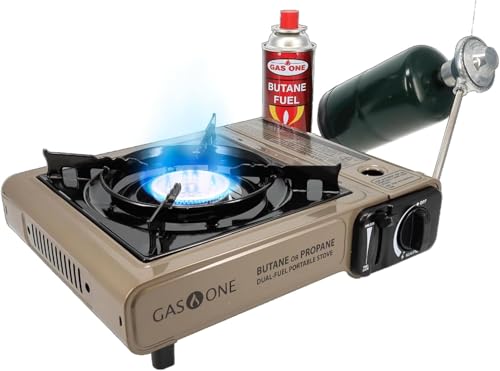
- Uses butane or propane
- Matchless piezo ignition
- Includes regulator and case
Best For: Flexible camping and emergency cooking
Best for Group Cooking

- Two adjustable burners
- Includes grill and griddle
- 24,000 BTUs with wind guards
Best For: Family camping and varied outdoor meals
Best Wind Protection
GS-3900PB Portable Camping Stove

- 15,000 BTU output
- Four-corner windblocker
- Dual-fuel with carrying case
Best For: Breezy campsites and emergency use
Best Two-Burner Simplicity
Coleman Triton+ 2-Burner Stove
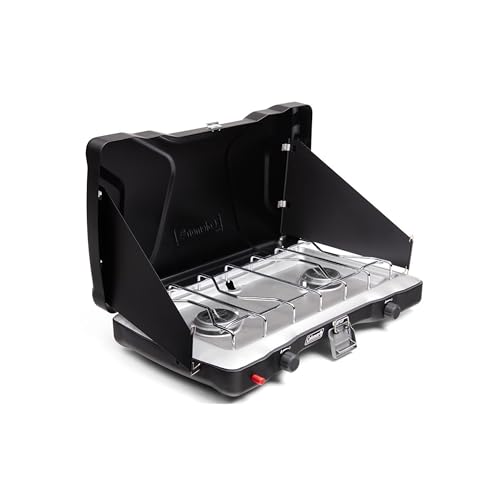
- Two adjustable burners
- 22,000 total BTUs
- InstaStart ignition and wind guards
Best For: Car camping, tailgating, and outdoor cooking
Efficient Solo Cooking

- 7,650-BTU single burner with adjustable heat
- Piezo ignition and fuel-cartridge safety feature
- Includes carrying case; uses 8-ounce butane
Best For: Solo camping, tailgating, and emergency cooking
Two-Burner Camp Kitchen
Coleman Triton 2-Burner Propane Stove
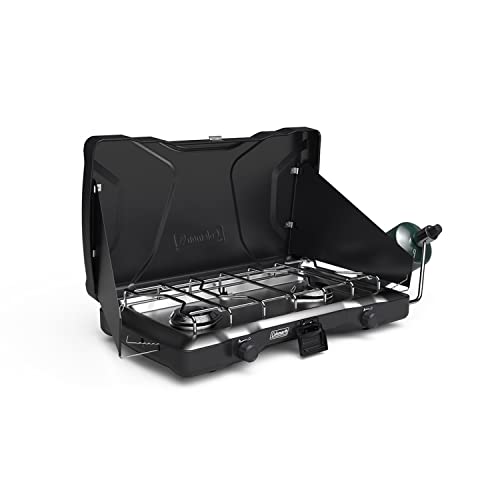
- Two adjustable burners with 22,000 total BTUs
- Wind guards and removable grate for outdoor use
- Fits 10-inch and 12-inch pans
Best For: Family camping, group meals, and tailgating
Wind-Ready Precision

- Brass burner with windshield for controlled heat
- CSA certified with three built-in safety protections
- Hard case, auto ignition, and 3-year warranty
Best For: Windy campsites, road trips, and emergency preparedness
Lightweight Gas Pick

- 3,000-watt output with adjustable flame control
- Piezo ignition and wind-resistant burner design
- 3.84 ounces; fits EN 417 threaded mixed-fuel canisters
Best For: Backpacking meals for one to three people
Simple Solid-Fuel Option

- Folds flat for storage and transport
- Compatible with canned heat, fuel cubes, and solidified alcohol
- Coated steel platform supports small to medium cookware
Best For: Solid-fuel camping and emergency kits
Compact Fuel Flexibility

- 3,000-watt output with piezo ignition
- Supports compatible butane, propane-mix, and isobutane fuels
- 0.24 pounds with support for pots up to 8 inches
Best For: Lightweight hiking with multiple EN 417 fuel options
Best Dual-Fuel Value – GS-3400P Portable Camping Stove
If you want flexible fuel options in a portable camping stove, the Gas One GS-3400P can run on either an 8-ounce butane cartridge or a 16.4-ounce propane cylinder. Its adjustable heat dial, carrying case, and matchless ignition make it practical for camping or emergency preparedness.
Best For: Campers and emergency-kit planners who want one compact stove with both butane and propane compatibility.
Pros:
- Accepts either butane or propane fuel.
- Automatic piezo-electric ignition eliminates matches and lighters.
- Built-in pressure sensing and gas shutoff safety features.
- Includes a propane converter regulator and carrying case.
Cons:
- Fuel is not included.
- Designed for a single burner.
The GS-3400P is a straightforward choice when fuel flexibility and compact storage matter more than multi-burner cooking capacity.
Best for Group Cooking – Coleman Cascade 3-in-1 Stove
The Coleman Cascade 3-in-1 is a portable camping stove built for more than simple boiling. With two adjustable burners, removable cast-iron grill and griddle accessories, and 24,000 total BTUs, it gives camp cooks several ways to prepare meals.
Best For: Families, groups, and campers who want a two-burner cooktop with grill and griddle capability.
Pros:
- Includes removable cast-iron grill and griddle accessories.
- Two adjustable burners provide cooking and simmer control.
- Two wind guards help protect the flame.
- Recessed handle, accessory case, and heavy-duty latch support transport.
Cons:
- At 15.8 pounds, it is heavier than compact single-burner stoves.
- Uses propane only, and the fuel is sold separately.
This model is a strong fit when meal versatility and two-pan cooking are priorities, though its larger size favors car camping over lightweight travel.
Best Wind Protection – GS-3900PB Portable Camping Stove
The GasOne GS-3900PB is a portable camping stove for users who want dual-fuel flexibility with added protection from breezy conditions. It supports an 8-ounce camping fuel cartridge or a 16.4-ounce propane cylinder, produces 15,000 BTUs, and includes a four-corner windblocker.
Best For: Campers and emergency-preparedness users who need a portable single-burner stove for variable outdoor conditions.
Pros:
- Compatible with both camping fuel cartridges and propane.
- Four-corner windblocker helps maintain the flame.
- Piezo-electric ignition and adjustable heat dial simplify operation.
- Includes a propane adapter and protective carrying case.
Cons:
- Fuel is not included.
- Weighs 6 pounds, making it less suited to lightweight backpacking.
- Single-burner design limits simultaneous cooking.
With its wind protection and dual-fuel design, the GS-3900PB is useful for dependable campsite or emergency cooking when portability still matters.
Best Two-Burner Simplicity – Coleman Triton+ 2-Burner Stove
The Coleman Triton+ is a practical portable camping stove for cooking with two pans at once. It delivers 22,000 total BTUs through independently adjustable burners, adds dual wind guards, and uses push-button InstaStart ignition for convenient lighting.
Best For: Campers, tailgaters, and emergency users who want a familiar two-burner propane setup with simple controls.
Pros:
- Two independently adjustable burners support precise cooking.
- Push-button InstaStart ignition provides matchless lighting.
- Dual wind guards help shield the burners.
- Removable grate and aluminized steel cooktop simplify maintenance.
Cons:
- Uses propane only, with fuel sold separately.
- Its two-burner format is less compact than a single-burner stove.
The Triton+ balances useful cooking capacity with straightforward operation, making it a solid propane option for car camping and outdoor meal preparation.
Efficient Solo Cooking – Gas One GS-1000G Butane Stove
For campers who want a straightforward option among portable camping stoves, the Gas One GS-1000G combines a single 7,650-BTU burner with automatic ignition and a carrying case. It uses standard 8-ounce butane canisters, sold separately, and is intended for outdoor use only.
Best For: Solo campers, tailgaters, and emergency kits that need a compact single-burner stove with simple controls.
Pros:
- Automatic piezo ignition eliminates the need for matches or a lighter.
- Adjustable heat control and 7,650 BTUs support quick, even cooking.
- CSA approved and equipped with a fuel-cartridge ejection safety feature.
- Includes a carrying case and has a quiet, clean-burning operation.
Cons:
- Single burner limits how many dishes you can prepare at once.
- Requires 8-ounce butane canisters, which are sold separately.
- Designed for outdoor use only.
The GS-1000G is a practical pick when portability, easy ignition, and basic cooking performance matter more than multi-burner capacity. Its included case also makes storage and transport convenient.
Two-Burner Camp Kitchen – Coleman Triton 2-Burner Propane Stove
The Coleman Triton is a useful choice among portable camping stoves when you need to cook more than one item at a time. Its two independently adjustable burners deliver 22,000 total BTUs, while wind guards help protect the flame in outdoor conditions.
Best For: Families, group campsites, and tailgaters who want two-burner cooking and room for 10-inch and 12-inch pans.
Pros:
- Two independently adjustable burners provide separate temperature control.
- 22,000 total BTUs offer strong cooking power.
- Wind guards help shield the burners from breezes.
- Removable chrome-plated grate simplifies cleanup.
Cons:
- At 5 pounds, it is heavier than the single-burner options in this roundup.
- Uses a 16-ounce propane cylinder, sold separately.
- Up to one hour of burn time on high may require extra fuel for longer trips.
Choose the Triton when meal flexibility is a priority. Its dual-burner layout is well suited to campsite breakfasts, group meals, and outdoor cooking that benefits from simultaneous heating.
Wind-Ready Precision – JoChef Portable Butane Stove
The JoChef portable butane stove is designed for cooks who want focused single-burner performance in a travel-ready package. It features a brass burner, built-in windshield, automatic ignition, and a hard-shell case, while accepting standard 8-ounce butane canisters.
Best For: Campers, road trippers, and preparedness-minded cooks who value precise heat control, wind protection, and included carrying protection.
Pros:
- Brass burner is designed for fast preheating and even flame distribution.
- Windshield helps maintain a steady flame, and the frame supports pans up to 10 inches wide.
- CSA certification and a triple safety system include ignition, pressure, and leak protections.
- Includes a hard-shell case and offers a 3-year limited warranty.
Cons:
- Single burner is less suitable for preparing several dishes simultaneously.
- Standard 8-ounce butane canisters are sold separately.
- At 3.1 pounds, it may be more suited to car camping than ultralight backpacking.
With its brass burner and windshield, the JoChef is a strong fit for outdoor cooks who want more controlled single-burner cooking. The protective case and extended warranty add practical value for frequent transport and regular use.
Lightweight Gas Pick – AOTU Portable Camping Stove
For campers seeking portable camping stoves with strong heat output and low pack weight, the AOTU is a compact gas-powered option. Its 3,000-watt output, piezo ignition, adjustable flame control, and wind-resistant burner design suit quick outdoor meals for small groups.
Best For: Backpackers and campers cooking for one to three people with compatible threaded fuel canisters.
Pros:
- Lightweight 3.84-ounce aluminum construction with a compact storage box.
- Adjustable control valve supports high heat and simmering.
- Four-dimensional support and a honeycomb windproof net help provide stable, efficient burning.
- Rated at 3,000 watts for fast cooking.
Cons:
- Compatible with 7/16-thread EN 417 butane or butane-propane mixed canisters, but not propane canisters.
- The 9.5-by-9.5-centimeter burner is intended for cookware up to about 20 centimeters and groups of one to three.
The AOTU balances portability, useful flame control, and durable aluminum construction. Confirm your fuel-canister compatibility and cookware size before choosing it.
Simple Solid-Fuel Option – Coghlan's Folding Camp Stove
Coghlan’s folding camp stove is a straightforward choice among portable camping stoves when you want a stable platform without a gas canister. The coated steel frame folds flat and accepts canned heat, fuel cubes, solidified alcohol, and other condensed fuel sources.
Best For: Campers, hikers, and emergency-kit users who prefer compact solid-fuel cooking.
Pros:
- Folds flat for convenient transport and storage.
- Coated steel construction is designed for rugged outdoor use.
- Works with several solid-fuel options, including fuel tablets and canned heat.
- Its 6.5-by-6.5-inch surface accommodates small to medium cookware.
Cons:
- At 1 pound, it is substantially heavier than the two gas stoves in this roundup.
- It uses solid fuel rather than a high-output gas burner, which may be less suitable for users prioritizing rapid, adjustable heating.
This stove favors simplicity and fuel flexibility over ultralight weight. Its folding steel design makes it practical for car camping, backup supplies, or trips where solid fuel is preferred.
Compact Fuel Flexibility – YCDMLJC Backpacking Stove
The YCDMLJC is one of the more compact portable camping stoves for hikers who want gas-fuel flexibility and push-button ignition. It delivers a stated 3,000 watts, includes stable supports, and packs into a small orange case for storage.
Best For: Backpackers and outdoor cooks using compatible butane, butane-propane, or isobutane EN 417 fuel canisters.
Pros:
- Weighs 0.24 pounds and packs to approximately 3.1 by 2 by 1.6 inches.
- Piezo ignition allows push-button lighting without a separate lighter.
- Accepts several 7/16-thread fuel types meeting the EN 417 standard.
- Expandable cooking support can handle pots up to 8 inches in diameter.
Cons:
- Fuel-canister connection and valve adjustment are required before ignition.
- The supplied notes do not specify a simmer range or a separate carrying case beyond the included orange box.
With its very low listed weight, broad EN 417 fuel compatibility, and 8-inch cookware capacity, the YCDMLJC is a practical lightweight gas stove. Check that your canisters meet the stated thread and fuel requirements.
How We Picked These Portable Camping Stoves
We focused on practical features that matter outdoors: fuel compatibility, burner output, ignition, wind protection, stability, portability, and ease of cleanup. The selection includes compact backpacking stoves, single-burner butane models, dual-fuel options, and two-burner propane cooktops. We also considered useful extras such as carrying cases, adjustable controls, integrated windscreens, griddles, and grills.
Because outdoor cooking needs vary, no single stove is ideal for everyone. A lightweight hiking stove prioritizes packability, while a family camp stove benefits from a wider cooking surface and two independently controlled burners.
Quick Comparison
| Stove type | Best for | Main advantage |
|---|---|---|
| Single-burner butane | Tailgating and simple meals | Compact setup and straightforward operation |
| Dual-fuel single-burner | Camping and emergency preparedness | Propane or butane flexibility |
| Two-burner propane | Family car camping | Cook multiple foods at once |
| Backpacking stove | Hiking and lightweight travel | Low weight and small packed size |
| Grill-and-griddle stove | Group breakfasts and varied meals | More cooking formats in one unit |
Key Buying Factors for Portable Camping Stoves
Fuel Type and Availability
Propane is widely available and works well for larger camp stoves. Butane canisters are convenient for compact tabletop models, while dual-fuel stoves offer added flexibility when one fuel type is unavailable. For backpacking, check the required canister style and whether it is easy to find at your destination.
Burner Power and Cooking Space
Higher BTU output can heat cookware faster, but efficiency and wind resistance matter just as much. A single burner is suitable for one-pot meals, coffee, or emergency use. Two burners are better for cooking a main dish and side simultaneously. If you regularly prepare pancakes, eggs, or grilled foods, a compatible griddle or grill surface adds versatility.
Portability and Stability
Look for a carrying case, folding legs, compact dimensions, and a weight appropriate for your transport method. Backpackers should prioritize minimum packed weight, while car campers can favor sturdier supports and larger cooking areas. Wide pot supports and a stable base are especially important with full cookware.
Ignition, Wind Protection, and Safety
Piezo or automatic ignition eliminates the need for matches, but bring a backup lighter. Wind guards help maintain heat outdoors, and adjustable controls allow more precise simmering. Use every stove outdoors or in a properly approved, well-ventilated area, and follow the manufacturer’s fuel and clearance instructions.
Who Should Buy Which Portable Camping Stoves?
- Choose a backpacking stove if low weight and compact packing are your top priorities.
- Choose a single-burner butane stove for tailgating, day trips, quick meals, and easy tabletop cooking.
- Choose a dual-fuel stove if you want flexibility for camping and emergency preparedness.
- Choose a two-burner propane stove for family camping or recipes requiring simultaneous cooking.
- Choose a grill-and-griddle model if breakfast foods, burgers, and group meals are part of your usual camp menu.