The right mummy sleeping bag can make cold nights outdoors far more comfortable while saving space in your pack. This lineup includes options for winter camping, three-season trips, backpacking, and budget-conscious buyers.
Compare temperature ratings, insulation, packed size, weather protection, and fit before choosing the bag that matches your camping conditions.
Best 10 Mummy Sleeping Bags Picks for 2026
Best for Deep Cold

- 0°F cold-weather rating
- Big-and-tall fit to 6'2"
- Draft tube and adjustable hood
Best For: Cold-weather camping with a roomy fit
Best for Spring and Fall Backpacking

- 36°F comfort rating
- 250GSM hollow-fiber insulation
- Compression sack included
Best For: Cool-weather backpacking and family camping
Best for Extra Room

- Tall, wide 6.8-foot design
- Water-repellent pongee shell
- 3-season comfort range
Best For: Roomy camping, bushcrafting, and outdoor use
Best All-Around Comfort
BISINNA 3-Season Mummy Sleeping Bag

- Water-repellent nylon shell with soft pongee lining
- Roomy 7-foot design for users up to 6'1"
- Compression sack and mesh storage bag included
Best For: Three-season camping, backpacking, and travel
Best for Temperature Choices
TETON LEEF Lightweight Mummy Sleeping Bag

- Available in 0°, 20°, and 30° options
- Roomier mummy shape supports easier movement
- Compression sack and lifetime warranty included
Best For: Backpackers choosing among different temperature ratings
Weather-Ready Value
Wakeman 25°F Mummy Sleeping Bag

- Waterproof, windproof polyester shell
- Drawstring hood for added warmth
- Packs into an included carrying case
Best For: Adult campers needing compact weather-resistant coverage
Comfort-Focused Classic

- Soft liner and roomy footbox
- Compressible microfiber insulation
- Includes stuff sack and lifetime warranty
Best For: Campers prioritizing comfort and packability
Lightweight Short Fit
TETON Short 20°F Mummy Sleeping Bag
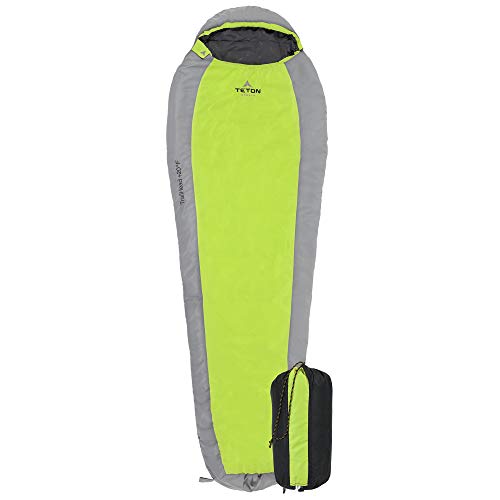
- Lightweight 2.4-pound construction
- Anti-snag zipper design
- Includes compression sack
Best For: Shorter adult hikers seeking a lighter packed setup
Best for Deep Cold – Coleman North Rim 0°F
For genuinely cold-weather camping, the Coleman North Rim is one of the warmer mummy sleeping bags in this roundup. Its 0°F rating, hollow-polyester insulation, adjustable hood, and draft tube are designed to help retain heat, while the larger cut accommodates campers up to 6 feet 2 inches.
Best For: Cold-weather campers who want a roomy mummy bag with a low temperature rating and easy-care construction.
Pros:
- Rated for temperatures as low as 0°F.
- Thermolock draft tube and adjustable hood help limit heat loss.
- Big-and-tall dimensions fit campers up to 6 feet 2 inches.
- Machine washable and backed by a 5-year limited warranty.
Cons:
- Its large cold-weather design may be more than needed for mild or warm nights.
- The supplied notes do not provide a packed weight or compression size.
The North Rim is a practical choice when warmth matters more than minimal pack size. Its mummy shape and ventilation-adjustable hood offer useful cold-weather features, while the roomy fit avoids the restrictive feel of some mummy bags.
Best for Spring and Fall Backpacking – 36°F Mummy Sleeping Bag
This mummy sleeping bag balances cool-weather warmth with packability for spring and fall trips. It has a stated 36°F comfort rating, 250GSM hollow-fiber insulation, a water-resistant 40D nylon shell, and a compression sack for carrying with other backpacking gear.
Best For: Backpackers and family campers planning cool nights who want a compression sack and clearly stated comfort and limit ratings.
Pros:
- 36°F comfort rating and 25°F lower-limit rating help with trip planning.
- Includes 250GSM hollow-fiber insulation and a compression sack.
- Water-resistant 40D nylon shell is suited to outdoor use.
- Dual-slider zipper, hood, and draft tube support ventilation and heat retention.
Cons:
- The close mummy fit is not extra wide.
- At about 3.81 pounds, it may not suit ultralight backpackers.
- It is designed for users up to about 6 feet tall.
This bag offers useful specifications for choosing a three-season sleep system, but its 36°F comfort rating should be considered alongside an insulated sleeping pad and suitable layers. Check the listed dimensions carefully if you prefer more interior room.
Best Value Cold-Weather Pick – Amazon Basics 20°F
The Amazon Basics 20°F mummy sleeping bag is a straightforward option for cold-weather hiking and camping. It combines a polyester shell, brushed tricot liner, adjustable hood, and anti-snag zipper in an adult-size design measuring 82 by 33 inches.
Best For: Campers seeking a simple, portable cold-weather mummy bag for three-season outdoor trips.
Pros:
- 20°F rating is suited to colder camping conditions.
- Brushed tricot liner adds a soft, cozy feel.
- Adjustable drawstring hood supports heat retention.
- Includes a carry bag for transport and storage.
Cons:
- At 2 kg, it is not the lightest option for backpacking.
- The supplied details do not specify a comfort-versus-limit temperature breakdown.
- The polyester construction may feel less technical than higher-end alternatives.
This is a practical, uncomplicated choice when you want a cold-weather mummy bag without a long list of specialized features. Its 82-inch length and 33-inch width should suit most adults, but its weight is worth considering for longer carries.
Best for Extra Room – OneTigris Bushcrafter’s
The OneTigris Bushcrafter’s is an unusually roomy option among mummy sleeping bags, measuring 6.8 feet long by 2.7 feet wide. Its 3-season design uses a water-repellent pongee shell, polycotton filling, a cord-stopped hood, and snag-free YKK zippers for camping, bushcrafting, and general outdoor use.
Best For: Campers who prioritize extra sleeping space and versatile outdoor use over a compact ultralight setup.
Pros:
- Tall-and-wide dimensions provide extra room for adults and kids.
- Water-repellent shell offers splash resistance.
- YKK anti-snag zippers and cord-stopped hood add practical cold-weather features.
- Machine washable on a delicate cycle and supplied with a stuff sack.
Cons:
- The stated comfort range of 46.4–59°F is intended for milder 3-season conditions.
- Its 3.1-pound weight is less appealing for weight-conscious backpackers.
- Polycotton insulation may be bulkier than lightweight synthetic alternatives.
Choose this bag when spaciousness and rugged versatility are more important than minimizing carried weight. The broad cut is useful for varied outdoor activities, but its temperature range makes it better suited to spring, summer, and fall nights than severe cold.
Best All-Around Comfort – BISINNA 3-Season Mummy Sleeping Bag
For campers seeking versatile mummy sleeping bags, the BISINNA combines a water-repellent nylon shell, soft pongee lining, and synthetic insulation in a 7-foot design. It is suited to three-season camping, travel, and backpacking, with features aimed at retaining warmth while remaining reasonably portable.
Best For: Three-season campers, backpackers, and travelers who want extra room and convenient compression storage.
Pros:
- Water-repellent 40D nylon shell helps handle damp conditions.
- Roomy 7-foot design accommodates users up to about 6 feet 1 inch.
- Includes a compression sack and separate mesh storage bag.
- Hood, insulated draft tube, and two-way anti-snag zipper support warmth and ventilation.
Cons:
- At 1.4 kg, it is not the lightest option for ultralight backpacking.
- Its listed rating is three-season rather than a dedicated winter rating.
The BISINNA is a practical middle-ground choice when comfort, portability, and weather resistance matter more than minimizing every ounce. Its roomy cut and warmth-focused features make it especially useful for general outdoor trips.
Best for Temperature Choices – TETON LEEF Lightweight Mummy Sleeping Bag
The TETON LEEF is one of the more adaptable mummy sleeping bags for campers who want to choose a temperature rating and size. Its roomier mummy shape supports movement, while the included compression sack helps it fit more easily into a hiking pack.
Best For: Backpackers and campers who want multiple temperature-rating and size options backed by a lifetime warranty.
Pros:
- Available in 0-degree, 20-degree, and 30-degree options.
- Roomier mummy design allows easier movement than a narrow cut.
- Includes a compression sack for more compact packing.
- Covered by TETON Sports’ stated lifetime warranty against qualifying material or workmanship defects.
Cons:
- The listed 0-degree regular model weighs 4.2 pounds, which may feel heavy for ultralight trips.
- Its 21-inch listed width is narrower than some roomier sleeping bag designs.
The LEEF stands out for flexibility rather than a single universal configuration. Choosing the appropriate rating and size lets buyers tailor it to their trips, while the compression sack and warranty add practical value for regular outdoor use.
Best for Roomy Cold-Weather Use – Bessport Washable Mummy Sleeping Bag
The Bessport is a roomy option among mummy sleeping bags, with a long profile designed for adults up to approximately 6 feet 6 inches. Its ripstop polyester shell, insulated footbox, hood, and quilted construction are intended for comfortable camping in cool and damp outdoor conditions.
Best For: Taller campers who want a washable, roomy bag for hiking, travel, and general outdoor activities.
Pros:
- Accommodates users up to about 6 feet 6 inches with a generous cut.
- Water-repellent 210T ripstop polyester shell helps resist damp weather and abrasion.
- Insulated footbox and drawstring hood support heat retention.
- Includes a stuff sack and uses double SBS zippers with anti-snag features.
Cons:
- At roughly 3.5 to 3.6 pounds, it is less suitable for ultralight backpacking.
- The supplied details identify the size as “Kids,” so buyers should verify the selected configuration before ordering.
- The notes describe comfort from 50–68°F and a temperature limit of 32°F or above, rather than a deep-winter rating.
The Bessport favors space, durability, and easy care over minimum packed weight. It is a sensible pick for taller users and casual cold-weather camping, provided its listed sizing and temperature expectations match your needs.
Weather-Ready Value – Wakeman 25°F Mummy Sleeping Bag
For campers seeking mummy sleeping bags with weather-resistant coverage, the Wakeman combines a waterproof, windproof polyester shell with a drawstring hood. Its 2.98-pound build and included carrying case make it practical for camping, hiking, and occasional backpacking.
Best For: Adult campers who want a compact sleeping bag for spring, summer, and early-fall trips.
Pros:
- Waterproof and windproof 210T polyester shell
- Drawstring hood helps retain warmth around the face
- Compresses to 17 by 8 inches and includes a carrying case
Cons:
- At 2.98 pounds, it may be heavier than ultralight backpacking options
- The supplied notes contain differing temperature descriptions, so verify the rating before planning cold-weather use
This is a straightforward choice when weather resistance and portability matter more than minimizing pack weight. Confirm the temperature rating for your intended conditions.
Comfort-Focused Classic – TETON 20°F Mummy Sleeping Bag
The TETON is one of the more comfort-oriented mummy sleeping bags in this roundup, with a soft liner, roomy footbox, and zipper draft tube. Its microfiber insulation is designed to balance loft, compressibility, and packability for camping, hiking, and backpacking.
Best For: Adults and kids who want a versatile, compressible bag with extra comfort features.
Pros:
- Soft liner and roomy footbox support comfortable sleeping
- Microfiber insulation is lightweight, lofty, and compressible
- Includes a stuff sack and offers a lifetime warranty against material or workmanship defects
Cons:
- Its listed maximum height recommendation is 72 inches
- The supplied details identify this version with a +20°F rating, so it may not suit colder trips
Choose this model when comfort and convenient packing are priorities. The draft tube and insulated camp-pad recommendation also make it easier to build a warmer sleep system.
Lightweight Short Fit – TETON Short 20°F Mummy Sleeping Bag
Among mummy sleeping bags, this short TETON version stands out for its 2.4-pound weight and compact fit. It includes microfiber construction, a compression sack, anti-snag zippers, and features intended to improve warmth and convenience on hiking trips.
Best For: Shorter adult hikers who want a lighter, easy-to-pack sleeping bag.
Pros:
- Lightweight 2.4-pound design
- Anti-snag zippers can be operated from inside or outside
- Includes a compression sack, roomy footbox, and zipper draft tube
Cons:
- The short size may not fit taller sleepers comfortably
- The listed length is 75 inches, so check fit carefully before buying
- Its supplied temperature rating is +20°F rather than the colder 5°F option referenced in the title
This is the better TETON choice for shoppers who value lower weight and a shorter overall fit. Confirm the dimensions and temperature rating against your height and planned conditions.
How We Picked These Mummy Sleeping Bags
We focused on practical features that matter outdoors: stated temperature ratings, insulation type, shell materials, hood and draft protection, zipper design, packed size, and included compression sacks. The selection covers several use cases, from cold-weather car camping to lightweight backpacking and general three-season travel.
Because temperature ratings are not always standardized across brands, treat them as a starting point rather than a guarantee. Your clothing, sleeping pad, tent, humidity, wind, and personal cold tolerance all affect how warm you will feel.
Quick Comparison
| Best For | What to Prioritize | Typical Pick Characteristics |
|---|---|---|
| Winter or cold-weather camping | Low rating, hood, draft collar, substantial insulation | Heavier, warmer designs such as 0°F to 20°F bags |
| Three-season camping | Balanced warmth and packability | Approximately 20°F to 40°F comfort-oriented options |
| Backpacking | Low packed volume and manageable weight | Lightweight insulation and a compression sack |
| Wet or unpredictable weather | Water-resistant shell and protected construction | Nylon shells, water-resistant finishes, and secure hoods |
Key Buying Factors for Mummy Sleeping Bags
Temperature Rating
Choose a bag based on the lowest conditions you realistically expect, not the warmest forecast. A comfort rating is more useful for most sleepers than an extreme rating, which may indicate survival rather than comfortable rest.
Insulation and Weight
Synthetic hollow-fiber insulation generally offers dependable performance in damp conditions and is often less expensive. Down can provide excellent warmth-to-weight performance, but the products in this roundup primarily emphasize accessible synthetic construction. Compare total weight and packed dimensions if you will carry the bag.
Fit, Hood, and Draft Control
A close mummy shape reduces empty air space and can improve warmth, but make sure the shoulder, hip, and foot areas are not restrictive. Adjustable hoods, drawcords, draft tubes, and insulated collars help reduce heat loss on colder nights.
Shell, Zipper, and Maintenance
Look for water-resistant fabric, a snag-resistant zipper, and a design that is easy to enter and exit. Check the care instructions before buying, especially if the bag is washable. Store synthetic bags loosely when possible rather than compressed for long periods.
Who Should Buy Which Mummy Sleeping Bags?
Cold sleepers and winter campers should favor the warmest suitable rating, an insulated hood, and stronger draft protection. Three-season campers will usually get the best balance from a mid-range bag around the 20°F to 40°F range. Backpackers should prioritize low weight and a compact compression sack, even if that means accepting a narrower fit. Occasional campers and families may prefer an affordable synthetic model that is easy to clean and sufficiently versatile.
Before ordering, confirm the bag’s actual dimensions, temperature-rating terminology, zipper orientation, and packed size. Pair it with an insulated sleeping pad: even a warm bag can perform poorly when body heat escapes into cold ground.