A heavy duty reverse hyper machine can be a smart addition if you want posterior-chain training with a more supportive setup than a standard bench or floor routine. The right model can help you train glutes, hamstrings, and low-back stability while fitting your space and budget.
Below, we focus on machines and benches that balance capacity, adjustability, storage, and overall build quality so you can choose with confidence.
Best 10 Heavy Duty Reverse Hyper Machine Picks for 2026
Heavy-Duty Pick
SPART H-PND Reverse Hyperextension Machine
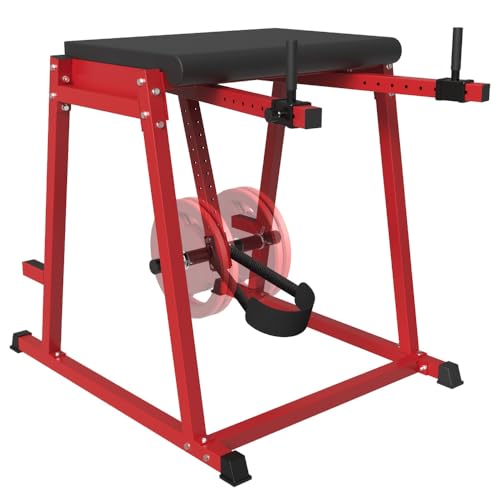
- 1100 lb total capacity
- 12-gauge steel frame
- 8-position handle and bar adjustments
Best For: Users wanting a high-capacity reverse hyper for home strength and rehab work
Budget-Friendly Bench
Marcy Adjustable Hyper Extension Bench
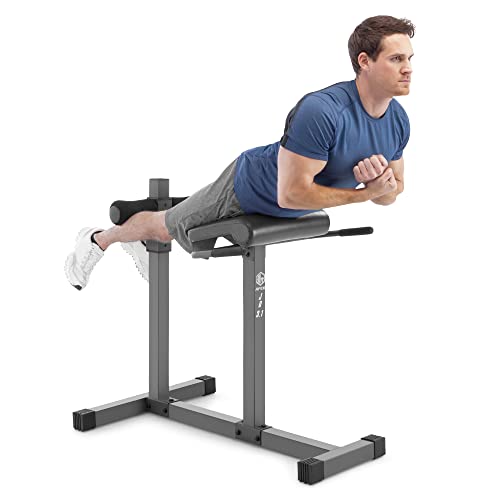
- Compact design for home use
- Heavy-duty tubing frame
- Padded leg holders and handles
Best For: Home users who want a compact bench for core and back extensions
Strength-Training Choice
Titan Fitness H-PND Reverse Hyperextensions Machine

- 700 lb rated capacity
- Cross brace for band resistance
- Heavy-duty steel frame
Best For: Serious home gym users who want a durable reverse hyper for progression
Space-Saving Option
Sunny Health & Fitness Multi-Function Roman Chair

- Folds flat for storage
- Adjustable height settings
- Built-in dip station
Best For: Small home gyms needing a foldable back-extension bench
Best for Easy Setup
Commercial-Grade Reverse Hyper Machine

- 13-gauge steel frame with 1100 lb total capacity
- 8 handle and 11 bar adjustments for fit
- Large pads and anti-slip feet for stability
Best For: Home gyms that need a stable, high-capacity reverse hyper
Versatile Decompression Option
Heavy-Duty Roman Chair With Inversion Support

- Over-extension protection and hip-supported decompression
- Multiple exercise options beyond back extensions
- Non-slip base pads and dual wheels for convenience
Best For: Home gyms that want decompression, core work, and back extensions in one unit
Multi-Use Strength Station
Seal Row and Reverse Hyper Combo Bench

- 1500 lb capacity with heavy-duty steel frame
- Chest support helps isolate back muscles
- Also supports seal rows, reverse hypers, and more
Best For: Lifters who want one bench for back work and upper-body accessories
Commercial-Grade Inversion & Core Trainer
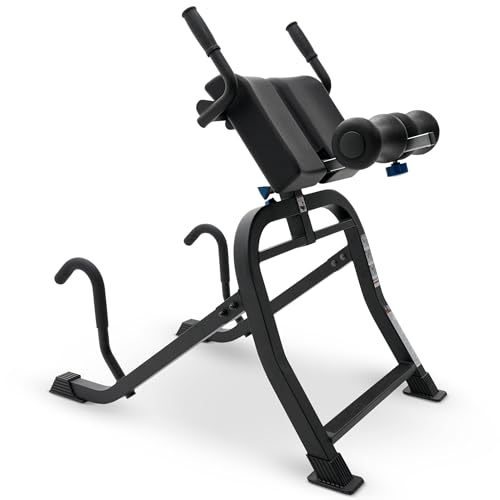
- 350 lb-rated commercial-grade steel frame
- Hip-supported inversion and back extension use
- Multiple core and bodyweight exercise options
Best For: Users wanting one sturdy station for inversion, back, and core training
Heavy-Duty Reverse Hyper Machine

- 440 lb user capacity and 660 lb sleeve rating
- 13-gauge steel frame with large pads
- 8 handle and 11 bar-height adjustments
Best For: Serious home gym users who want a dedicated reverse hyper machine
Foldable Roman Chair for Small Spaces

- Fold-flat frame for easy storage
- 300 lb capacity with steel construction
- 5 angle and 8 thigh-pad adjustments
Best For: Small-space home gyms that need a foldable back and core bench
Heavy-Duty Pick – SPART H-PND Reverse Hyperextension Machine
If you want a heavy duty reverse hyper machine for home training, the SPART H-PND is built around a 12-gauge steel frame and a high total weight capacity. It’s designed for reverse hypers, hip thrust rear kicks, and lower-body work, with adjustable handles and weight-bar positions to help you find a comfortable setup.
Best For: Home gym users who want a higher-capacity reverse hyper machine for lower back, glute, hamstring, and rehab-focused training.
Pros:
- 1100 lb total weight capacity with a 660 lb loadable sleeve rating
- 12-gauge steel frame and rubber feet for stability
- 8 handle positions and 8 weight-bar height settings
- Large padded contact areas for added comfort during training
Cons:
- Large footprint may take up meaningful floor space
- Heavier build can make setup and moving more cumbersome
The SPART H-PND is the strongest pure heavy-duty option in this group, and its adjustable design makes it more versatile than a simple fixed bench. If load capacity and sturdiness matter most, it’s a compelling choice.
Budget-Friendly Bench – Marcy Adjustable Hyper Extension Bench
Marcy Adjustable Hyperextension Roman Chair / Exercise Hyper Bench JD-3.1 Dark grey
Check Price On AmazonThe Marcy Adjustable Hyper Extension Bench is a straightforward heavy duty reverse hyper machine alternative for core and posterior-chain work at home. It focuses on basic hyperextension movements with a sturdy tubing frame, integrated padding, and a compact shape that’s easier to tuck away than larger specialty machines.
Best For: Buyers who want a compact, no-frills back extension bench for glutes, hamstrings, lower back, and core training.
Pros:
- Heavy-duty tubing frame with a powder-coated finish
- High-density foam padding and adjustable leg holders for comfort
- Compact design stores easily in a corner
- Versatile for ab work, back extensions, and core training
Cons:
- More basic than a dedicated reverse hyper machine
- Less adjustable and less specialized than larger specialty units
This Marcy bench is best when you want simple, space-conscious training rather than a full-featured reverse hyper setup. It covers the basics well and should appeal to home users prioritizing convenience.
Strength-Training Choice – Titan Fitness H-PND Reverse Hyperextensions Machine
The Titan Fitness H-PND is a heavy duty reverse hyper machine aimed at strength training, rehab-style movement, and everyday lower-body work. With a 700 lb rating, steel construction, and a cross brace for adding resistance bands, it offers more of a true specialty-machine feel than a basic Roman chair.
Best For: Lifters and home gym owners who want a rugged reverse hyper machine with room to progress.
Pros:
- 700 lb rated capacity for demanding training
- Heavy-duty steel frame with rubber feet for stability
- Cross brace allows resistance-band progression
- Includes spring collars and a hyper strap
Cons:
- Heavy 250 lb machine is not easy to move
- Large footprint requires dedicated space
If you want a sturdy, progression-friendly reverse hyper for consistent use, the Titan H-PND is a strong contender. Its balance of capacity, included accessories, and band compatibility makes it practical for serious home training.
Space-Saving Option – Sunny Health & Fitness Multi-Function Roman Chair
The Sunny Health & Fitness Multi-Function Roman Chair is a lighter-duty heavy duty reverse hyper machine alternative for users who need a compact, foldable setup. It targets the glutes, hamstrings, lower back, and core, while adding a dip-station feature for a bit more exercise variety in a small footprint.
Best For: Beginners and space-conscious home gym users who want a foldable back-extension bench with basic versatility.
Pros:
- Folds flat for easy storage
- Adjustable height for a more personalized fit
- High-density foam pad and non-slip handlebars
- Built-in dip station adds extra training options
Cons:
- 250 lb maximum capacity is lower than heavier specialty machines
- More compact build is less robust than true heavy-duty reverse hyper units
This Sunny Health & Fitness model makes sense when storage and simplicity matter more than maximum load. It’s a practical entry point for back extensions and core work in a home gym.
Best for Easy Setup – Commercial-Grade Reverse Hyper Machine
If you want a heavy duty reverse hyper machine for posterior-chain work, this VINE H-PND is built for stable home-gym training. It uses 13-gauge steel, a 2-inch loadable sleeve, and broad padding to support reverse hyperextensions, hip thrusts, rear kicks, and rehab-focused lower-back work.
Best For: Home gym users who want a high-capacity reverse hyper machine for lower-back, glute, and hamstring training.
Pros:
- 660 lb loadable sleeve and 440 lb user capacity for a 1100 lb total capacity
- 8 handle length settings and 11 weight-bar height adjustments for a more precise fit
- Large 35″ x 24.2″ pads and anti-slip feet improve comfort and stability
- Includes a yoga strap and 2 barbell clamps so you can start sooner
Cons:
- Arrives in two packages, so setup may take extra time
- At 125 lbs gross weight, it is not a lightweight move-around machine
This is a strong pick if your priority is a sturdier reverse hyper for regular training rather than a compact, entry-level unit. The adjustment range and padded contact points make it easier to dial in for different users and workout styles.
Versatile Decompression Option – Heavy-Duty Roman Chair With Inversion Support
This heavy duty reverse hyper machine alternative is aimed at controlled back extension work, decompression, and broader bodyweight training. The roman-chair style setup adds over-extension protection, a hip-supported 90/90 inversion position, and multiple grips and handles for stretching, core work, and upper-body exercises.
Best For: Users who want a back-extension and decompression bench with more versatility than a basic hyperextension station.
Pros:
- Built-in over-extension protection for more controlled back extensions
- Hip-supported 90/90 inversion position for decompression without ankle strain
- Supports a wide range of exercises, including ab crunches, push-ups, pull-ups, dips, and leg raises
- Dual-wheel mobility and non-slip base pads help with convenience and stability
Cons:
- 350 lb maximum capacity is lower than heavier-duty specialty reverse hyper machines
- At 60 lbs, it is still a substantial piece of equipment for a home gym
If you want one station that does more than standard back extensions, this model stands out for flexibility and comfort-focused decompression. It is best suited to buyers who value safer movement control and multi-exercise use over maximum load capacity.
Multi-Use Strength Station – Seal Row and Reverse Hyper Combo Bench
If you are shopping for a heavy duty reverse hyper machine and want extra upper-body utility, this Mikolo bench combines seal-row support with back-extension options. The chest-supported design, triangular base, and 1500 lb capacity make it a strong fit for isolated back training, while the adjustable bench setup adds more exercise variety.
Best For: Lifters who want a stable back-extension and reverse-hyper-capable bench with seal-row and upper-body versatility.
Pros:
- 1500 lb capacity and heavy-duty steel construction for high-stability training
- Chest support helps reduce momentum and isolate back muscles
- 8 adjustable barbell heights and a 37″ elevated bench improve positioning
- Works for seal rows, reverse hypers, back extensions, rear delt raises, and more
Cons:
- More of a combo station than a dedicated reverse hyper machine
- Assembly and adjustment may be more involved than a simpler bench
This is the best choice here if you want a machine that goes beyond one movement pattern. Its biggest strength is versatility, especially for users who want support for rowing and back-focused accessory work in the same footprint.
Commercial-Grade Inversion & Core Trainer – Teeter DEX II
If you want a heavy duty reverse hyper machine alternative that also covers decompression and core work, the Teeter DEX II is built around versatility rather than one narrow movement. It combines hip-supported inversion, back extensions, and multiple attachment-style training options in a commercial-grade frame rated to 350 lb.
Best For: Home users who want one station for inversion, back extensions, and core-focused training.
Pros:
- Commercial-grade steel base with a 350 lb user rating.
- Hip-supported inversion lets you decompress hips and spine without ankle loading.
- Supports back extensions, ab crunches, pushups, pullups, dips, leg raises, and resistance bands.
- Contoured foam lap cushion and spring-loaded adjustment help fit multiple users.
Cons:
- It is more of a hybrid inversion/core station than a dedicated reverse hyper machine.
- At 60 lb and 41″ x 29″ x 45″, it still takes up meaningful floor space.
- Assembly and setup may be more involved than on a basic hyperextension bench.
Overall, this is a strong pick if your buying priority is a sturdy, multi-use trainer that can support back relief and core work in the same footprint. It is less specialized than a true reverse hyper, but it offers a lot of training variety for the space.
Heavy-Duty Reverse Hyper Machine – Vine H-PND Reverse Hyper
For buyers focused on a heavy duty reverse hyper machine, the Vine H-PND is the most purpose-built option in this group. It uses a 13-gauge steel frame, large pads, and multiple adjustment points to support posterior-chain work, rehab-style training, and high-volume sessions in a home or garage gym.
Best For: Lifters and rehab-minded users who want a dedicated reverse hyperextension machine with high load capacity.
Pros:
- Very high capacity: 440 lb user weight plus 660 lb loadable sleeve rating.
- 13-gauge steel construction with a stable 125 lb gross weight.
- 8 handle lengths and 11 weight-bar height settings for a custom fit.
- Large padded contact surfaces and anti-slip feet improve comfort and stability.
Cons:
- Arrives in two packages, so delivery and setup may take extra effort.
- Its 50.7″ x 38.9″ footprint is substantial for smaller rooms.
- Designed specifically for reverse hyperextensions, so it is less versatile than a multi-station bench.
This is the most straightforward choice if you want a true reverse hyper setup instead of a general Roman chair. The high capacity, adjustability, and commercial-style build make it a strong fit for serious training.
Foldable Roman Chair for Small Spaces – Adjustable Hyper Bench
If you’re shopping for a compact heavy duty reverse hyper machine style bench, this Roman chair is built more for home convenience than max-load specialization. It supports hyperextensions and several core movements, while the fold-flat frame and adjustable pad settings make it practical for smaller gyms.
Best For: Apartment or garage gym users who need a foldable back extension bench with core training flexibility.
Pros:
- Fold-flat design stores easily behind a door or under a bed.
- 5 angle positions and 8 thigh-pad settings help fit different users.
- 300 lb capacity is solid for a compact home bench.
- Works for hyperextensions, side bends, sit-ups, and reverse crunches.
Cons:
- Lower weight capacity than the heavier commercial-style reverse hyper options.
- Not a dedicated reverse hyper machine for loaded posterior-chain training.
- Smaller footprint also means less of the stability and mass of larger units.
For limited-space setups, this is the most storage-friendly option in the roundup. It is best viewed as a versatile hyperextension bench first, with reverse hyper-style use as part of a broader core and back routine.
How We Picked the Best Heavy Duty Reverse Hyper Machine
We prioritized capacity, frame construction, stability, adjustability, and how well each design serves home gym buyers. Because this category includes true reverse hyper machines, Roman chairs, inversion-style benches, and combo units, we looked for options that offer real value for back extension and posterior-chain work without ignoring practical factors like footprint and foldability.
Quick Comparison
As you compare a Heavy Duty Reverse Hyper Machine, think in terms of use case first: dedicated lifting, rehab-friendly movement, or compact general training. Higher-capacity specialty machines tend to feel more stable for loaded work, while Roman chairs and foldable benches usually win on price and space savings.
Key Buying Factors for a Heavy Duty Reverse Hyper Machine
Load Rating and Frame Stability
Check the stated capacity, but also look at the overall build. Thick steel, a wide base, and solid support points matter more than the number alone when you want controlled movement and minimal wobble.
Adjustability and User Fit
Height settings, foot support, and pad positioning affect comfort and range of motion. If multiple people will use the machine, easy adjustments become especially important.
Training Style
Some models are better for reverse hyper-style hip extension and glute work, while others lean toward back extension, core training, or rehab use. Choose the design that matches your main goal instead of trying to force one machine to do everything.
Space and Storage
Home gym buyers should weigh footprint, folding features, and transport wheels if available. A compact machine that gets used consistently is usually a better purchase than a larger unit that crowds your training area.
Padding and Comfort
Good padding and secure contact points help you train longer with better control. This is especially relevant for a Heavy Duty Reverse Hyper Machine used for repetitive accessory work or recovery sessions.
Who Should Buy Which Heavy Duty Reverse Hyper Machine?
If you want the closest match to heavy-duty specialty training, choose the higher-capacity reverse hyper-style machines. If your priority is general back extension, core work, or rehab in a smaller space, a Roman chair or foldable hyperextension bench may make more sense. Lifters focused on multi-use value should look at combo units that can support both back extension and upper-body work.
In short, match the machine to your training goal, available space, and comfort needs. That approach will help you choose a model you’ll actually use long term.