Regular calf stretching can help runners maintain ankle mobility, manage post-run tightness, and build a more consistent recovery routine. The right tool makes it easier to apply controlled tension without relying on awkward wall or stair stretches.
We compared 10 calf stretchers for runners across design, adjustability, stability, portability, and comfort. The list includes simple foot rockers, adjustable slant boards, and strap-based options for different training and recovery needs.
Best 10 Calf Stretchers for Runners Picks for 2026
Best Overall Rocker
ProStretch Original Calf Stretcher

- Rocking design targets calves and foot structures
- Slip-resistant rubber pads
- Made in the U.S.A. with a one-year warranty
Best For: Focused calf, foot, and Achilles stretching
Best Adjustable Board
Wooden Slant Calf Stretch Board
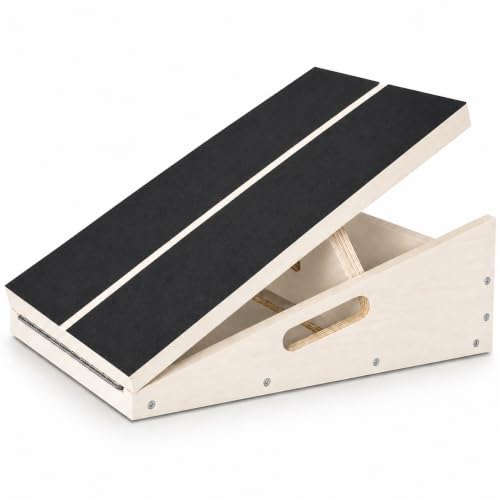
- Five angles from 15° to 35°
- 500-pound capacity wooden platform
- Works for stretching, squats, and ankle mobility
Best For: Progressive stretching and multi-use workouts
Best for Two Feet
ProStretch Double Calf Stretcher

- Stretches one or both feet
- Non-slip dual rocker design
- Includes guide and one-year warranty
Best For: Efficient bilateral calf and foot stretching
Best Portable Wedge
Foldable Foam Calf Stretch Board

- Lightweight, foldable, and easy to clean
- Five adjustable angle positions
- Designed for stretching, squats, and mobility
Best For: Portable calf and ankle mobility routines
Best Customizable Option

- Adjustable heel rest for variable stretch intensity
- Removable toe lift targets toes and plantar fascia
- Slip-resistant platform with included stretching guide
Best For: Customizable calf, foot, and plantar fascia stretching
Best for Deep Stretching

- Stretches and strengthens the foot and lower leg
- Non-skid rocker bottom supports stable positioning
- Targets tight calves, Achilles tendonitis, and shin splints
Best For: Stable foot and lower-leg stretching with strengthening
Best Portable Pick

- Lightweight design travels easily to gyms and offices
- Adjustable fit accommodates most foot sizes
- Supports gradual stretching and rehabilitation
Best For: Portable calf, ankle, and foot stretching
Best Padded Strap
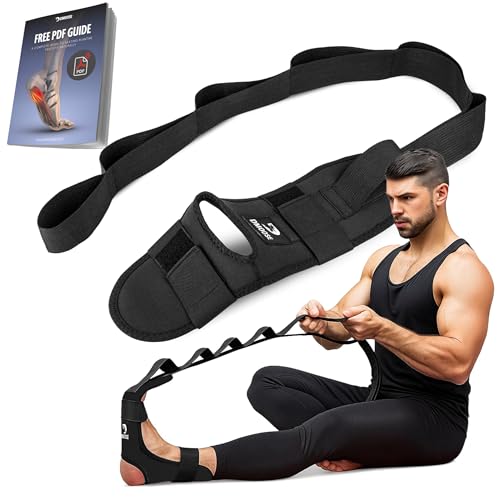
- Padded neoprene foot cradle
- Seven adjustable grip loops
- Includes exercise e-guide
Best For: Runners seeking cushioned, adjustable stretching support
Best Foot Rocker
Curved Calf and Foot Stretcher

- Angled curved stretching surface
- Nonslip design for stability
- Supports up to 300 pounds
Best For: Home users who prefer a stable foot-rocker platform
Best Travel Strap
comness Foot and Calf Stretcher

- Six-loop webbing design
- Two orientations for varied stretches
- Includes carrying pouch and manual
Best For: Runners needing a lightweight, portable stretching strap
Best Overall Rocker – ProStretch Original Calf Stretcher
For runners looking for calf stretchers for runners that focus on the lower leg and foot, the ProStretch Original uses a rocking design to hold the foot in a stretching position. Its slip-resistant rubber pads and compact 14-ounce build make it practical for regular home use.
Best For: Runners managing tight calves, foot discomfort, or a routine involving plantar fascia and Achilles tendon stretching.
Pros:
- Rocker design isolates the lower-leg muscles, tendons, and ligaments.
- Slip-resistant pads help limit movement during stretching.
- Made in the U.S.A. and includes a one-year warranty.
- Stretching guide is available via QR code.
Cons:
- Fits adult shoes up to size 12.
- Recommended weight limit is 250 pounds.
- Requires socks and rubber-soled athletic shoes.
This is a focused foot-rocker option rather than a general-purpose exercise platform. It is a sensible pick when controlled calf and foot stretching is the main priority, provided its fit and usage requirements work for you.
Best Adjustable Board – Wooden Slant Calf Stretch Board
This wooden slant board is one of the more versatile calf stretchers for runners, offering five angle settings from 15 to 35 degrees. The broad platform can support stretching, ankle mobility, calf raises, squats, and warm-up work at home or in the gym.
Best For: Runners who want adjustable stretching intensity and a sturdy platform for mobility and strength exercises.
Pros:
- Five adjustable angles allow gradual progression.
- 500-pound capacity with reinforced wooden supports.
- Textured top and slip-resistant base support secure footing.
- Side handle, exercise guide, and three-year warranty are included.
Cons:
- At 3.85 kg, it is heavier than the foam wedge options.
- Its 16-by-12.5-inch footprint may require dedicated storage space.
- Wood construction is less convenient to wipe clean than foam.
The adjustable angles make this a strong choice for runners who want more control over progression. Its size and weight favor stable home or gym use over highly portable training.
Best for Two Feet – ProStretch Double Calf Stretcher
The ProStretch Double is designed for runners who want to stretch both sides simultaneously, while still allowing one-foot use. As calf stretchers for runners, its dual rocker format is aimed at controlled calf and foot positioning, with non-slip pads for a steadier session.
Best For: Runners who value two-sided stretching or want the flexibility to work one foot at a time.
Pros:
- Dual rocker design supports one- or two-foot stretching.
- Designed to target tight calves, feet, and lower-leg structures.
- Lightweight, non-slip format is suitable for regular use.
- Includes a QR-code stretching guide and one-year warranty.
Cons:
- Fits adult shoes up to size 12.
- Recommended weight limit is 250 pounds.
- Requires rubber-soled athletic shoes during use.
The two-foot configuration can make a regular stretching routine more efficient than a single-foot rocker. Choose it over the single model when simultaneous stretching is important, while keeping the shoe and weight limits in mind.
Best Portable Wedge – Foldable Foam Calf Stretch Board
For runners who need portable calf stretchers for runners, this lightweight EPP foam wedge offers multiple configurations and five listed angle positions, including a flat 180-degree option. Its foldable, wipe-clean design works for stretching, squats, ankle mobility, and physical-therapy-style exercises.
Best For: Runners seeking a lightweight, easy-to-carry wedge for home, office, or travel workouts.
Pros:
- Weighs about one pound and uses a foldable design.
- Five angle settings provide options from easier to more challenging stretches.
- EPP material is waterproof, oil-proof, recyclable, and easy to clean.
- Rated for a 960-pound standing capacity and includes a training poster.
Cons:
- The supplied details describe multiple configurations rather than one broad single platform.
- At roughly 12 by 6 inches, the standing surface is narrower than the wooden board.
- It has a one-year warranty rather than the wooden board’s three-year warranty.
This is the most travel-friendly option in the group and offers useful angle variety without the weight of a wooden board. Its narrower, modular format may appeal most to runners prioritizing portability and storage.
Best Customizable Option – ProStretch Plus
For runners comparing calf stretchers for runners, the ProStretch Plus stands out for its adjustable heel rest, slip-resistant platform, and removable toe lift. It is designed to target tight calves, foot discomfort, and the lower-leg connective chain while allowing you to adjust the stretch intensity.
Best For: Runners who want a customizable calf and foot stretch with added toe and plantar fascia engagement.
Pros:
- Adjustable heel rest helps vary stretch intensity.
- Removable toe lift provides an advanced toe and plantar fascia stretch.
- Slip-resistant platform and included stretching guide support controlled use.
- Lightweight design fits adult shoes up to size 14 and supports up to 300 pounds.
Cons:
- Requires rubber-soled athletic shoes and socks during use.
- Its larger feature set may be more than runners seeking a basic rocker need.
The ProStretch Plus is a strong pick when adjustability matters. Its customizable setup and removable toe lift make it especially versatile for runners addressing both calf tightness and foot-related stretching needs.
Best for Deep Stretching – PowerStep UltraFlexx
The PowerStep UltraFlexx is a practical choice among calf stretchers for runners who want a stable foot rocker for stretching and strengthening. Its non-skid rocker bottom holds the foot in position while working the foot and lower-leg muscles, ligaments, and tendons.
Best For: Runners seeking a stable rocker for deeper foot, calf, and lower-leg stretching.
Pros:
- Designed to stretch and strengthen the foot and lower leg.
- Addresses tight calves, plantar fasciitis, Achilles tendonitis, and shin splints.
- Non-skid rocker bottom helps maintain a stable position.
- Lightweight plastic design is easy to handle.
Cons:
- The supplied notes recommend using it with sturdy athletic shoes.
- It is less customizable than models with adjustable stretch settings.
Choose the UltraFlexx if stability and a deep, guided rocker motion are your priorities. It combines stretching with strengthening, making it a useful option for runners building a consistent lower-leg routine.
Best Portable Pick – Hausse Foot Stretcher
The Hausse Foot Stretcher is a portable option for runners who want to fit calf and foot stretching into daily routines. Its lightweight, non-slip rocker design can be used at home, in an office, or during travel, while adjustable features accommodate most foot sizes.
Best For: Runners who value portability and want a simple rocker for gradual stretching and rehabilitation.
Pros:
- Portable design suits gym, office, home, and travel use.
- Adjustable features fit most men’s and women’s foot sizes.
- Supports foot extension, ankle straightening, flexibility, balance, and posture.
- Can be used for gradual stretching and rehabilitation.
Cons:
- The supplied notes do not specify a weight limit or included stretching guide.
- Its listed sport type is walking rather than running.
The Hausse is a sensible pick when convenience is the deciding factor. Its compact, lightweight profile makes it easier to keep a stretching tool nearby, though runners wanting more documented customization may prefer the ProStretch Plus.
Best Padded Strap – DMoose Foot & Calf Stretcher
For runners comparing calf stretchers for runners, the DMoose model is a flexible strap option designed for controlled foot, calf, hamstring, and lower-leg stretching. Its padded cradle and multiple loops make it useful when you want adjustable tension during mobility work or rehabilitation.
Best For: Runners who want a padded, adjustable strap for flexibility training and lower-leg rehabilitation.
Pros:
- 8 mm neoprene padding is designed to reduce discomfort during stretching.
- Seven hand loops provide multiple grip positions and help maintain tension.
- Dual hook-and-loop straps accommodate different foot sizes.
- Includes a guide with step-by-step rehabilitation exercises.
Cons:
- Requires active use and control rather than providing a hands-free stretch.
- The strap design may offer less fixed positioning than a foot rocker.
At 52 inches long and made from nylon and neoprene, this lightweight strap packs easily for home, gym, or travel use. It is a practical pick if adjustability and cushioning matter more to you than a rigid stretching platform.
Best Foot Rocker – Curved Calf and Foot Stretcher
This foot rocker is a straightforward choice among calf stretchers for runners who prefer a stable platform over a strap. Its angled, curved surface positions the foot for a deeper calf, ankle, and foot stretch while the nonslip surface helps keep the device steady.
Best For: Runners who want a structured, hands-free-style foot rocker for home mobility sessions.
Pros:
- Curved ergonomic surface contours to the foot.
- Angled construction promotes consistent foot positioning.
- Nonslip surface supports stability during stretching.
- Supports up to 300 pounds and fits shoe sizes up to US 12.5.
Cons:
- Its 11.5-by-11.5-by-6-inch footprint is less portable than a strap.
- Plastic construction provides less padding than a cushioned strap model.
The rocker weighs 0.51 kg and includes a 180-day warranty. Choose it if you value repeatable positioning and a stable base; choose a strap instead if you need something compact for travel.
Best Travel Strap – comness Foot and Calf Stretcher
The comness strap is a portable option for runners evaluating calf stretchers for runners, with a looped webbing design that supports different stretching positions. It can target the foot, calf, hamstring, thigh, and lower back, making it useful for warmups, cooldowns, and general flexibility work.
Best For: Athletes and runners who want a lightweight stretching strap for home, gym, office, or travel.
Pros:
- Six-loop webbing offers multiple hand positions.
- Can be used in two orientations for different stretches.
- Portable design includes a carrying pouch.
- Instruction manual supports easier setup and use.
Cons:
- It has less built-in cushioning than padded strap models.
- As a manual strap, it requires the user to control positioning and tension.
Made from polyester and weighing 8.48 ounces, the red comness strap is easy to carry between training locations. Its main advantage is versatility and portability, especially for runners who want one compact tool for several lower-body stretches.
How We Picked the Best Calf Stretchers for Runners
We focused on features that matter during real-world use: how easily each device controls the stretch, how securely it supports the foot, and whether it suits pre-run mobility, post-run recovery, or longer therapeutic sessions. We also considered adjustability, weight capacity, portability, padding, surface grip, and the learning curve for new users.
Because runners have different flexibility levels and injury histories, the selection includes both compact rockers and larger incline-style boards. Product claims about pain relief should be viewed cautiously; a stretcher can support mobility work but does not diagnose or treat an injury.
Quick Comparison
| Design | Best for | Main advantage | Potential limitation |
|---|---|---|---|
| Single foot rocker | Daily mobility and recovery | Simple, compact, and quick to use | Usually stretches one foot at a time |
| Double calf stretcher | Efficient bilateral stretching | Works both calves together | May provide less individualized control |
| Adjustable slant board | Progressive stretching and strength work | Multiple angle settings | Larger and less portable |
| Foot stretcher with strap | Seated or targeted stretching | Fine control over tension and positioning | Requires more active setup |
| Wedge block | Training, mobility, and balance exercises | Versatile platform for lower-body work | Can feel demanding for very tight calves |
Key Buying Factors for Calf Stretchers for Runners
Adjustability and Stretch Control
Beginners often benefit from a gentle fixed rocker or a low incline. If your mobility changes with training, an adjustable board or strap lets you increase tension gradually. Avoid choosing the steepest setting simply because it is available; a controlled, pain-free stretch is more useful than excessive range.
Stability and Traction
Look for a broad base, nonslip contact points, and a foot platform that remains steady on hard floors. A stable stretcher helps you maintain alignment and reduces the temptation to compensate through the knees, hips, or lower back.
Comfort and Foot Fit
Padding, a contoured rocker, or an adjustable strap can make longer sessions more comfortable. Check the usable foot width and strap length, especially if you wear larger shoes or prefer stretching barefoot.
Portability and Storage
A compact rocker is convenient for a desk, gym bag, or travel. Slant boards and wedges usually offer a more substantial platform but take up more space. Consider where you will actually use the product, since convenience strongly affects consistency.
Capacity and Construction
For boards and wedges, verify the stated weight capacity and inspect the surface material, hinges, adjustment points, and base grip. Choose a model that feels solid under your full body weight rather than one that flexes or shifts during use.
Who Should Buy Which Calf Stretchers for Runners?
Choose a Foot Rocker for Simple Daily Recovery
A compact rocker is a practical choice if you want a fast calf and plantar fascia stretch after runs or while working at home. It is typically the easiest format to learn.
Choose an Adjustable Board for Progression
Runners who want to vary intensity, train ankle mobility, or use one device for multiple lower-body exercises should consider an adjustable slant board or wedge.
Choose a Strap for Targeted Control
A strap-style stretcher suits seated routines and users who need to control the angle or tension independently. It can also be useful when a standing board feels too aggressive.
Choose a Double Stretcher for Efficiency
If you regularly stretch both legs at the same time and have similar flexibility on each side, a double model can shorten your routine. For noticeable left-right differences, separate or adjustable control may be preferable.
Whichever format you select, begin with short, comfortable sessions and increase duration or angle gradually. Stop if stretching causes sharp pain, numbness, swelling, or worsening symptoms, and consult a qualified clinician for persistent Achilles, heel, or calf problems.