Training indoors is easier to structure when your equipment delivers dependable power data. The best bike trainers with power meter capability help you track effort, follow workout targets, and connect with popular cycling apps.
This roundup combines direct-drive smart trainers with pedal- and crank-based power meters, so you can choose the setup that fits your bike, training goals, space, and budget.
Best 10 Bike Trainers with Power Meter Picks for 2026
Best Self-Powered Option

- Claimed ±1% accuracy without calibration
- Self-powered or plug-in operation
- 2,500W capacity and 25% gradient simulation
Best For: High-intensity indoor training and realistic virtual routes
Best Connected Trainer

- Smooth, road-like magnetic resistance
- Integrated Wi-Fi for pairing and updates
- Includes an 11-speed cassette
Best For: Stable, convenient indoor training setup
Best Value Power Accuracy

- Claimed ±2% power-meter accuracy
- 2,000W capacity and 18% slope simulation
- Cassette not included
Best For: Connected road and mountain-bike training
Best Pedal-Based Solution

- Claimed ±1% left-pedal power accuracy
- Bluetooth and ANT+ connectivity
- Includes cadence and advanced ride metrics
Best For: Road cyclists adding power data to an existing setup
Best Smart Trainer for Self-Powered Riding

- ±1% power accuracy with up to 2,200W peak power
- 19% gradient simulation and dual BLE/ANT+ connectivity
- Self-powered or plug-in operation; cassette sold separately
Best For: Connected indoor training with realistic terrain simulation
Best Add-On Power Meter for Easton Cranks

- Dual-sided power and cadence measurement with ±1% accuracy
- BLE 5.0 and ANT+ support for trainers, computers, and apps
- Up to 300 hours of battery life with IPX7 water resistance
Best For: Easton 110 BCD 4-bolt crankset owners
Best Premium Wi-Fi Smart Trainer
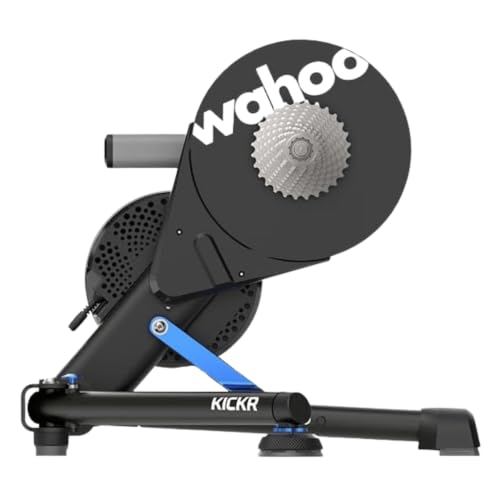
- More than 2,200W resistance with ±1% power accuracy
- Wi-Fi connectivity and automatic calibration
- High-inertia flywheel and AXIS feet for natural ride feel
Best For: Serious riders wanting integrated power measurement and stable connectivity
Best Crankset Upgrade
GEOID PM500 Power Meter Crankset
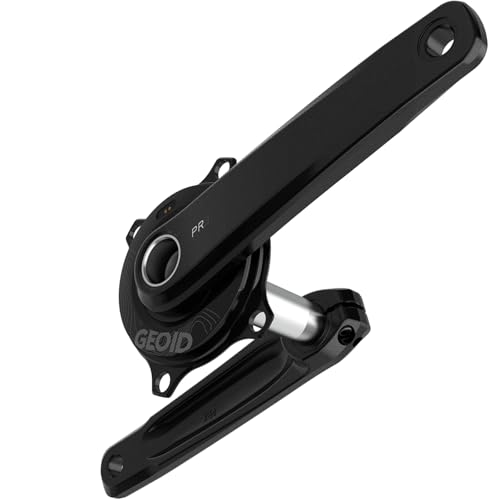
- ±1.5% power accuracy with four training metrics
- Up to 300 hours of battery life
- Bluetooth and ANT+ support with IPX7 protection
Best For: Riders wanting detailed power data from a crank-based system
Best Easy-Install Option
Magene P715 Power Meter Pedals

- ±1% power accuracy
- One-minute installation for easy bike switching
- 120-hour battery with Bluetooth and ANT+
Best For: Cyclists wanting portable, clipless pedal-based power measurement
Best for SPD-SL Riders
Magene P715 Dual-Sensing Pedals
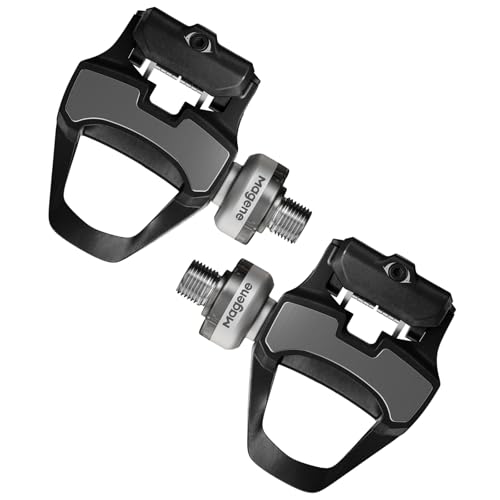
- Dual-sided power measurement at ±1% accuracy
- Compatible with SPD-SL cleats
- 120-hour battery and one-minute installation
Best For: Road cyclists seeking SPD-SL-compatible dual-sided power data
Best Self-Powered Option – ThinkRider XXPRO
If you want bike trainers with power meter functionality and broad simulation capability, the ThinkRider XXPRO is a strong option. Its direct motor drive provides claimed ±1% data accuracy without calibration, while self-power generation lets you ride without connecting a power adapter.
Best For: Riders seeking high power capacity, downhill simulation, and flexible ANT+, Bluetooth, GPS, and Zwift connectivity.
Pros:
- Direct-drive motor with claimed ±1% accuracy and no calibration required
- Self-powered operation can eliminate the need for a power adapter
- Supports up to 2,500W and simulates gradients up to 25%
- Includes uphill and downhill simulation for more realistic virtual routes
Cons:
- The supplied notes do not specify cassette compatibility or included cassette components
- Its high-performance feature set may be more than casual riders need
The XXPRO stands out for combining a built-in power measurement claim with unusually strong gradient and wattage specifications. It is particularly appealing for structured indoor training and immersive route simulation.
Best Connected Trainer – Wahoo KICKR CORE 2
The Wahoo KICKR CORE 2 is a practical choice among bike trainers with power meter features for riders who prioritize a smooth ride and simple connectivity. It uses magnetic resistance, includes an 11-speed cassette, and adds integrated Wi-Fi for faster pairing and automatic updates.
Best For: Riders who want a stable direct-drive training platform with road-like resistance and convenient connected setup.
Pros:
- Designed to provide smooth resistance and a road-like ride feel
- Integrated Wi-Fi supports faster pairing and automatic updates
- Includes an 11-speed cassette, AC adapter, and cassette spacer
- Supports a stated load capacity of up to 250 pounds
Cons:
- The supplied notes do not state a specific power-accuracy percentage or maximum wattage
- The listed configuration is specifically an 11-speed cassette model
With its included cassette and integrated Wi-Fi, the KICKR CORE 2 focuses on reducing setup friction. Buyers who require a precise published power-meter accuracy figure should verify the current specifications before purchasing.
Best Value Power Accuracy – ThinkRider X2Max
The ThinkRider X2Max offers a straightforward entry into bike trainers with power meter capability. Its DEPT dynamic electromagnetic torque power meter is rated at ±2% error, while ANT+ and Bluetooth support enables compatibility with Zwift and other mainstream cycling software.
Best For: Road and mountain-bike riders wanting electromagnetic resistance, virtual gradient simulation, and a stated power-error figure without an included cassette.
Pros:
- DEPT power meter provides claimed ±2% power accuracy
- Supports up to 2,000W and simulates gradients up to 18%
- Works with ANT+, Bluetooth, and software such as Zwift
- Designed for quiet operation, with noise listed at about 58dB at 30 km/h
Cons:
- Cassette is not included
- The supplied notes list a narrower gradient range than the XXPRO
- Its stated accuracy is ±2%, rather than ±1%
The X2Max balances useful power measurement, software connectivity, and virtual resistance in a stable I-beam frame. Factor in the additional cassette purchase when comparing its overall setup cost.
Best Pedal-Based Solution – Favero Assioma UNO
Favero Assioma Uno Power Meter Pedal | Why We Like The Favero Assioma UNO Pedal
Check Price On AmazonThe Favero Assioma UNO takes a different approach to bike trainers with power meter setups: it measures power through a left pedal sensor rather than through the trainer. Bluetooth and ANT+ connectivity make it suitable for compatible cycling devices, and the pedal also includes cadence sensing and advanced riding metrics.
Best For: Road cyclists who want a pedal-based power sensor that can be used with compatible indoor and outdoor training equipment.
Pros:
- Left-pedal power sensor provides claimed ±1% accuracy
- Supports both Bluetooth and ANT+ connectivity
- Includes cadence sensing and a gyroscope
- Offers IAV Power Phase and IAV Rider Position metrics
Cons:
- It is a power-meter pedal, not a complete resistance trainer
- The supplied product is a single-sensor UNO configuration
- Listed for road bikes and uses a 9/16-inch thread
For riders who already own an indoor trainer, the Assioma UNO can add pedal-based power data without replacing the trainer. Confirm pedal compatibility and whether left-side measurement suits your training requirements.
Best Smart Trainer for Self-Powered Riding – CYCPLUS R200
For cyclists comparing bike trainers with power meter functionality, the CYCPLUS R200 combines app connectivity, simulated gradients, and power accuracy rated to within ±1%. Its brushless motor supports up to 2,200W peak power and 19% incline simulation, while the trainer can operate in self-powered or plug-in mode. Note that the cassette is not included.
Best For: Riders who want a connected direct-drive trainer with uphill and downhill simulation, dual BLE/ANT+ support, and flexible power options.
Pros:
- Power accuracy is maintained at ±1%.
- Supports Zwift, MyWhoosh, and the CYCPLUS app through BLE and ANT+.
- Simulates gradients up to 19% and includes a cooling fan for extended sessions.
- Includes quick-release and thru-axle adapters.
Cons:
- Cassette is not included.
- Virtual shifting requires the separately sold CYCPLUS BC2 Shifter.
- Virtual shifting is not compatible with ERG mode.
The R200 is a versatile option if realistic terrain simulation and strong app compatibility matter more than having every accessory included. Confirm your cassette and shifting setup before buying.
Best Add-On Power Meter for Easton Cranks – CooSpo S10 Crank Power Meter
The CooSpo S10 is a crank-based power meter for riders who already use a compatible Easton 110 BCD 4-bolt crankset. For cyclists building bike trainers with power meter data, it measures total and left/right power plus cadence with claimed ±1% accuracy, sending readings over Bluetooth 5.0 or ANT+ to computers and training apps.
Best For: Easton crankset users who want dual-sided power and cadence data for indoor trainer sessions as well as outdoor riding.
Pros:
- Measures total power, left/right power, cadence, pedal smoothness, and torque effectiveness.
- Supports simultaneous BLE and ANT+ connections with devices and apps such as Garmin, Wahoo, and Zwift.
- Offers claimed ±1% accuracy and up to 300 hours of battery life.
- IPX7 water resistance suits all-weather riding.
Cons:
- Compatibility is limited to Easton 110 BCD 4-bolt crankset systems.
- It is an add-on crank power meter rather than a complete indoor trainer.
- Warranty coverage is listed as 12 months.
The S10 makes sense when your trainer does not provide power data or when you want consistent power measurement across indoor and outdoor rides. Verify the crank and chainring interface before ordering.
Best Premium Wi-Fi Smart Trainer – Wahoo KICKR V6
The Wahoo KICKR V6 is a premium smart trainer for riders who want integrated power measurement without relying on a separate crank meter. It delivers more than 2,200W of resistance with claimed ±1% accuracy, uses Wi-Fi for a stable data connection, and automatically calibrates for continued precision.
Best For: Serious indoor cyclists who prioritize accurate power data, reliable connectivity, and a natural ride feel.
Pros:
- Provides more than 2,200W of resistance with ±1% power accuracy.
- Automatic calibration reduces the need for manual power-meter calibration.
- Built-in 2.4 GHz Wi-Fi sends ride data to compatible computers, tablets, and smartphones.
- High-inertia flywheel and AXIS feet are designed to create a realistic outdoor-style ride feel.
Cons:
- At 22 kg, it is relatively heavy to move or store.
- It carries a higher-end feature set than casual riders may need.
- Warranty coverage is listed as one year.
The KICKR V6 is a strong choice when accurate, calibration-free power data and dependable connectivity are central to your training routine. Its substantial construction favors a dedicated indoor setup over frequent transport.
Best Crankset Upgrade – GEOID PM500 Power Meter Crankset
For riders seeking bike trainers with power meter compatibility, the GEOID PM500 provides a crank-based power measurement option with Bluetooth and ANT+ connectivity. It tracks power, cadence, left-right balance, and pedaling smoothness, making it suitable for structured indoor or outdoor training.
Best For: Cyclists who want detailed power data, long battery life, and compatibility with devices and platforms such as Garmin, Wahoo, Zwift, and TrainingPeaks.
Pros:
- ±1.5% power accuracy with temperature compensation.
- Up to 300 hours of battery life and magnetic charging.
- Tracks four useful training metrics, including left-right balance and pedaling smoothness.
- IPX7 waterproofing and dual Bluetooth/ANT+ connectivity.
Cons:
- Requires crankset installation rather than a simple pedal swap.
- Uses a 110BCD four-bolt chainring standard, so compatibility should be checked before purchase.
- The listed 680g crankset weight may not suit riders prioritizing the lightest setup.
The PM500 is a feature-rich option for riders building a training-focused setup around a compatible crankset. Its long battery life and broad connectivity are especially useful for frequent indoor trainer sessions.
Best Easy-Install Option – Magene P715 Power Meter Pedals
The Magene P715 pedals are a practical choice for cyclists comparing bike trainers with power meter setups, particularly when quick installation matters. The pair measures power with ±1% accuracy and connects to compatible cycling computers, apps, and trainers through Bluetooth or ANT+.
Best For: Riders who frequently move power measurement between bikes or want a fast, clipless pedal-based installation.
Pros:
- ±1% power accuracy for consistent training data.
- One-minute installation makes switching bikes straightforward.
- Up to 120 hours of battery life.
- Supports both Bluetooth and ANT+ connectivity and is IPX7 waterproof.
Cons:
- The clipless pedal design may not suit riders using flat pedals.
- At 157g per pedal, the pair is not positioned as an ultralight option.
- Compatibility with a bike’s cleat and pedal system should be confirmed before buying.
Because the power meter is built into the pedals, the P715 offers a flexible way to add power data without replacing a crankset. Its dual-protocol connectivity also makes it well suited to indoor training equipment and cycling apps.
Best for SPD-SL Riders – Magene P715 Dual-Sensing Pedals
For riders using SPD-SL equipment, these Magene P715 dual-sensing pedals offer a convenient way to add power data to bike trainers with power meter workflows. Independent left- and right-leg measurement, ±1% accuracy, and Bluetooth/ANT+ support provide useful data for indoor sessions and outdoor rides.
Best For: Road cyclists who use SPD-SL cleats and want dual-sided power measurement without changing their existing cleat system.
Pros:
- Independently measures left and right leg power with ±1% accuracy.
- SPD-SL compatible, allowing riders to retain their existing cleats.
- Up to 120 hours of battery life.
- One-minute installation with Bluetooth and ANT+ connectivity.
Cons:
- Designed for SPD-SL systems, limiting compatibility with other pedal standards.
- Clipless pedals may not be appropriate for casual or flat-pedal riders.
- The 318g pair weight may matter to weight-conscious cyclists.
This version stands out when left-right analysis and SPD-SL compatibility are priorities. It combines quick installation with the connectivity needed for cycling computers, applications, and compatible trainers.
How We Picked the Best Bike Trainers with Power Meter
We selected products based on power-measurement usefulness, connectivity, compatibility, resistance performance, installation requirements, and everyday practicality. The list includes direct-drive smart trainers that measure or control resistance indoors, along with pedal and crank power meters that can add watt data to an existing trainer or outdoor bike.
We also considered stated accuracy, maximum simulated gradient, power capacity, battery life, transmission standards, noise claims, cassette or drivetrain requirements, and whether a product supports both ANT+ and Bluetooth. Product specifications can vary by firmware, bike setup, and measurement conditions, so treat advertised accuracy as a reference rather than a guarantee of identical readings across systems.
Quick Comparison
| Type | Best For | What to Check |
|---|---|---|
| Direct-drive smart trainer | Structured indoor workouts and virtual riding | Freehub, cassette, axle standards, app support, and power reporting |
| Power-meter pedals | Moving power measurement between bikes | Cleat system, pedal clearance, battery life, and single- versus dual-sided data |
| Crank-based power meter | Stable bike-mounted measurement | Crank length, chainring standard, crank compatibility, and installation space |
Key Buying Factors for Bike Trainers with Power Meter
Power Measurement and Training Accuracy
Look for a clearly stated accuracy rating and a measurement method that suits your training. A trainer may measure power at the drivetrain, while pedals measure closer to the rider and crank meters measure at the crank. Differences between devices are normal, so consistent use and regular calibration often matter more than chasing the smallest specification advantage.
Smart Connectivity and App Support
ANT+ and Bluetooth make it easier to connect to cycling computers, phones, tablets, and platforms such as Zwift or TrainerRoad. Check whether the trainer supports controllable resistance, cadence transmission, virtual shifting, and simultaneous connections. A self-powered model may be convenient, but plug-in operation can be preferable for long sessions or higher resistance levels.
Bike, Cassette, and Pedal Compatibility
Direct-drive trainers generally require removing the rear wheel and fitting a compatible cassette or freehub body. Confirm speed count, cassette range, axle type, and derailleur compatibility before buying. For power pedals, verify the cleat standard and pedal-thread compatibility. Crank meters require careful checks of crank length, bolt pattern, chainring spacing, and frame clearance.
Resistance, Noise, and Practical Setup
Higher wattage and gradient simulation can benefit sprinting, climbing workouts, and heavier riders, but they are not the only priorities. Consider noise, footprint, transport, calibration, firmware updates, and storage. A slightly less powerful trainer may be the better choice if it is easier to install and use consistently.
Who Should Buy Which Bike Trainers with Power Meter?
- Choose a direct-drive smart trainer if you want automatic resistance control, realistic virtual climbs, and a dedicated indoor setup.
- Choose power-meter pedals if you use more than one bike or want to carry consistent power measurement outdoors and indoors.
- Choose a crank-based power meter if you prefer a discreet, bike-mounted sensor and already own a compatible trainer.
- Choose a higher-output trainer if you regularly perform sprint intervals, steep simulated climbs, or high-resistance workouts.
- Choose the simplest compatible option if reliable setup, low maintenance, and repeatable training matter more than maximum specifications.
Before ordering, confirm current firmware, included accessories, regional cassette requirements, and compatibility with your exact bike. The best choice is the one that delivers dependable data and fits naturally into the way you train.