The right indoor trainer can make triathlon bike training more consistent, measurable, and convenient—whether you are building endurance, sharpening intervals, or riding through bad weather.
We selected 10 bike trainers for triathlons across smart direct-drive, wheel-on, and travel-friendly designs to help you match resistance control, connectivity, noise, and budget to your training plan.
Best 10 Bike Trainers for Triathlons Picks for 2026
High-Power Pick
ThinkRider XXPRO Smart Trainer
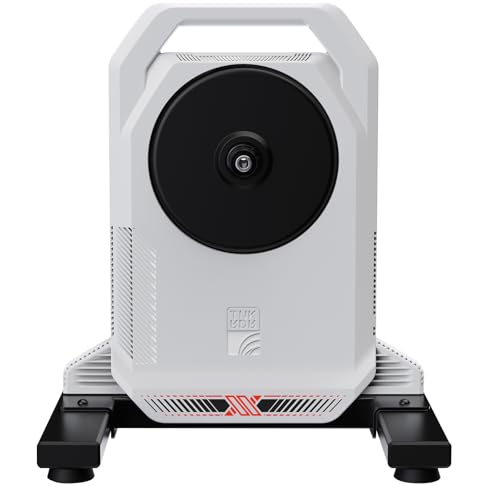
- 2,500 watts and 25% gradient simulation
- Direct drive with claimed ±1% accuracy
- ANT+, Bluetooth, GPS, PC, and Zwift support
Best For: Powerful virtual hill and interval training
Premium Ride-Feel Pick
Garmin TacX Neo 2T Smart Trainer

- ANT+ and Bluetooth wireless connectivity
- Foldable design with broad axle adapters
- 2,200-watt listed load capacity
Best For: Connected indoor training across multiple devices
Travel Warm-Up Pick
Feedback Sports Omnium Portable Trainer

- Folding 14-pound design with travel bag
- Fits 16-inch to 29-inch wheels
- Zero-resistance setup for cadence work
Best For: Race-day warm-ups and portable recovery rides
Stable Connectivity Pick
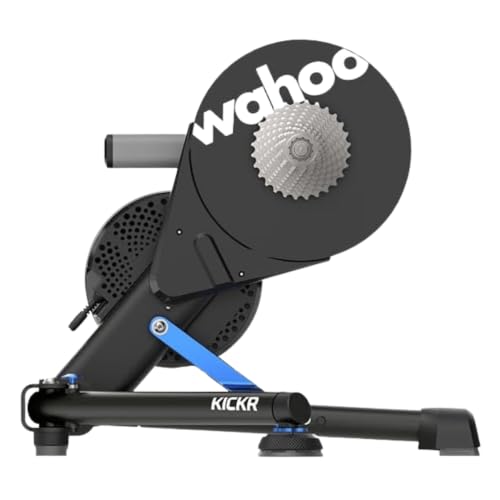
- 2,200-plus watts with claimed ±1% accuracy
- 2.4 GHz Wi-Fi for stable data transfer
- High-inertia flywheel and AXIS feet
Best For: Connected, calibration-free power training
Best Smart Value

- ANT+ and Bluetooth connectivity
- Up to 2,000W with 18% incline simulation
- Quiet operation around 58 dB at 30 km/h
Best For: Triathletes wanting connected indoor workouts and realistic climbs
Best Premium Realism

- Motion plates add a realistic riding feel
- Simulates inclines up to 25% and varied road surfaces
- Pre-installed 11-speed cassette and no calibration required
Best For: Serious athletes seeking immersive, app-connected training
Best Simple Budget Pick

- Progressive fluid resistance for indoor conditioning
- Foldable stainless-steel frame with carrying bag
- Fits most 26- to 29-inch and 700c wheels
Best For: Budget-minded triathletes wanting portable, uncomplicated training
Premium Direct-Drive Pick
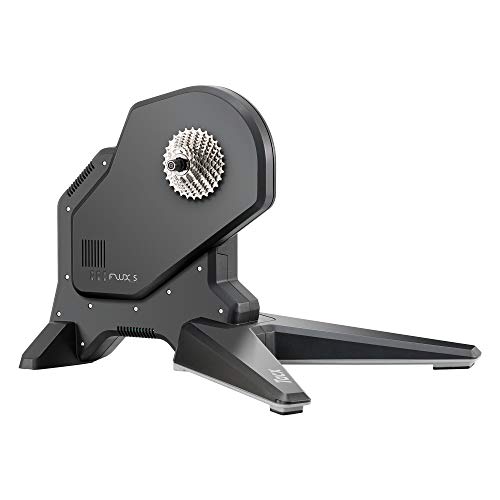
- Power accuracy within 3%
- Quiet direct-drive design
- Up to 10% simulated incline
Best For: Structured triathlon training and powerful indoor efforts
Convenient Smart Wheel-On Pick

- No rear-wheel removal required
- ANT+ FE-C and Bluetooth connectivity
- Zwift certified with +/- 5% accuracy
Best For: Accessible smart training with quick bike setup
Simple Budget Training Pick

- Progressive fluid resistance
- Foldable wheel-on frame
- Works with apps via separate sensor
Best For: Steady indoor riding and compact storage
High-Power Pick – ThinkRider XXPRO Smart Trainer
For athletes seeking bike trainers for triathlons with demanding interval and hill sessions, the ThinkRider XXPRO combines direct motor drive, up to 2,500 watts of resistance, and simulated gradients up to 25%. Its self-powering capability can also simplify indoor setup.
Best For: Triathletes who want powerful, app-compatible training with uphill and downhill simulation.
Pros:
- Direct motor drive offers claimed ±1% data accuracy without calibration.
- Supports ANT+, Bluetooth, bike GPS, PC, and Zwift connectivity.
- Simulates uphill and downhill gradients and can generate its own electricity.
- Provides up to 2,500 watts and a 25% simulated gradient.
Cons:
- Its iron construction and roughly 19.49-by-18.9-by-20.87-inch dimensions may be less convenient to move.
- Compatibility details center on road bikes, so other bike types should be checked before purchase.
The XXPRO is a feature-rich option for structured triathlon training, especially when virtual courses and steep resistance matter more than portability.
Premium Ride-Feel Pick – Garmin TacX Neo 2T Smart Trainer
The Garmin TacX Neo 2T is a strong choice among bike trainers for triathlons when wireless connectivity and a substantial resistance capacity are priorities. It uses magnetic resistance, supports ANT+ and Bluetooth, and includes adapters for several common axle standards.
Best For: Triathletes who want a foldable smart trainer with broad device and axle compatibility.
Pros:
- Wireless ANT+ and Bluetooth connectivity works with iOS, Android, macOS, and Windows.
- Includes a front wheel block, power cable, quick-release skewer, thru-axle skewer, and multiple axle adapters.
- Foldable design can make storage more manageable.
- Listed with a 2,200-watt load capacity.
Cons:
- At 47.4 pounds, it is not a lightweight travel-focused trainer.
- The included one-month Tacx Premium software period may require a later subscription for continued access.
With its platform support and included fit hardware, the NEO 2T suits athletes who want a ready-to-connect indoor setup and do not need an ultralight trainer.
Travel Warm-Up Pick – Feedback Sports Omnium Portable Trainer
For triathletes who need bike trainers for triathlons that can travel to races, the Feedback Sports Omnium Zero-Drive emphasizes portability and quick warm-ups. Its folding aluminum platform, included travel bag, and fork-mount design support compact transport.
Best For: Race-day warm-ups, recovery rides, and high-speed cadence work away from home.
Pros:
- Folds compactly and includes a heavy-duty travel bag.
- Fits 16-inch to 29-inch wheels and accommodates QR and selected thru-axle setups with adapters.
- Zero-resistance design supports high-speed spinning and track-style workouts.
- Lightweight 14-pound aluminum construction has a three-year warranty.
Cons:
- The resistance curve tops out at approximately 150 watts, limiting hard power sessions.
- Its fork-mount format does not provide the same smart resistance features as connected direct-drive trainers.
The Omnium is best viewed as a portable cadence and warm-up tool rather than a full replacement for a high-resistance smart trainer.
Stable Connectivity Pick – Wahoo KICKR V6 Smart Trainer
The Wahoo KICKR V6 is a practical option among bike trainers for triathlons when stable data transmission and a realistic indoor feel are important. It adds 2.4 GHz Wi-Fi connectivity to ANT+ and Bluetooth-style training ecosystems, while its high-inertia flywheel and AXIS feet are designed to mimic outdoor movement.
Best For: Triathletes who want calibration-free power training with robust Wi-Fi connectivity.
Pros:
- Offers more than 2,200 watts of resistance with claimed ±1% accuracy.
- Wi-Fi can transfer ride data to a computer, tablet, or smartphone.
- High-inertia flywheel and AXIS feet are designed for a more natural ride feel.
- Automatic calibration continually supports accurate power measurement.
Cons:
- Its 22-kilogram weight makes it less convenient to transport.
- The listed dimensions are unusually large, so available floor space should be verified.
- The one-year manufacturer warranty is shorter than the Omnium’s listed warranty.
The KICKR V6 is a compelling choice for structured indoor training blocks, particularly for athletes who value dependable connectivity and consistent power data.
Best Smart Value – ThinkRider X2Max
For triathletes seeking bike trainers for triathlons, the ThinkRider X2Max combines smart connectivity, high power capacity, and realistic incline simulation. Its ANT+ and Bluetooth support works with popular training platforms such as Zwift, while the electromagnetic resistance system supports structured indoor sessions.
Best For: Triathletes who want a quiet, app-compatible direct-drive-style trainer with strong climbing simulation.
Pros:
- Supports ANT+ and Bluetooth connectivity with mainstream cycling software.
- Provides up to 2,000 watts of power and simulates gradients up to 18%.
- Reports approximately 58 dB of noise at 30 km/h and uses a stable I-beam structure.
Cons:
- Cassette is not included.
- Power measurement has a stated accuracy of ±2%, rather than the tighter accuracy of some premium trainers.
The X2Max is a practical choice for indoor triathlon preparation when software compatibility, quiet operation, and climbing-focused workouts matter. Confirm cassette requirements before setup.
Best Premium Realism – Garmin TacX NEO 3M
Garmin TacX NEO 3M Smart Trainer, Multidirectional Movement, Realistic Ride Fee
Check Price On AmazonThe Garmin TacX NEO 3M is built for triathletes who want an immersive indoor setup. Its integrated motion plates, virtual flywheel, and incline simulation create a more road-like feel, while compatibility with Zwift, TrainerRoad, and Tacx Training supports varied workouts.
Best For: Serious triathletes prioritizing realistic movement, steep-climb simulation, and detailed training-app integration.
Pros:
- Integrated motion plates can be toggled on or off for a more natural riding feel.
- Simulates road surfaces, inclines up to 25%, and descents when paired with compatible apps.
- Supports up to 2,200 watts, measures power, speed, and cadence, and includes a pre-installed 11-speed cassette.
Cons:
- At 52 pounds, it is relatively heavy to move.
- Some premium training features require compatible apps or subscriptions.
With no calibration required and a cassette included, the NEO 3M offers a streamlined setup for demanding indoor sessions. Its motion and surface simulation make it especially appealing for athletes who value realism over portability.
Best Simple Budget Pick – Alpcour Fluid Trainer Stand
The Alpcour Fluid Trainer Stand offers a straightforward way to add indoor riding to a triathlon training plan. Its fluid resistance increases as you pedal faster, and the foldable stainless-steel frame is designed for storage and travel without relying on smart-device connectivity.
Best For: Triathletes who want an affordable, portable trainer for steady rides, intervals, and basic off-season conditioning.
Pros:
- Fluid resistance provides progressive load as cadence increases.
- Foldable frame, carrying bag, front-wheel riser, and anti-slip pads support convenient use and storage.
- Compatible with most 26- to 29-inch and 700c wheels and includes a two-year warranty.
Cons:
- It is not a smart trainer and does not list ANT+ or Bluetooth connectivity.
- Resistance is controlled by the wheel-driven fluid unit rather than electronically simulated gradients.
- Rear-tire contact may be less representative of road feel than a trainer with a virtual flywheel.
The Alpcour is a sensible option when simplicity, portability, and progressive resistance matter most. It suits foundational endurance work and indoor conditioning, though athletes wanting app-controlled power targets should consider a smart model instead.
Premium Direct-Drive Pick – Tacx Flux S Smart Trainer
For triathletes seeking bike trainers for triathlons, the Tacx Flux S offers a stable direct-drive setup, power measurement within 3% accuracy, and app connectivity for structured indoor workouts. Its electromagnetic resistance supports simulated inclines and hard standing efforts.
Best For: Triathletes who want accurate, quiet, app-connected training with a sturdy direct-drive frame.
Pros:
- Measures power within 3% accuracy.
- Next-to-silent direct-drive operation helps limit household noise.
- Works with Zwift, TacX Training, and other popular third-party apps.
- Simulates inclines up to 10% and offers up to 1,500 watts of sprint resistance.
Cons:
- At 50 pounds, it is relatively heavy to move.
- Its direct-drive design requires removing the bike’s rear wheel.
The Flux S is a strong choice when workout precision, realistic resistance, and a solid platform for standing efforts matter more than portability.
Convenient Smart Wheel-On Pick – Saris M2 Smart Trainer
Saris M2 Smart Indoor Bike Trainer, Compatible with Zwift App, Black, Made in the USA
Check Price On AmazonThe Saris M2 is a practical option among bike trainers for triathlons when you want smart resistance without removing the rear wheel. Its electromagnetic system provides consistent workouts and connects to training platforms through ANT+ FE-C and Bluetooth.
Best For: Triathletes who prioritize simple setup, broad app connectivity, and measured wheel-on resistance.
Pros:
- Wheel-on design avoids rear-wheel removal or bike disassembly.
- Electromagnetic resistance delivers controlled, consistent workouts.
- Supports ANT+ FE-C and Bluetooth connections and is Zwift certified.
- Includes a steel quick-release skewer for common road and mountain bike frames.
Cons:
- Its stated power accuracy is within +/- 5%, less precise than the Tacx Flux S.
- Noise is listed at 69 decibels at 20 mph.
- Wheel-on trainers can require suitable tire and roller setup for indoor use.
The M2 balances convenience and smart-training features well, making it useful for athletes who switch between indoor sessions and regular outdoor riding.
Simple Budget Training Pick – Saris Fluid2 Indoor Trainer
The Saris Fluid2 is a straightforward choice among bike trainers for triathlons, using fluid resistance to create a progressive, road-like feel. Its foldable wheel-on frame is easy to set up and works with platforms such as Zwift and Rouvy when paired with a compatible speed or cadence sensor.
Best For: Triathletes who want a simple, compact wheel-on trainer for steady indoor riding.
Pros:
- Fluid resistance increases progressively as you pedal harder.
- Precision-balanced flywheel supports smooth, quiet operation.
- Foldable frame simplifies setup and storage.
- Compatible with Zwift and Rouvy when used with a speed or cadence sensor.
Cons:
- A speed or cadence sensor is sold separately for app compatibility.
- It does not provide the listed built-in smart connectivity of the Saris M2.
- Wheel-on installation is less direct than a direct-drive trainer.
The Fluid2 is best suited to athletes who value dependable resistance and easy storage over integrated smart controls and direct power measurement.
How We Picked the Best Bike Trainers for Triathlons
We evaluated these trainers by the features that matter most during triathlon preparation: resistance accuracy, maximum simulated gradient and power capacity, connectivity, setup, stability, noise, portability, and compatibility with common road and mountain bikes. Smart models were prioritized for structured workouts and virtual riding, while wheel-on and compact options were included for athletes who value lower cost, simple storage, or travel readiness.
Compatibility is especially important. Direct-drive trainers require a compatible cassette or freehub setup, while wheel-on trainers generally work with the bike’s existing rear wheel but may need a trainer tire for best results.
Quick Comparison
| Trainer type | Best for | Main advantage | Typical trade-off |
|---|---|---|---|
| Premium smart direct-drive | Serious indoor training | Accurate control, high resistance, immersive apps | Higher price and more setup |
| Midrange smart direct-drive | Regular structured workouts | Strong value and reliable connectivity | Fewer premium movement features |
| Wheel-on smart or fluid | Budget-conscious cyclists | Uses the existing bike and costs less | More tire noise and possible power variation |
| Portable or compact trainer | Travel and occasional use | Easy transport and storage | Less realistic road feel or automation |
Key Buying Factors for Bike Trainers for Triathlons
Resistance and Workout Control
Look for electronically controlled resistance if you plan to follow ERG workouts, threshold intervals, or simulated climbs. A higher power rating and gradient range provide more headroom for strong riders and sprint efforts, but accuracy and smooth control are often more useful than headline wattage alone.
Connectivity and Training Platforms
ANT+ and Bluetooth support makes it easier to connect to platforms such as Zwift, TrainerRoad, and other cycling apps. Consider whether you need simultaneous connections, reliable firmware updates, cadence data, or virtual shifting. A trainer that connects easily is more likely to become part of your regular routine.
Bike, Drivetrain, and Space Compatibility
Check axle standards, cassette requirements, freehub compatibility, wheel sizes, and available clearance before ordering. Also measure your training area. Folding wheel-on models can suit small spaces, while direct-drive units are typically heavier but more stable during hard efforts.
Noise, Movement, and Portability
Quiet operation matters when training near family members or neighbors. Some premium models add side-to-side movement for a more natural ride, while compact travel trainers prioritize low weight. Decide whether your priority is realistic feel, maximum stability, or easy transport.
Who Should Buy Which Bike Trainers for Triathlons?
Choose a Premium Smart Direct-Drive Trainer
Choose a high-end smart model if you train year-round, use structured plans, want realistic climbing simulation, and expect precise resistance changes during demanding sessions.
Choose a Midrange Smart Trainer
A midrange direct-drive trainer is a strong choice for most triathletes who want dependable app connectivity and controlled workouts without paying for every premium feature.
Choose a Wheel-On Trainer
Wheel-on fluid and electromagnetic trainers suit beginners, indoor base training, and athletes who want to keep setup simple. They are particularly practical when multiple bikes need to use the same trainer.
Choose a Portable Trainer
Travel-focused athletes should prioritize compact folding designs, included carrying cases, broad wheel compatibility, and quick setup. These models are useful for race-week preparation, hotel rooms, and occasional indoor sessions.