The best bike trainer can turn your existing bicycle into a reliable indoor workout setup, whether you want simple resistance training or immersive virtual rides.
These 10 picks cover magnetic, fluid, and direct-drive smart trainers, with options for different budgets, wheel sizes, noise preferences, and training goals.
Best 10 Bike Trainer Picks for 2026
Best All-Around Value
Sportneer Magnetic Bike Trainer

- Fits most 26–28-inch and 700C bikes
- Six handlebar-controlled resistance levels
- Stable steel frame with front riser block
Best For: Affordable everyday indoor cycling
Best for Zwift Integration

- Electronic resistance with a road-like feel
- Integrated Wi-Fi for pairing and updates
- Includes third-generation Zwift Cog and Click
Best For: Connected virtual training and structured workouts
Best Portable Option
Alpcour Foldable Magnetic Trainer

- Foldable frame includes a carrying bag
- Six handlebar-controlled resistance levels
- Fits most 26–28-inch and 700C wheels
Best For: Travel, storage-conscious setups, and seasonal training
Best High-Power Smart Trainer
ThinkRider X2Max Smart Trainer

- Up to 2,000 watts with ±2% stated accuracy
- Simulates gradients up to 18%
- ANT+ and Bluetooth support for cycling software
Best For: Demanding connected workouts and virtual climbs
Best Heavy-Duty Pick
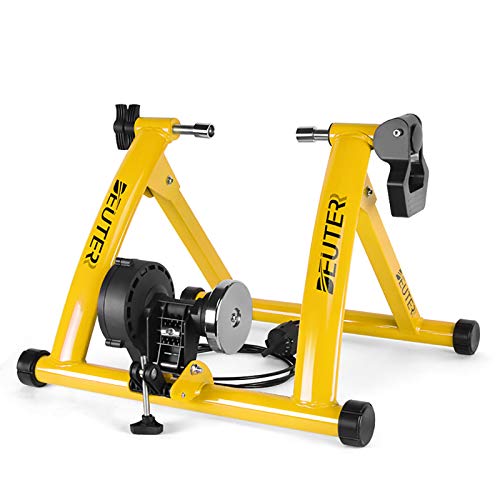
- Fits 26-29 inch and 700C wheels
- Six adjustable magnetic resistance levels
- Folding frame with 330-pound stated capacity
Best For: Stable, foldable indoor training
Best Smart Trainer
XXPRO Direct-Drive Smart Bike Trainer

- 2,500W maximum power and 25% gradient simulation
- ANT+ and Bluetooth connectivity for connected training
- Self-powered or plug-in operation
Best For: Connected road-bike training
Best Value Option
Red Folding Magnetic Bike Trainer

- Works with 26-29 inch and 700C wheels
- Five magnetic resistance settings
- Folding design with included riser block
Best For: Simple, portable indoor cycling
Best Overall
Saris Fluid2 Indoor Bike Trainer
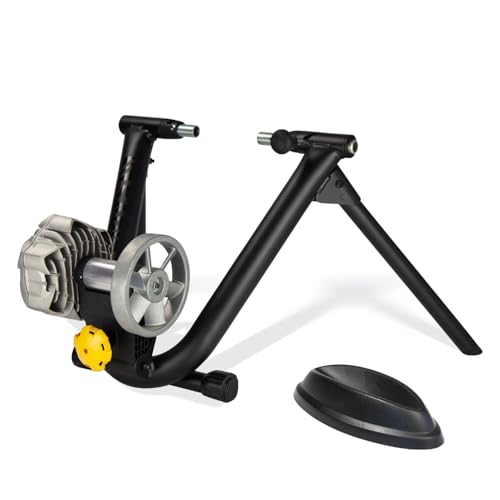
- Realistic progressive fluid resistance
- Smooth, quiet flywheel performance
- Foldable and app-compatible with a sensor
Best For: Cyclists wanting a road-like indoor training experience
Best Stable Magnetic Option
Yaheetech Magnetic Bike Trainer Stand
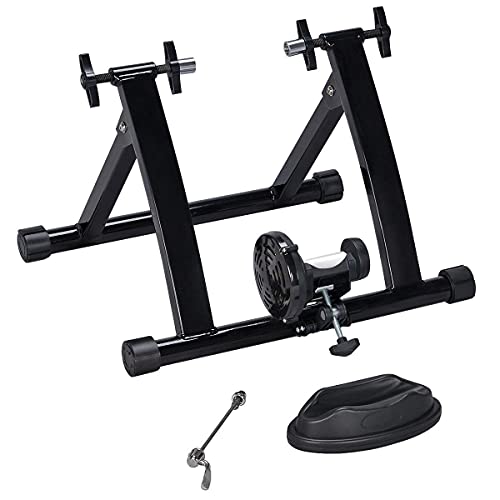
- Sturdy alloy-steel frame
- Adjustable leveling feet improve stability
- Fits 26-28-inch and 700C wheels
Best For: Quick-release bike owners training at home
Best Adjustable Resistance
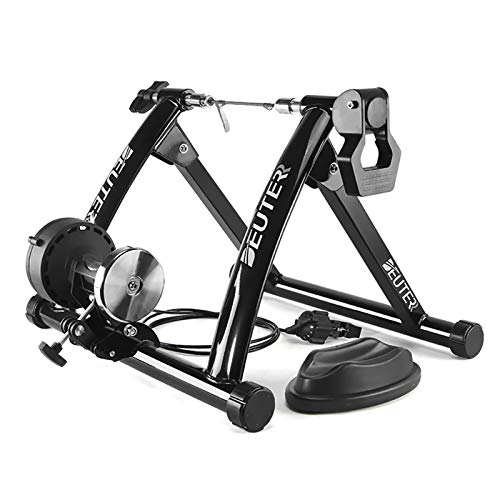
- Six resistance levels with handlebar control
- Fits 26-29-inch and 700C wheels
- Folds for transport and storage
Best For: Riders seeking flexible, portable indoor workouts
Best All-Around Value – Sportneer Magnetic Bike Trainer
If you want a straightforward bike trainer for indoor workouts, the Sportneer combines broad wheel compatibility with six manually adjustable magnetic resistance levels. Its quick-release setup, front-wheel riser block, and stable steel frame make it practical for regular home training.
Best For: Road and mountain bike riders who want an affordable, adjustable indoor trainer for general fitness and endurance work.
Pros:
- Fits most 26–28-inch and 700C bikes, with a separate thru-axle version available.
- Six resistance levels can be changed using the handlebar-mounted remote.
- Wide base, low center of gravity, and adjustable anti-slip feet support a stable ride.
- Includes a front-wheel riser block and quick-release skewer.
Cons:
- Noise varies by tire type; slick or road tires are recommended.
- The standard package is not intended for every thru-axle configuration without the appropriate version or adapter.
With its useful compatibility range and simple resistance control, this bike trainer is a solid choice for riders who prioritize value and easy setup over connected training features.
Best for Zwift Integration – Wahoo KICKR CORE 2
The Wahoo KICKR CORE 2 is a premium bike trainer for cyclists who want a connected indoor setup. Its electronic resistance, integrated Wi-Fi, Zwift Cog and Click, and road-like ride feel are designed for structured workouts and virtual riding.
Best For: Cyclists training with Zwift or other connected platforms who want quick pairing, stable performance, and automatic updates.
Pros:
- Electronic resistance provides a smooth, road-like ride feel.
- Integrated Wi-Fi supports faster pairing and automatic updates on an active network.
- Includes the third-generation Zwift Cog and Click for a streamlined Zwift setup.
- Adapters support common quick-release and thru-axle configurations.
Cons:
- Its connected features and electronic resistance require power and compatible software for the full experience.
- It is a more specialized and potentially costly option than a basic magnetic stand.
The KICKR CORE 2 makes the most sense when immersive software-based training is central to your routine. For riders who only need basic resistance, its connected hardware may be more than necessary.
Best Portable Option – Alpcour Foldable Magnetic Trainer
The Alpcour is a practical bike trainer for riders who need indoor capability without a permanent setup. Its six fixed magnetic resistance levels, foldable stainless-steel frame, quick-release design, and included carrying bag make it convenient for storage and travel.
Best For: Road and mountain bike owners who want a portable trainer for seasonal workouts, compact storage, or travel.
Pros:
- Foldable frame and included carrying bag simplify transport and storage.
- Six handlebar-mounted resistance settings support different workout intensities.
- Wide base, low stance, front riser block, and anti-slip pads promote stability.
- Compatible with most 26–28-inch and 700C wheels.
Cons:
- Resistance is fixed to six levels rather than electronically controlled.
- As a wheel-on trainer, tire choice can affect noise and riding performance.
This bike trainer is especially appealing if portability matters as much as indoor performance. It delivers the essentials for routine training while folding away more easily than a larger smart trainer.
Best High-Power Smart Trainer – ThinkRider X2Max Smart Trainer
The ThinkRider X2Max is a smart bike trainer built for demanding indoor sessions and software-connected riding. It offers up to 2,000 watts of power, simulated gradients up to 18%, ANT+ and Bluetooth connectivity, and automatic resistance changes when paired with compatible cycling software such as Zwift.
Best For: Serious indoor cyclists who want high power capacity, automatic gradient simulation, and broad wireless software compatibility.
Pros:
- Provides up to 2,000 watts of power with stated power-meter accuracy of ±2%.
- Simulates gradients up to 18% and can automatically match software route resistance.
- Supports both ANT+ and Bluetooth connectivity with compatible cycling software.
- I-beam triangular construction is designed for balance and stability.
Cons:
- A cassette is not included, so additional drivetrain hardware may be required.
- Its advanced smart features are unnecessary for riders seeking only basic indoor resistance.
The X2Max stands out for riders who want realistic, software-controlled resistance and substantial power headroom. Check cassette compatibility and your preferred connection method before buying.
Best Heavy-Duty Pick – Folding Magnetic Bike Trainer
If you need a bike trainer for regular indoor riding, this magnetic model offers broad wheel compatibility, adjustable resistance, and a sturdy folding frame. It fits 26- to 29-inch and 700C wheels and includes a quick-release skewer and front-wheel riser block.
Best For: Riders who want a stable, foldable indoor trainer with a high stated load capacity.
Pros:
- Supports bikes with 26- to 29-inch or 700C wheels.
- Six handlebar-adjustable magnetic resistance levels.
- Strong pyramid-style structure with a stated 330-pound capacity.
- Folds for storage and sets up without additional tools.
Cons:
- Rough mountain-bike tires can create substantial noise.
- Magnetic resistance is manually adjusted rather than app-controlled.
This is a practical bike trainer for dependable indoor workouts and easy storage. Use smoother tires or a mat if reducing vibration and indoor resonance is a priority.
Best Smart Trainer – XXPRO Direct-Drive Smart Bike Trainer
This bike trainer is designed for connected indoor training, using direct motor drive, Bluetooth, and ANT+ compatibility. Its 2,500-watt maximum power and simulated gradients up to 25% support demanding workouts, while self-power generation can reduce reliance on the power adapter.
Best For: Connected road-bike riders who want virtual shifting and automated uphill and downhill simulation.
Pros:
- Direct-drive motor provides stated data accuracy of plus or minus 1% without calibration.
- Supports Bluetooth, ANT+, bike GPS, PC, and Zwift connections.
- Simulates gradients up to 25% and downhill sections.
- Can generate its own power or use the included power adapter.
Cons:
- Its 242-pound stated load capacity is lower than the other listed trainers.
- Designed for road bikes, so compatibility should be checked before purchase.
The XXPRO is the most feature-rich option here for riders who prioritize connected training and realistic terrain simulation. It is a better fit for a dedicated indoor setup than for simple, unplugged exercise.
Best Value Option – Red Folding Magnetic Bike Trainer
This red magnetic bike trainer is a straightforward choice for indoor cycling when outdoor conditions are poor. Its folding design fits 26- to 29-inch and 700C wheels, and the included quick-release skewer and front-wheel riser block help simplify setup.
Best For: Road and mountain-bike owners seeking a basic indoor trainer with adjustable resistance and easy storage.
Pros:
- Compatible with 26- to 29-inch and 700C wheels.
- Provides five magnetic resistance settings.
- Folding frame stores and transports more easily.
- Stated load capacity is 330 pounds.
Cons:
- Knobby MTB tires may be loud during use.
- It lacks the smart connectivity and automatic terrain simulation of a direct-drive trainer.
This model keeps indoor training simple: mount the bike, select a resistance level, and ride. It makes sense for riders who value basic functionality and portability over app-based features.
Best Overall – Saris Fluid2 Indoor Bike Trainer
The Saris Fluid2 is a strong all-around bike trainer for cyclists who want a realistic, smooth indoor ride. Its fluid resistance progressively increases as you pedal harder, while the foldable frame keeps storage manageable.
Best For: Road and mountain bike riders seeking a quiet, road-like training experience with optional virtual-app compatibility.
Pros:
- Fluid resistance delivers progressive, realistic road-like effort.
- Precision-balanced flywheel supports smooth, quiet operation.
- Foldable frame and wheel-on setup simplify installation and storage.
- Works with Zwift and Rouvy when paired with a compatible sensor.
Cons:
- Speed or cadence sensor is sold separately for training-app connectivity.
- Designed with one listed resistance setting rather than handlebar-adjustable levels.
Choose the Fluid2 if ride feel and dependable construction matter more than built-in electronic controls. Its limited lifetime warranty and durable aluminum construction add confidence for regular indoor sessions.
Best Stable Magnetic Option – Yaheetech Magnetic Bike Trainer Stand
The Yaheetech magnetic bike trainer offers a practical indoor setup for compatible road and mountain bikes. Its sturdy steel frame, adjustable feet, and magnetic resistance make it a straightforward choice for home workouts.
Best For: Riders with a quick-release bike who want a stable, adjustable magnetic trainer for indoor exercise.
Pros:
- Magnetic resistance supports a relatively quiet training environment.
- Four level-adjustable feet help keep the stand stable and protect flooring.
- Fits 26- to 28-inch and 700C wheels.
- Includes a quick-release skewer and uses shock-absorbing mounting fittings.
Cons:
- Requires a rear quick-release wheel; thru-axle adapters are not included.
- Wheel-to-trainer friction can still create noise, especially with unsuitable tires.
This trainer is best suited to riders who value a solid, uncomplicated stand over app-focused features. Slick tires and a carpet may help reduce humming and indoor resonance.
Best Adjustable Resistance – Folding Magnetic Bike Trainer
This folding magnetic bike trainer is built for riders who want flexible resistance control and broad wheel compatibility. A handlebar-mounted control lets you switch among six resistance levels without leaving the bike.
Best For: Road and mountain bike riders needing a portable trainer with quick-release setup and on-bike resistance adjustment.
Pros:
- Six magnetic resistance levels accommodate varied workout intensity.
- Handlebar control allows resistance changes while riding.
- Supports 26- to 29-inch and 700C wheels.
- Folding design, quick clamp, and included front-wheel riser support convenient setup and storage.
Cons:
- Rough mountain-bike tires may produce more noise and vibration indoors.
- Quick-release installation is specified, so axle compatibility should be checked.
- Its iron-and-steel construction weighs about 10.05 kg.
With its wide wheel range and six-level control, this model is a useful value-oriented choice for varied indoor workouts. Use smooth tires or place it on carpet if reducing resonance is a priority.
How We Picked the Best Bike Trainers
We focused on trainer type, compatibility, resistance control, stability, noise, connectivity, setup, and overall value. The selection includes basic wheel-on stands for convenient indoor exercise, fluid models for smoother resistance, and smart direct-drive trainers designed for apps such as Zwift.
We also considered practical details that affect everyday use, including supported wheel sizes, cassette requirements, front-wheel support, folding designs, quick-release compatibility, and whether the trainer needs external power.
Quick Comparison
| Trainer Type | Best For | Typical Advantages | Potential Trade-Offs |
|---|---|---|---|
| Magnetic wheel-on | Budget indoor riding | Affordable, compact, simple setup | More tire noise and less realistic resistance |
| Fluid wheel-on | Smoother training | Progressive resistance and natural road feel | Usually costs more and may require careful tire setup |
| Direct-drive smart | Virtual training and performance data | Quiet operation, accurate control, app connectivity | Higher price and cassette compatibility requirements |
Key Buying Factors for a Bike Trainer
Trainer Type and Resistance
Magnetic trainers are generally the most affordable and easiest to store. Fluid trainers provide a smoother, more progressive feel. Direct-drive smart trainers remove the rear wheel and usually deliver better accuracy, lower noise, and automatic resistance changes for connected workouts.
Bike and Wheel Compatibility
Confirm that your bicycle fits the listed wheel range, such as 26-inch, 27.5-inch, 28-inch, or 700C. Check axle standards carefully: a quick-release bike may not mount directly to a trainer designed primarily for thru-axles. Direct-drive models also require a compatible cassette or freehub body, and the cassette may need to be purchased separately.
Connectivity and Power
For Zwift and similar platforms, look for Bluetooth or ANT+ support and verify compatibility with your phone, tablet, computer, or cycling computer. Smart trainers typically need a power outlet, while self-powered options can be more flexible but may offer different connectivity or feature limitations.
Noise, Stability, and Space
Direct-drive trainers are often the quietest choice, but drivetrain condition, tire pressure, and flooring still affect noise. A wide, sturdy frame helps prevent movement during hard efforts. If storage matters, prioritize folding legs and confirm the folded dimensions before buying.
Who Should Buy Which Bike Trainer?
- Choose a basic magnetic trainer if you need an inexpensive way to ride indoors, warm up, or maintain fitness without app-based workouts.
- Choose a fluid trainer if you prefer smoother resistance and a more road-like feel while keeping your existing rear wheel.
- Choose a smart direct-drive trainer if you use virtual cycling platforms, want automatic resistance control, or need detailed training data.
- Choose a high-power smart model if you regularly perform sprint, climbing, or structured interval sessions and want greater headroom for advanced training.
Before ordering, match the trainer to your bike’s axle, wheel, cassette, and connectivity requirements. A slightly more expensive compatible model is usually a better purchase than a cheaper trainer that needs multiple adapters or cannot support your intended apps.