A bike computer with Bluetooth sensors can turn ordinary rides into measurable training sessions, displaying speed, cadence, distance, route data, and more without relying on your phone.
We selected 10 practical options, including GPS computers, speed and cadence sensors, and combination setups for road cycling, commuting, indoor training, and e-bike use.
Best 10 Bike Computer with Bluetooth Sensors Picks for 2026
Long-Range Data Tracker

- 40-hour battery with IPX7 water resistance
- Bluetooth 5.0 and ANT+ sensor support
- 40+ metrics with Strava and Komoot sharing
Best For: Long-distance riders needing extended battery life
Simple Sensor Upgrade
Garmin Speed and Cadence Sensor 2 Bundle

- Includes dedicated speed and cadence sensors
- Magnet-free installation on hubs and crank arms
- Speed sensor self-calibrates with compatible Garmin devices
Best For: Adding core cycling metrics to an existing setup
Navigation Bundle Pick
iGPSPORT BSC200S GPS Bike Computer Bundle

- Includes speed and cadence sensors
- Route navigation with Strava, Komoot, and Ride with GPS support
- 100+ metrics with Bluetooth and ANT+ connectivity
Best For: Riders wanting navigation and sensors in one package
Flexible Single-Sensor Option
COOSPO BK467 Speed and Cadence Sensor

- Switches between speed and cadence modes
- Bluetooth and ANT+ compatibility
- Works with Zwift, Rouvy, Peloton, and GPS computers
Best For: Indoor or outdoor riders needing one versatile sensor
Navigation-Ready Pick
iGPSPORT BSC300T GPS Bike Computer
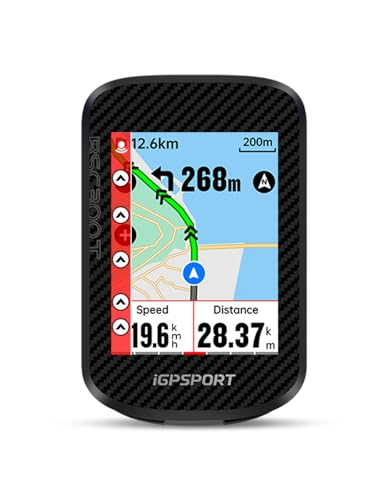
- Worldwide offline maps with turn prompts
- Bluetooth 5.0 and ANT+ sensor support
- 130+ metrics with ebike mode
Best For: Navigation-focused riders and connected ebike users
Long-Battery Value
COOSPO BC107 GPS Cycling Computer

- Up to 80 hours of advertised battery life
- ANT+ support for key cycling sensors
- IP67 protection and auto-backlit LCD
Best For: Long-distance riders who prefer simple GPS tracking
Sensor Add-On Pick
Magene S3+ Speed/Cadence Sensor
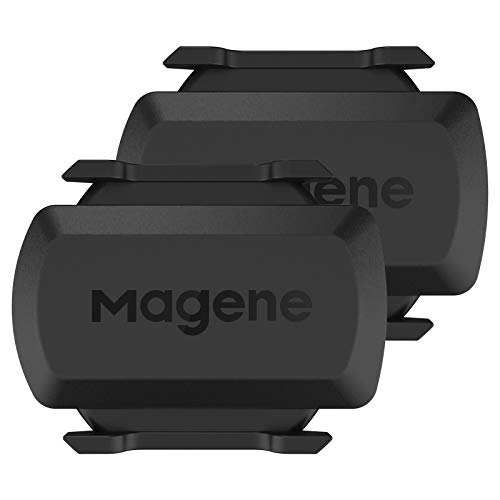
- Bluetooth and ANT+ wireless connectivity
- Switches between speed and cadence modes
- Up to 500 hours of advertised battery life
Best For: Adding speed or cadence data to compatible devices
Best Dual-Sensor Upgrade
iGPSPORT Speed and Cadence Sensor Set
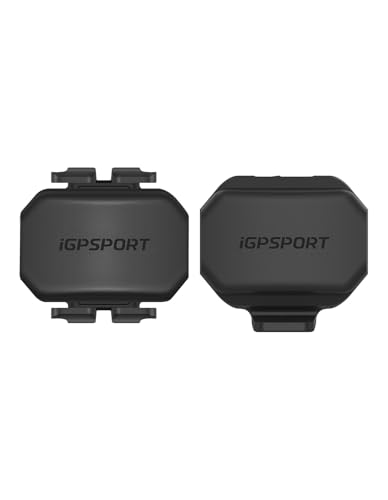
- Separate sensors track speed and cadence
- Bluetooth 5.0 and ANT+ connectivity
- Up to 300 hours of battery life
Best For: Cyclists wanting dedicated speed and cadence tracking
Best Long-Battery Combo
COOSPO BK805 Speed and Cadence Sensor
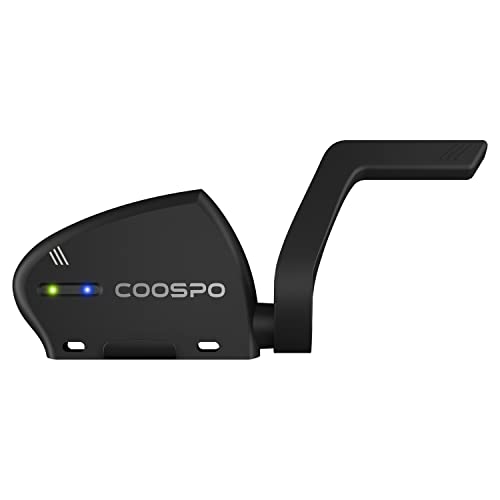
- Tracks speed, cadence, and distance
- Bluetooth and ANT+ app compatibility
- Up to 500 hours of battery life
Best For: Outdoor riders using multiple cycling apps
Best Mode-Switching Sensor
Magene S3+ Speed/Cadence Sensor
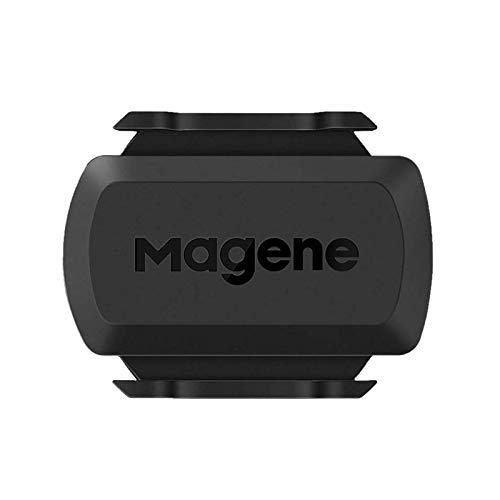
- Switches between speed and cadence modes
- Supports Bluetooth and ANT+ connections
- Works indoors and outdoors
Best For: Riders wanting a compact configurable sensor
Long-Range Data Tracker – iGPSPORT BSC100S
The iGPSPORT BSC100S is a practical bike computer with Bluetooth sensors support, ANT+ connectivity, and a large data set for everyday riding. Its 2.6-inch display, multi-satellite positioning, and 40-hour battery make it suited to riders who want dependable ride tracking without route navigation.
Best For: Long-distance riders who want broad sensor compatibility and extended battery life.
Pros:
- Supports Bluetooth 5.0 and ANT+ sensors, including speed, cadence, and heart-rate devices.
- Offers more than 40 riding metrics and can share activity data with Strava and Komoot through the iGPSPORT app.
- Provides up to 40 hours of battery life and IPX7 water resistance.
- The 2.6-inch anti-glare LCD is designed for clear viewing while riding.
Cons:
- Route navigation is not listed among the supplied features.
- A Type-C charging cable is not included.
The BSC100S is a strong straightforward choice for riders prioritizing battery endurance, accurate positioning, and compatibility with Bluetooth or ANT+ sensors over navigation features.
Simple Sensor Upgrade – Garmin Speed and Cadence Sensor 2 Bundle
The Garmin Speed Sensor 2 and Cadence Sensor 2 bundle is for cyclists who already have a compatible bike computer, phone, or Garmin device and need core speed and pedaling data. These wireless sensors are an alternative to buying a complete bike computer with Bluetooth sensors built in.
Best For: Riders adding speed and cadence tracking to an existing compatible setup.
Pros:
- Includes separate speed and cadence sensors for simultaneous measurement.
- The speed sensor attaches to either wheel hub and self-calibrates with a compatible Edge computer or Garmin device.
- The cadence sensor fits any crank-arm size and measures pedal strokes per minute.
- Magnet-free installation makes the sensors easier to install, maintain, and move between bikes.
Cons:
- This is a sensor bundle, not a standalone bike computer or display.
- Compatibility depends on the phone, app, or cycling computer used.
This bundle makes sense when your current head unit supports the sensors and you want reliable speed and cadence measurements without replacing your existing cycling setup.
Navigation Bundle Pick – iGPSPORT BSC200S GPS Bike Computer Bundle
The iGPSPORT BSC200S is a complete bike computer with Bluetooth sensors support, bundled with speed and cadence sensors for a ready-to-ride setup. It adds route navigation, smart notifications, and more than 100 data fields, making it a more feature-rich option for riders who want both navigation and sensor tracking.
Best For: Riders seeking an all-in-one navigation computer with included speed and cadence sensors.
Pros:
- Includes the BSC200S computer, CAD70 cadence sensor, SPD70 speed sensor, mount, case, and charging cable.
- Supports routes from iGPSPORT, Strava, Ride with GPS, and Komoot, plus back-to-start navigation.
- Offers more than 100 riding metrics and customizable display pages.
- Supports Bluetooth and ANT+ connections, smart notifications, and IPX7 water resistance.
Cons:
- Its listed 25-hour battery life is shorter than the BSC100S’s 40-hour rating.
- The 2.4-inch screen is smaller than the BSC100S display.
With sensors included, route tools, and broad data customization, the BSC200S is the better fit for riders who want a more capable package rather than a basic ride tracker.
Flexible Single-Sensor Option – COOSPO BK467 Speed and Cadence Sensor
The COOSPO BK467 is a compact sensor for riders building a bike computer with Bluetooth sensors setup around a compatible computer, phone app, or indoor-training platform. It can operate in speed or cadence mode, while ANT+ support allows compatible devices to receive its data.
Best For: Indoor and outdoor cyclists who need one adaptable speed or cadence sensor.
Pros:
- Works with Bluetooth and ANT+ devices, including Zwift, Rouvy, Peloton, Ride with GPS, and compatible bike computers.
- One sensor can be installed on a crank arm for cadence or a wheel hub for speed.
- Magnet-free installation simplifies setup.
- IP67 water resistance and a replaceable CR2032 battery support regular use.
Cons:
- Each sensor measures speed or cadence, not both simultaneously; two sensors are needed for both metrics.
- Bluetooth connects to one app or device at a time.
- The listing notes different one-piece and two-piece options, so quantity should be verified before purchase.
The BK467 is a useful low-profile choice when you need one measurement mode at a time and want compatibility across indoor-training apps and Bluetooth or ANT+ cycling computers.
Navigation-Ready Pick – iGPSPORT BSC300T GPS Bike Computer
If you want a bike computer with bluetooth sensors plus detailed navigation, the iGPSPORT BSC300T combines Bluetooth 5.0 and ANT+ support with a 2.4-inch touchscreen. It also adds worldwide offline maps, turn prompts, off-course warnings, and more than 130 riding metrics.
Best For: Riders who want navigation, broad sensor compatibility, and an ebike-friendly display.
Pros:
- Supports Bluetooth 5.0 and ANT+ sensors, including speed, cadence, heart-rate, and smart-trainer devices.
- Offers worldwide offline maps, route previews, turn prompts, and off-course warnings.
- Provides more than 130 data fields, real-time tracking, and Strava or Komoot sharing.
- Uses five satellite systems and offers an advertised battery life of up to 20 hours.
Cons:
- The package does not include a Type-C cable.
- Its feature-rich interface may be more than casual riders need.
The BSC300T is the strongest choice here for riders prioritizing mapping and connected sensor support. Its touchscreen, ebike mode, and group-riding tools make it especially versatile for longer or more complex rides.
Long-Battery Value – COOSPO BC107 GPS Cycling Computer
The COOSPO BC107 is a practical bike computer with bluetooth sensors when you want a simple GPS display and long battery life. Its ANT+ connection supports heart-rate, speed, cadence, and power sensors, while the CoospoRide app handles setup, activity analysis, firmware updates, and Strava syncing.
Best For: Riders seeking long runtime, a readable display, and ANT+ sensor connectivity.
Pros:
- Offers an advertised 80-hour battery life for extended use between charges.
- Supports ANT+ heart-rate, speed, cadence, and power-meter connections.
- Includes a 2.4-inch sunlight-readable LCD with automatic backlight.
- IP67 waterproof protection helps it handle rainy rides.
Cons:
- Bluetooth is used for app connection and syncing; the supplied notes specify ANT+ for cycling sensors.
- The out-front mount is sold separately.
- Sensor availability depends on the selected purchase option.
Choose the BC107 if endurance and straightforward ride tracking matter more than advanced on-device mapping. The app adds useful phone-based setup and sharing, while the ANT+ support covers common training sensors.
Sensor Add-On Pick – Magene S3+ Speed/Cadence Sensor
The Magene S3+ is a compact way to add speed or cadence data to a bike computer with bluetooth sensors. It supports both Bluetooth and ANT+, but one sensor operates in only one mode at a time, so riders measuring both speed and cadence need two sensors.
Best For: Cyclists who need an inexpensive wireless speed or cadence sensor for indoor or outdoor training.
Pros:
- Supports both Bluetooth and ANT+ connections.
- Can be configured for speed or cadence use on road bikes, trainers, or spinning bikes.
- Offers an advertised 500-hour battery life and weighs just 8.8 grams.
- ANT+ allows connection to multiple devices simultaneously.
Cons:
- One sensor cannot measure speed and cadence at the same time; two are needed for both.
- Bluetooth connects to only one app or device concurrently.
- The IP54 rating provides less protection than a fully waterproof design.
The S3+ is best viewed as a sensor accessory rather than a standalone computer. Confirm your cycling app or head unit supports the selected Bluetooth or ANT+ connection, and plan on buying two units if you want simultaneous speed and cadence tracking.
Best Dual-Sensor Upgrade – iGPSPORT Speed and Cadence Sensor Set
If you need a bike computer with Bluetooth sensors for tracking both speed and cadence, this iGPSPORT set provides separate wireless sensors with Bluetooth 5.0 and ANT+ connectivity. Its compact design, long stated battery life, and IPX7 waterproof rating make it a practical option for regular outdoor riding.
Best For: Cyclists who want dedicated speed and cadence sensors with broad Bluetooth and ANT+ compatibility.
Pros:
- Includes separate speed and cadence sensors for simultaneous tracking.
- Supports Bluetooth 5.0 and ANT+ connections with many bike computers and spin bikes.
- Offers up to 300 hours of battery life and IPX7 water resistance.
- Ultra-thin 7.8-gram design and included mounting parts simplify installation.
Cons:
- The set requires installing two separate sensors.
- The supplied details do not specify compatibility with every individual bike computer.
Choose this set if you prefer dedicated sensors rather than switching one unit between modes. The two-year warranty and replaceable-battery design add practical value for ongoing training use.
Best Long-Battery Combo – COOSPO BK805 Speed and Cadence Sensor
For riders seeking a bike computer with Bluetooth sensors in a single-unit format, the COOSPO BK805 monitors speed and cadence and can provide distance data to compatible apps or GPS computers. It supports Bluetooth and ANT+, includes adjustable mounting options, and is rated IP67 for water resistance.
Best For: Outdoor cyclists who want one adjustable sensor with broad app and bike-computer compatibility.
Pros:
- Tracks both cycling speed and cadence and can provide distance data.
- Works with Bluetooth and ANT+ devices, plus apps such as Rouvy, Peloton, and Wahoo.
- Replaceable battery is rated for up to 500 hours of use.
- Includes rubber bands and zip-tie mounting accessories for flexible installation.
Cons:
- The manufacturer does not recommend it for indoor spinning bikes.
- Correct placement matters; the supplied guidance notes a magnet check if cadence is missing.
- At 50 grams, it is heavier than the other listed sensor options.
The BK805 is a versatile choice for riders using multiple fitness apps or computers. Its long battery rating is especially useful when minimizing battery changes matters more than having separate sensor units.
Best Mode-Switching Sensor – Magene S3+ Speed/Cadence Sensor
The Magene S3+ is a flexible option for a bike computer with Bluetooth sensors, but its single sensor operates in either speed or cadence mode at one time. It supports Bluetooth and ANT+, works with indoor and outdoor cycling setups, and can be mounted on a stem or handlebar.
Best For: Riders who want one compact sensor that can switch between speed and cadence use.
Pros:
- Supports both speed and cadence modes for road bikes, spinning bikes, and trainers.
- Bluetooth and ANT+ connectivity works with platforms including Onelap, Wahoo Fitness, and Zwift.
- Lightweight 9-gram design with stem and handlebar mounting options.
- ANT+ can connect to multiple devices at the same time, according to the supplied guidance.
Cons:
- One sensor cannot measure speed and cadence simultaneously; two sensors are needed for both.
- Over Bluetooth, one sensor can connect to only one app or device concurrently.
- It enters sleep mode after being stationary and must be properly woken before broadcasting.
This sensor suits cyclists who value a compact, reusable setup and do not need simultaneous speed and cadence readings from one unit. For dual-metric tracking, plan on purchasing two sensors and configuring each mode separately.
How We Picked the Best Bike Computer with Bluetooth Sensors
We focused on compatibility, sensor connectivity, display usability, weather resistance, battery expectations, and the type of riding each product supports. The selection includes complete GPS computers as well as standalone Bluetooth and ANT+ sensors, since many cyclists already own a phone, smartwatch, or head unit and only need accurate speed or cadence data.
We also considered whether each option suits outdoor navigation, structured training, indoor cycling, or basic ride tracking. A Bike Computer with Bluetooth Sensors should be easy to pair and dependable during real rides, not merely offer a long list of specifications.
Quick Comparison
| Best For | Look For |
|---|---|
| Basic ride tracking | GPS computer with clear speed, distance, and battery information |
| Training data | Bluetooth or ANT+ speed and cadence sensors |
| Route guidance | Offline maps, turn guidance, and off-course alerts |
| Indoor cycling | Cadence or speed sensor compatibility with training apps |
| Mixed bike use | Water resistance, wireless pairing, and flexible mounting |
Key Buying Factors for a Bike Computer with Bluetooth Sensors
Connectivity and Compatibility
Bluetooth is convenient for phones, tablets, indoor trainers, and many modern head units. ANT+ can be useful when connecting multiple devices or combining several sensors. Before buying, check that the computer, sensor, and training app use compatible connection standards.
GPS, Sensors, or Both
GPS computers can estimate speed and distance without a wheel sensor, while dedicated sensors can provide consistent data in tunnels, dense tree cover, or indoors. A combined setup often gives the most flexibility, particularly for structured training.
Navigation and Display
Choose a larger or touchscreen display if you need maps and route guidance. For simple metrics, a compact LCD screen may be easier to read, lighter, and more efficient. Consider whether you want buttons, touch controls, or both.
Durability and Battery Life
For outdoor riding, prioritize water resistance and a secure mount. Longer battery life matters for touring and endurance rides, while rechargeable sensors and computers reduce maintenance. Verify charging requirements and expected runtime before committing.
Who Should Buy Which Bike Computer with Bluetooth Sensors?
Choose a GPS bike computer if you want standalone ride recording, navigation, and at-a-glance metrics. Select a speed or cadence sensor if you already use a phone, smartwatch, indoor trainer, or compatible head unit. A two-sensor setup is best for cyclists who want more precise training feedback, especially cadence-based workout control. Riders who alternate between indoor and outdoor cycling should prioritize dual Bluetooth and ANT+ support, waterproof construction, and easy sensor transfer between bikes.