Training, desk time, and recovery can all challenge your upper-back alignment. The right posture corrector can provide a useful reminder to draw your shoulders back without adding unnecessary bulk or restricting movement.
We compared 10 posture-support braces with athletic use in mind, focusing on breathable materials, adjustability, support zones, coverage, and comfort during light activity. Use the guide below to narrow the options by fit, training needs, and intended wear time.
Best 10 Posture Correctors for Athletes Picks for 2026
Run-Ready Support
Men's Running Posture Corrector

- Breathable perforated shoulder coverage
- Reflective strip for low-light runs
- Padded straps and buckle barrier
Best For: Runners seeking a cool, visible posture reminder
Spine-Conforming Fit

- Natural-curve spine support
- Bamboo lining with breathable mesh
- Size-specific fit for varied body types
Best For: Active users wanting structured, breathable back support
Everyday Under-Clothing Support
Upper Back Brace for Men and Women

- Adjustable elastic shoulder straps
- Designed to stay discreet under clothing
- 30–55-inch chest range
Best For: Users wanting versatile daily and exercise wear
Firm Adjustable Tension

- Strong elastic shoulder tension
- Three-position underarm adjustment
- Breathable mesh and perforated materials
Best For: Users preferring firm, noticeable posture support
Comfort-Focused Pick

- Breathable and adjustable for discreet wear
- Fits 30–43-inch chests
- Lifetime warranty included
Best For: Gradual posture training and everyday wear
Structured Support Pick
5x Enhanced Support Back Brace

- Five flexible ABS support rods
- Breathable mesh with adjustable straps
- Available in three sizes
Best For: Daily exercise, work, and recovery support
Lightweight Training Pick

- Thin, breathable fabric
- Customizable fit and compression
- Suitable for light exercise and daily wear
Best For: Light activity and everyday posture practice
Full-Back Daily Support
Adjustable Lumbar Posture Corrector
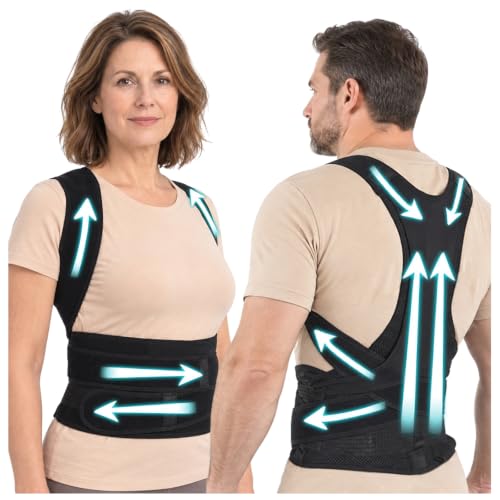
- Dual-layer support for upper and lower back alignment
- Breathable mesh with adjustable shoulder and waist fit
- Designed for walking, stretching, yoga, and light exercise
Best For: Adults needing full-back support for daily wear and light activity
Flexible Upper-Back Training

- Four fiberglass stays provide flexible upper-back stability
- Breathable, low-profile design fits under most clothing
- Adjustable fit for walking and everyday posture training
Best For: Adults wanting gentle upper-back support for walking and daily use
Versatile Full-Back Alignment

- Three-in-one support for back, chest, and shoulders
- Widened belt, adjustable straps, and removable support strip
- Breathable mesh with included storage bag
Best For: Adults wanting broad lumbar support for daily use and lifting-related activities
Run-Ready Support – Men's Running Posture Corrector
For athletes comparing posture correctors for athletes, this running-focused brace emphasizes airflow, shoulder awareness, and visibility during active routines. Its open Y-shaped design, padded straps, and reflective back strip suit treadmill sessions, outdoor runs, and low-light training.
Best For: Runners who want a lightweight posture reminder with breathable shoulder coverage and reflective detailing.
Pros:
- Perforated shoulder pads and sponge-padded straps promote airflow and help spread pressure.
- Reflective center-back strip adds visibility during early, dusk, or nighttime runs.
- Padded buckle barrier keeps rear hardware from directly contacting the back.
- Underbust sizing covers 27–42 inches and uses adjustable hook-and-loop closure.
Cons:
- Designed around upper-back posture awareness rather than broad lower-back support.
- Hand-wash care may require more maintenance than machine-washable options.
- Fit is based on underbust measurement, so careful sizing is important.
This is a practical choice for runners who prioritize cooling details and a noticeable posture cue without a bulky brace. Measure under the bust before ordering and treat it as a support and awareness aid, not medical treatment.
Spine-Conforming Fit – Bionic System Back Brace
Among posture correctors for athletes, this bionic-system brace stands out for its spine-conforming construction and size-specific fit. Bamboo-fiber lining and hexagonal mesh are intended to support comfort during hiking, yoga, walking, casual exercise, and other daily activities.
Best For: Athletes and active users who want structured back support with breathable materials and a more tailored fit.
Pros:
- Spine-conforming design is built around the body’s natural curve.
- Bamboo fiber lining and outer mesh support a softer, more breathable feel.
- Different sizing heights are intended to accommodate varied body types.
- Listed for activities including hiking, yoga, walking, and posture training.
Cons:
- The supplied listing specifies an L size for 40–46-inch waist measurements, so sizing options should be checked.
- At 0.58 kg, it may feel more substantial than a minimal shoulder-only brace.
- Lace-up closure may take longer to adjust than hook-and-loop designs.
Choose this model when fit precision and broader back support matter more than the simplest, lightest construction. Confirm the size-specific measurements before use, especially if wearing it for exercise.
Everyday Under-Clothing Support – Upper Back Brace for Men and Women
This versatile option among posture correctors for athletes is designed for work, exercise, yoga, and leisure. Adjustable elastic straps, soft sponge shoulder padding, and a low-profile design aim to provide a posture cue while allowing normal movement.
Best For: Men and women who want an adjustable upper-back brace that can be worn discreetly during mixed daily and active routines.
Pros:
- Adjustable magic-tape closure and elastic straps allow users to customize the fit.
- Soft sponge shoulder pads are intended to improve comfort around strap contact points.
- Designed to remain unobtrusive under clothing.
- Broad chest sizing from 30–55 inches offers a wide stated fit range.
Cons:
- The product guidance recommends beginning with 30 minutes per day and increasing wear gradually.
- Although breathable, the listing does not provide specific mesh or perforation details.
- It is an upper-back posture brace, not a comprehensive lower-back support belt.
This model suits shoppers who value discreet wear and broad adjustability. Follow the gradual wear recommendation and wear it over an undergarment to help reduce friction.
Firm Adjustable Tension – Breathable Back Brace for Men
For athletes comparing posture correctors for athletes, this brace offers a more substantial correction feel through elastic shoulder straps and back-support stays. Breathable mesh, perforated materials, and adjustable underarm settings are intended to balance firm tension with wearability.
Best For: Users who prefer noticeable shoulder tension and adjustable support for training, errands, or everyday posture practice.
Pros:
- Elastic shoulder straps provide firm, responsive tension as a posture reminder.
- Back-support stays help stabilize the upper back while opening the chest.
- Three underarm strap settings allow pressure adjustment.
- Mesh and perforated materials are designed to improve airflow and reduce heat buildup.
Cons:
- The listed M/L size fits 33–41-inch waist measurements, so sizing must be checked at the navel.
- The stronger tension may feel restrictive for users who prefer minimal support.
- The notes acknowledge that underarm discomfort may not be eliminated completely.
This is the better fit for shoppers who want a clearly noticeable correction cue rather than a barely-there design. Measure at the navel, consider sizing up when between ranges, and wear it over an undergarment to help limit friction.
Comfort-Focused Pick – ComfyBrace Posture Corrector
For athletes seeking posture correctors for athletes that can also fit into everyday routines, the ComfyBrace offers adjustable upper-back support in a breathable, low-profile design. Its 30–43-inch chest range and gradual-wear guidance make it suited to building posture awareness rather than providing rigid immobilization.
Best For: Adults wanting a soft, adjustable brace for walking, standing, work, or gradual posture training.
Pros:
- Breathable, adjustable design intended for discreet wear under clothing
- Soft polyester construction with durable stitching
- Supports the upper back, shoulders, neck, and clavicle area
- Includes a lifetime warranty
Cons:
- Designed for posture improvement, not treatment of serious injuries or back damage
- Recommended chest range is limited to 30–43 inches
- Requires gradual break-in wear, beginning at 5–10 minutes daily
The ComfyBrace is a practical choice when comfort, adjustability, and a discreet profile matter more than heavy structural support. Athletes with severe back problems should seek medical advice rather than rely on this brace.
Structured Support Pick – 5x Enhanced Support Back Brace
Among posture correctors for athletes, this model stands out for its five flexible ABS support rods and full-back design. It is built for daily support during work, exercise, or recovery, while breathable mesh and adjustable shoulder straps aim to keep the fit comfortable.
Best For: Users who want more structured back support for daily activities, exercise, or recovery routines.
Pros:
- Five flexible ABS rods provide stable full-back support
- Breathable mesh is lightweight, quick-drying, and easy to clean
- Adjustable, armpit-friendly shoulder design
- Available in three sizes and backed by a one-year warranty
Cons:
- May have a temporary odor after sealed packaging
- Correct strap adjustment may require following the wearing video
- Large size and fit should be checked carefully against the sizing guidance
This is the strongest-support option in the group based on its five-rod construction. It may suit athletes who prefer a more structured brace, but proper sizing and adjustment are important for comfort during movement.
Lightweight Training Pick – Adjustable Upper Back Brace
For athletes comparing posture correctors for athletes for light activity and everyday use, this adjustable upper-back brace emphasizes a thin, breathable feel. It is intended to encourage more open shoulders and upright posture during work, driving, walking, and light exercise.
Best For: Adults wanting lightweight upper-back guidance for posture practice, desk work, walking, and light exercise.
Pros:
- Ultra-light, thin, breathable fabric designed for warm-weather comfort
- Adjustable fit and compression level
- Suitable for work, home, driving, walking, and light exercise
- Supports the shoulders, upper back, neck, and clavicle area
Cons:
- Positioned for light exercise rather than demanding athletic activity
- Provides posture guidance but is not presented as a medical treatment
- The supplied notes do not specify a detailed size range
This brace is the most lifestyle-oriented choice, especially if you want a discreet layer for posture practice and light movement. Its limited structural detail makes it less suitable for athletes seeking rigid or high-load support.
Full-Back Daily Support – Adjustable Lumbar Posture Corrector
For athletes seeking posture correctors for athletes that can also fit into everyday routines, this full-back brace combines dual-layer waist support with adjustable shoulder alignment. Its breathable mesh construction and open-back design are suited to walking, light exercise, stretching, yoga, or prolonged sitting and standing.
Best For: Adults wanting adjustable upper- and lower-back support for daily wear and light activity.
Pros:
- Dual-layer lumbar and waist support helps stabilize upper- and lower-back alignment.
- Adjustable shoulder straps and hook-and-loop waist closure allow a personalized fit.
- Breathable mesh and an underarm-friendly design support extended wear.
- Suitable for walking, fitness, stretching, and yoga.
Cons:
- It is designed for posture support and light exercise rather than unrestricted high-intensity sports.
- The full-back structure may feel more substantial than a minimal shoulder-only corrector.
This is a practical choice when you want one adjustable brace for posture training, lumbar support, and everyday movement. The wide waist belt and breathable materials make it especially useful for users who alternate between sitting, standing, and light activity.
Flexible Upper-Back Training – Fit Geno Support Brace
Fit Geno is a low-profile option among posture correctors for athletes who want gentle upper-back guidance without rigid immobilization. Four lightweight fiberglass stays, breathable mesh, and adjustable shoulder and waist straps provide support for walking, commuting, desk work, and other light daily activities.
Best For: Adults seeking flexible upper-back posture training during walking and everyday wear.
Pros:
- Four fiberglass support stays help stabilize the upper back while preserving flexibility.
- Breathable mesh and a slim profile can fit under most clothing.
- Adjustable shoulder straps and waist support accommodate varied body types.
- Removable support rods allow the support level to be adjusted.
Cons:
- The listed sport type is walking, so it may not suit demanding athletic activity.
- Hand-wash-only care requires more maintenance than machine-washable options.
- Users should begin with short wear sessions and increase gradually.
This brace favors comfort and posture awareness over rigid correction. It makes sense for athletes who want a lightweight aid for walking, travel, or recovery-day routines, particularly when paired with stretching and strengthening exercises.
Versatile Full-Back Alignment – Upgraded Lumbar Support Brace
For athletes comparing posture correctors for athletes with broader waist and back coverage, this upgraded brace offers three-in-one support for the back, chest, and shoulders. A widened belt, adjustable shoulder straps, perforated elastic material, and dense mesh are intended to provide breathable support during daily wear and lifting-related activities.
Best For: Adults wanting adjustable full-back and lumbar support with added storage for everyday use.
Pros:
- Three-in-one design supports the back, chest, and shoulders.
- Widened waist belt provides broad lumbar coverage, while the elastic support strip can be withdrawn.
- Dense mesh and perforated elastic materials promote airflow and flexibility.
- Includes a storage bag for keys, phones, or cards.
Cons:
- Proper sizing requires measuring the waist at the navel and following the size chart.
- Hand-wash-only care may be less convenient for frequent training use.
- The full-back design may be more coverage than athletes seeking a minimal brace need.
This model stands out for users who want substantial lumbar and full-back coverage rather than a simple shoulder reminder. Its adjustable construction and removable support strip offer flexibility, while the storage feature adds convenience for walking and everyday activities.
How We Picked the Best Posture Correctors for Athletes
We evaluated these Posture Correctors for Athletes around the factors that matter most during training and recovery: shoulder mobility, adjustability, breathability, support coverage, and ease of layering under clothing. We also considered whether each design focuses on the upper back, adds lumbar coverage, or uses wider support panels for a more structured feel.
A posture brace should act as a cue and support aid, not replace strength work, mobility training, or professional care. Product listings can vary by size and revision, so check the current measurements, materials, and care instructions before ordering.
Quick Comparison
| Best for | Look for | Typical design |
|---|---|---|
| Running and light training | Low bulk and breathable fabric | Upper-back shoulder brace |
| Extended daily wear | Soft edges and precise adjustment | Lightweight, discreet support |
| More structured support | Wider panels and stronger closure | Upper-back or full-back brace |
| Lower-back involvement | Lumbar coverage and stable fit | Full-back support system |
Key Buying Factors for Posture Correctors for Athletes
Fit and Adjustability
A brace should sit securely without digging into the shoulders, ribs, or underarms. Adjustable straps are especially important if you plan to wear it over different base layers. Measure according to the seller’s chart rather than relying only on small, medium, or large labels.
Mobility and Breathability
For running, gym sessions, and sports practice, choose a design that permits normal arm movement and does not trap excessive heat. Mesh or ventilated materials can improve comfort, while a slimmer upper-back brace is usually less obtrusive than a full-back model.
Support Level and Coverage
Upper-back braces are generally suited to shoulder-position reminders and mild postural support. Full-back models may feel more stable when lumbar coverage is a priority, but they can be warmer and more restrictive. More support is not automatically better if it limits natural movement.
Wear Time and Care
Start with short sessions and assess comfort. Look for clear washing instructions and durable closures if the brace will be used frequently. Stop wearing it if you experience numbness, worsening pain, skin irritation, or restricted breathing.
Who Should Buy Which Posture Correctors for Athletes?
Choose a breathable upper-back model if you want a lightweight reminder during walking, running, warm-ups, or desk-based recovery. Choose a highly adjustable brace if your clothing layers or body measurements change throughout the year. Choose a full-back or lumbar-support design if you specifically want broader coverage and accept additional bulk. Choose a softer, lower-profile option for casual daily wear under clothing.
Athletes with persistent pain, weakness, numbness, an injury, or a diagnosed spinal condition should ask a qualified healthcare professional whether a posture brace is appropriate. The best option is the one that fits correctly, supports your intended activity, and complements—not replaces—active rehabilitation and sound training habits.