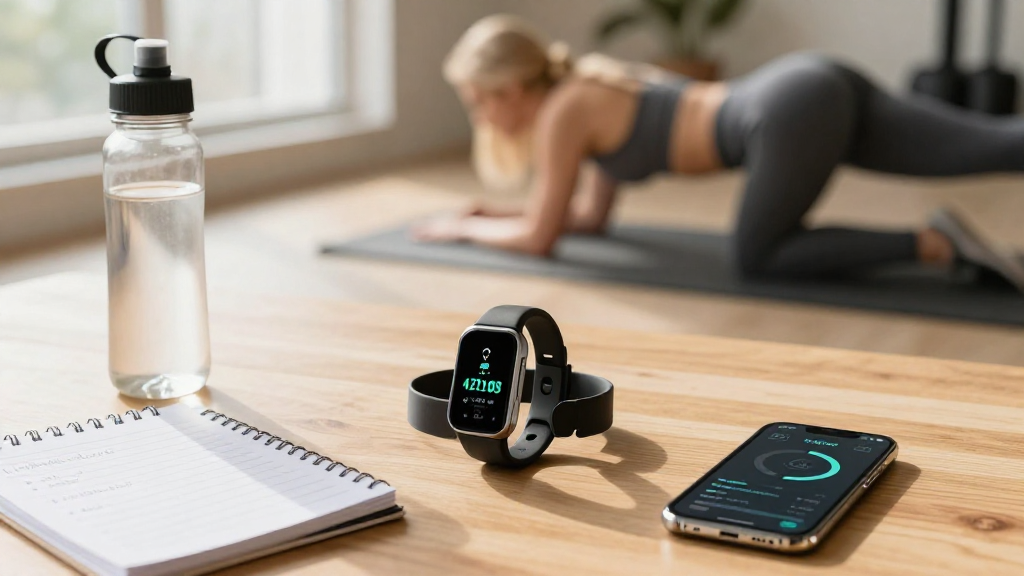
Tracking your fitness progress is essential for achieving your health goals.
With the right fitness progress tips, you can monitor your achievements and make necessary adjustments to your workout routine.
What Are the Best Ways to Track Fitness Progress?
-
Set Clear Goals
– Specific: Instead of just wanting to ‘get fit’, set specific targets like “lose 5 pounds” or “run 3 miles without stopping.”
– Measurable: Use tools that help you quantify your goals, making it easier to track them over time.
– Achievable: Set realistic goals that you can accomplish given your current fitness level.
– Relevant: Ensure your goals relate to your personal health and fitness aspirations.
– Time-bound: Set a deadline to achieve your goals to keep you accountable. -
Keep a Fitness Journal
– Document your workouts, including:- Duration
- Intensity
- Exercises performed
- Consider noting your diet, sleep patterns, and overall mood.
- Review your journal regularly to identify trends and adjust your workouts accordingly.
-
Use Fitness Apps and Devices
– Smartphone apps: Applications like MyFitnessPal or Strava help track workouts, calories, and distance.
– Wearable technology: Fitness trackers such as Fitbit or Apple Watch offer insights into your daily activity levels, heart rate, and calories burned.
– Online platforms: Websites such as Trainerize allow you to connect with personal trainers and maintain an online workout log.
Why Is Measuring Fitness Progress Important?
Regularly measuring your fitness progress ensures you stay motivated and accountable.
Here are some important reasons to keep track of your fitness journey:
- Motivation: Seeing how far you’ve come can boost your enthusiasm and help you push through challenging days.
- Accountability: Knowing you are tracking your progress encourages you to stick to your routine.
- Adjustments: Measuring your progress allows you to adjust your workouts based on what is working or not.
- Long-term Success: Building this habit sets the foundation for a sustainable fitness lifestyle.
What Metrics Should You Track?
Tracking various metrics provides a comprehensive view of your fitness journey.
Here are some essential metrics to consider:
-
Weight and Body Composition
– Regularly weigh yourself (e.g., weekly or bi-weekly).
– Consider body fat percentage and muscle mass for a more holistic view. -
Fitness Tests
– Cardiovascular endurance: Perform a timed mile run or a VO2 max test.
– Strength: Track the maximum weight you can lift for specific exercises (e.g., bench press, squat).
– Flexibility: Measure how far you can reach in a sit-and-reach test. -
Resting Heart Rate
– Tracking resting heart rate can indicate your cardiovascular fitness level.
– Measure your heart rate first thing in the morning before getting out of bed. -
Daily Activity Levels
– Aim for a certain number of steps each day (e.g., 10,000 steps).
– Track non-exercise activity thermogenesis (NEAT) to see how much you move throughout the day.
How Can You Maintain Your Fitness Progress?
Sustaining your fitness progress can be challenging, but these fitness progress tips can help:
-
Variety is Key
– Change your workout routine every few weeks to prevent boredom.
– Incorporate different workout styles, such as strength training, Pilates, cardio, and yoga. -
Regularly Reassess Your Goals
– Every 3-6 months, revisit your goals to see if they still align with your fitness journey.
– Adjust based on accomplishments and where you want to go next. -
Stay Accountable
– Partner with a workout buddy or join a fitness group to create a supportive environment.
– Share your achievements and struggles, which can motivate both you and others. -
Reward Yourself
– Celebrate milestones—both big and small—with non-food-related rewards, like new workout gear or a spa day. -
Listen to Your Body
– Pay attention to signs of burnout or overtraining.
– Don’t hesitate to take rest days when needed to avoid injury and promote recovery.
Why Set a Routine for Tracking?
Establishing a consistent routine for tracking your fitness progress can yield remarkable results.
Here’s how to integrate tracking into your daily life:
- Dedicate a Specific Time: Choose a regular time each week (e.g., Sundays) to log your achievements and setbacks.
- Integrate Tracking into Workouts: Use your fitness apps or journals immediately after each workout to record data while it’s fresh in your mind.
What Are Some Tools You Can Use?
The right tools can simplify tracking and maintaining your fitness progress.
Here are some recommended options:
-
Fitness Journals
– Choose a journal that enables you to jot down your workouts and thoughts.
– Look for one with prompts for motivation or reflections. -
Mobile Apps
– Establish a rapport with apps like JEFIT for structured workout plans or Lose It! for dietary tracking. -
Wearables
– Utilize smartwatches or fitness bands for all-in-one tracking of activity, sleep, and health metrics. -
Online Forums and Groups
– Join communities (like Reddit or Facebook groups) that focus on fitness tracking for tips, support, and ideas.
How to Stay Motivated While Tracking Progress?
Tracking can sometimes feel tedious, but these fitness progress tips can keep you engaged and excited:
- Create a Vision Board: Visualize your goals with images that inspire you.
- Engage with Supportive Communities: Find accountability partners or workout groups for motivation.
- Track Your Non-Scale Victories: Celebrating accomplishments beyond just weight loss—like lifting heavier weights or completing your first 5K—can keep you motivated and reinforce progress.
In conclusion, tracking and maintaining your fitness progress is essential for long-term success.
By using effective fitness progress tips, you can set achievable goals, measure success through various metrics, and stay motivated through consistent tracking and community support.
Implement these strategies, and embrace your journey toward a healthier and fitter you!