The best slant boards for yoga can make calf stretches, ankle-mobility drills, and heel-elevated poses more consistent. The right design should feel stable underfoot while matching your flexibility, training goals, and available storage space.
We selected 10 options ranging from compact foam wedges to adjustable wooden boards, with attention to angle selection, traction, weight capacity, portability, and everyday versatility.
Best 10 Slant Boards for Yoga Picks for 2026
Professional Foam Wedges

- Pair of fixed 18° foam wedges
- Useful for stretching, squats, and rehabilitation
- Lightweight closed-cell foam construction
Best For: Home, gym, and clinic mobility work
Adjustable Wooden Trainer

- Five settings from 23° to 45°
- Foldable design for carrying and storage
- Includes training poster and instructions
Best For: Progressive calf and ankle stretching
Compact EVA Pair

- Two lightweight EVA wedge blocks
- Works for yoga, Pilates, squats, and stretching
- Portable design with a 180-day warranty
Best For: Portable lower-body mobility and training
Modular Foam Set
Three-Piece Adjustable Slant Board

- Three pieces create five angle combinations
- Lightweight set includes a carry bag
- Wipe-clean foam supports stretching and squats
Best For: Gradual, customizable yoga and mobility routines
Best Adjustable Wooden Pick

- Four adjustable incline settings from 30° to 45°
- Lightweight design for home, office, or gym use
- Works for stretching, squats, posture, and rehab
Best For: Versatile wooden mobility and stretching routines
Best Lightweight Foam Option

- Five listed positions for adjustable stretching
- About 1 pound with a stated 960-pound capacity
- Foldable, portable, and easy to clean
Best For: Travel-friendly foam mobility and squat training
Best High-Capacity Wooden Pick

- Four incline settings from 20° to 40°
- Natural hardwood design with a stated 500-pound capacity
- Built-in handle and non-slip surface
Best For: Stable wooden mobility and squat training
Best Heavy-Duty Pick

- 1,000-pound maximum weight recommendation
- Supports calf, ankle, balance, and flexibility work
- Compact EVA construction
Best For: Adults wanting a sturdy, single-board calf stretcher
Best Two-Piece Value
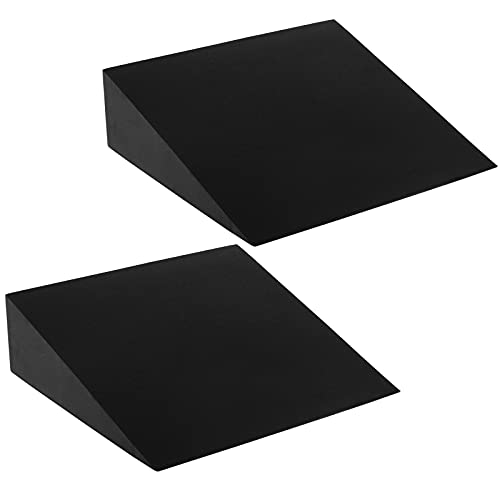
- Two lightweight EVA foam wedges included
- Wide bases support balance and control
- Suitable for yoga, Pilates, and stretching
Best For: Budget-conscious users wanting paired exercise wedges
Best Adjustable Set
Yesland Multi-Angle Slant Boards

- Five stackable angle configurations
- Three-piece non-slip EPP foam set
- Rated to hold up to 480 pounds
Best For: Users needing adaptable angles for yoga and mobility work
Professional Foam Wedges – OPTP PRO-Slant
If you want slant boards for yoga that can also support strength and mobility work, the OPTP PRO-Slant offers a sturdy foam option with an 18° incline. Use the pair together or separately for calf stretching, heel-elevated squats, calf raises, and rehabilitation exercises.
Best For: Home, gym, or clinic users seeking lightweight foam wedges for calf, ankle, foot, and squat exercises.
Pros:
- Pair can be used together or individually for different exercises.
- Closed-cell foam is lightweight, sturdy, and suitable for frequent use.
- Supports stretching and strengthening for the calves, ankles, feet, and lower legs.
Cons:
- Offers a fixed 18° incline rather than adjustable angles.
- Foam construction may not suit shoppers wanting a wooden board.
The OPTP PRO-Slant is a practical choice when you value simple setup, portability, and a fixed incline for yoga-adjacent stretching, squats, and rehabilitation routines.
Adjustable Wooden Trainer – Five-Angle Slant Board
For shoppers comparing slant boards for yoga, this portable wooden model stands out for its five angle settings. It adjusts from 23° to 45°, allowing you to vary calf, ankle, heel, leg, and knee stretches as your flexibility and training needs change.
Best For: Beginners and experienced users who want adjustable stretching angles for home or gym sessions.
Pros:
- Five angle options provide progression from easier to more demanding stretches.
- Folds for transport and requires no setup.
- Includes a training poster and instructions.
- Rated in the product details for a 300-pound maximum weight recommendation.
Cons:
- At 4.6 pounds, it is heavier than the foam wedge options.
- The wooden design may be less cushioned than foam.
- No warranty is listed in the supplied details.
This board is a flexible pick for yoga and mobility routines when adjustable angles matter more than the lightest possible design.
Compact EVA Pair – Non-Slip Squat Wedge Blocks
These compact EVA wedges are a versatile option among slant boards for yoga, especially if you want to switch between calf stretching, heel elevation, lunges, Pilates, and balance work. The two-piece design lets you position each wedge independently for different lower-body exercises.
Best For: Users who want lightweight, portable wedges for yoga, Pilates, squats, and foot or ankle mobility work.
Pros:
- Pair format supports individual or two-foot positioning.
- EVA foam is lightweight and easy to carry.
- Suitable for yoga, Pilates, lunges, deadlifts, squats, and calf stretches.
- Product notes describe a non-slip design and 180-day warranty.
Cons:
- The incline is not described as adjustable.
- Each wedge is relatively compact at 9.06 by 5.91 inches.
If portability and exercise versatility are your priorities, this pair offers a simple way to add heel elevation and calf stretching to a yoga or strength routine.
Modular Foam Set – Three-Piece Adjustable Slant Board
This three-piece foam set gives shoppers looking for slant boards for yoga several ways to vary their stretch. The components can be used individually or combined to create angles of 8.5°, 17°, 25.5°, 34°, or 180°, making it useful for gradual calf and foot mobility work.
Best For: Users who want a lightweight, modular set for stretching, squats, plantar-fasciitis-related exercise, and easy storage.
Pros:
- Multiple pieces allow several angle combinations.
- Lightweight foam design includes a carry bag.
- Waterproof, oil-proof material can be wiped or rinsed clean.
- Product details list a 480-pound maximum weight recommendation.
Cons:
- Its modular setup may require more positioning than a single board.
- Foam may feel less rigid than a wooden slant board.
The modular format makes this a strong choice for users who want to start with a gentler incline and build toward deeper stretches without buying multiple boards.
Best Adjustable Wooden Pick – Portable Wooden Slant Board
If you want slant boards for yoga that can also support squats, stretching, and rehabilitation work, this portable wooden model offers four incline settings. Its lightweight build makes it practical for use at home, in the office, gym, or a physiotherapy setting.
Best For: Beginners, athletes, and adults who want a versatile wooden board for calf stretching, ankle mobility, squats, and recovery exercises.
Pros:
- Adjusts to 30°, 35°, 40°, and 45° for varied stretching intensity.
- Weighs about 4.5 pounds and is easy to move between locations.
- Suitable for stretching, weight-bearing exercises, posture work, and rehabilitation training.
Cons:
- Offers fewer angle options than some multi-angle alternatives.
- Its wooden construction may be less convenient to clean than foam.
This is a solid choice when you prefer a traditional wooden slant board with straightforward angle adjustment. It balances portability and versatility for general mobility routines and lower-leg stretching.
Best Lightweight Foam Option – Multi-Angle Squat Wedge
For shoppers comparing slant boards for yoga, this foam wedge stands out for its very low weight, multiple positions, and easy-clean construction. It is designed for calf stretching, squats, ankle mobility, and physical therapy exercises.
Best For: Users who want a portable, lightweight foam wedge with several incline choices for stretching, mobility drills, and squat training.
Pros:
- Provides five listed angle positions, including 8.5°, 17°, 25.5°, 34°, and 180°.
- Weighs about 1 pound while supporting up to 960 pounds according to the supplied notes.
- Foldable, detachable, water-resistant, and easy to wipe clean.
- Includes a training poster and a one-year after-sales warranty.
Cons:
- The smaller 12-by-6-inch footprint may offer less standing space than larger boards.
- Its foam construction may feel different from a rigid wooden board.
This option is especially practical for travel or compact workout spaces. Its combination of low weight, adjustable positioning, and simple maintenance makes it a flexible choice for mobility-focused routines.
Best High-Capacity Wooden Pick – TEMI Adjustable Slant Board
This TEMI model is a useful option if you want slant boards for yoga alongside heel stretches, squats, and ankle mobility exercises. Its hardwood construction, non-slip surface, built-in handle, and four incline settings give it a stable, portable design.
Best For: Users seeking a sturdy wooden board for mobility training, balance work, squat positioning, and lower-leg rehabilitation exercises.
Pros:
- Offers 20°, 25°, 30°, and 40° incline settings.
- Uses a natural hardwood structure with a stated 500-pound weight capacity.
- Built-in handle and approximately 5-pound weight support portability.
- Non-slip surface is designed for squats, heel stretches, and ankle mobility drills.
Cons:
- Heavier than the lightweight foam wedge in this roundup.
- Provides four angle settings rather than five.
The TEMI board is a strong fit for users who prioritize a rigid wood platform and higher stated weight capacity. Its adjustable angles and stable surface make it suitable for both everyday mobility work and more structured training.
Best Heavy-Duty Pick – Calf Stretching Slant Board
If you want slant boards for yoga that can also support dedicated calf stretching and mobility work, this EVA balance board is a sturdy option. Its 1,000-pound maximum weight recommendation and compact 16-inch length suit home workouts, ankle-mobility drills, and rehabilitation-focused routines.
Best For: Adults seeking a heavy-duty calf stretcher for plantar fascia, Achilles tendon, ankle mobility, balance, and flexibility exercises.
Pros:
- Supports up to 1,000 pounds according to the product details.
- Can be used for calf stretching, squats, balance, flexibility, and ankle-mobility work.
- EVA construction is compact at 16 x 6.5 x 3.25 inches.
Cons:
- Only one board is included.
- Its relatively narrow 6.5-inch width may offer less foot coverage than wider wedge designs.
- The notes do not specify adjustable angles.
This is a practical choice when load capacity and a compact design matter more than adjustability. It fits a range of stretching and fitness applications, but shoppers wanting multiple wedges or angle options may prefer another format.
Best Two-Piece Value – DEAYOU Yoga Foam Wedges
For shoppers comparing slant boards for yoga on a budget, this two-piece EVA foam wedge set offers flexibility for stretching, Pilates, squats, pushups, and planks. The wide, flat bases and lightweight design make the wedges easy to position at home or carry to the gym.
Best For: Yoga, Pilates, mobility work, physical therapy, and users who want two lightweight wedges for varied exercise setups.
Pros:
- Includes two wedges for paired exercises or additional positioning options.
- Wide, flat bases and 13-inch ramp length support balance and control.
- Lightweight, high-density EVA foam is portable and easy to clean with a dry cloth.
- Useful for stretching, squats, pushups, planks, back support, and foot positioning.
Cons:
- The foam design may provide less rigidity than metal or wooden alternatives.
- The 4-inch thickness does not offer adjustable incline settings.
- The product notes do not provide a maximum weight recommendation.
This set makes sense for general-purpose home exercise and users who value quantity and portability. Its fixed foam shape is versatile, though it may be less suitable for shoppers specifically seeking a highly adjustable or rigid slant board.
Best Adjustable Set – Yesland Multi-Angle Slant Boards
These slant boards for yoga stand out for their stackable design and five angle configurations. The three-piece EPP foam set can be arranged for calf stretching, squats, physical therapy, and mobility routines, making it useful when you want to change the incline as your practice or recovery needs evolve.
Best For: Users who want adjustable angles for yoga, calf stretching, rehabilitation, ankle mobility, and home exercise.
Pros:
- Offers five configurations: 8.5°, 17°, 25.5°, 34°, and 180°.
- Three-piece set supports different stretch combinations and exercise setups.
- Non-slip EPP foam is described as waterproof, oil-proof, odorless, and capable of holding up to 480 pounds.
- Portable design works at home, in the office, gym, or outdoors.
Cons:
- Each board is relatively narrow at 6.25 inches wide.
- The set is smaller in length than the 13-inch DEAYOU wedges.
- Stacking pieces may require more setup than using a single fixed wedge.
This is the strongest fit for shoppers who prioritize adjustability and multiple exercise angles. Its three-piece format offers more configuration choices, while the compact foam construction keeps it portable for mobility and rehabilitation routines.
How We Picked the Best Slant Boards for Yoga
We compared these slant boards by looking at the features that matter most during stretching and mobility work: construction, surface grip, adjustment systems, portability, size, and stated weight capacity. We also considered whether each board is better suited to gentle yoga-based stretching, strength training, rehabilitation exercises, or heel-elevated squats.
Because product specifications can vary by seller and model, check the current listing for exact dimensions, included accessories, angle ranges, and care instructions before ordering. A slant board can support mobility work, but it should not replace professional guidance for an injury or diagnosed condition.
Quick Comparison
- Best for premium foam versatility: OPTP PRO-Slant.
- Best for adjustable home use: Wooden or foam models with five angle settings.
- Best for portability: Compact foam wedges and three-piece sets with carry bags.
- Best for heavier users: Models with a clearly stated high weight capacity and broad, stable bases.
- Best for paired exercises: Two-piece wedge sets that can be used under both feet.
Key Buying Factors for Slant Boards for Yoga
Angle Range and Adjustability
Adjustable boards let you begin with a mild incline and gradually increase the stretch. Multiple settings are especially useful when sharing the board or alternating between calf stretching, ankle drills, squats, and yoga poses. Fixed wedges are simpler and often lighter, but offer less progression.
Stability and Traction
Look for a wide base, a secure adjustment mechanism, and a textured or non-slip standing surface. Foam should resist sliding on your floor, while wooden boards need reliable feet or grip pads. Test the board on the surface where you plan to use it; smooth floors can expose traction limitations.
Materials, Capacity, and Comfort
Foam wedges are lightweight and usually comfortable for bare feet, but dense construction matters for long-term support. Wood can provide a firmer, more rigid platform. Confirm the listed weight capacity and choose a board with enough surface area for your foot size, particularly for loaded squats or balance exercises.
Portability and Storage
A compact wedge is convenient for travel, office use, or keeping beside a yoga mat. Adjustable wooden boards may be more substantial but can offer greater stability. Carry bags, folding designs, and multi-piece sets are useful when equipment must be stored or transported regularly.
Who Should Buy Which Slant Boards for Yoga?
Choose a foam wedge if you want a lightweight, comfortable option for regular calf stretches, yoga warmups, or travel. Choose an adjustable board if you need progressive stretching or expect multiple people to use it. Choose a wooden model if you prefer a firm platform for squats, Pilates, or physical-therapy-style drills. Choose a two- or three-piece set if you want flexibility for bilateral exercises, different foot positions, or easier packing.