A touchscreen bike computer can make route planning, climb data, and ride controls easier to manage without reaching for a phone. The best models combine responsive displays with reliable GPS, sensor connectivity, and weather-ready construction.
This roundup compares 10 bike computers with touchscreen across navigation, battery life, training tools, mapping, and value, so you can choose the right fit for daily rides, long adventures, or structured workouts.
Best 10 Bike Computers with Touchscreen Picks for 2026
Best Value Touchscreen Bike Computer

- 2.4-inch touchscreen plus three buttons
- Navigation, GPX routes, and indoor training
- ANT+/Bluetooth support with 24-hour battery
Best For: Everyday riders seeking a compact connected computer
Best Large-Screen Navigation

- Large 3.5-inch color touchscreen
- Dual-band GPS with automatic rerouting
- Up to 35 hours of battery life
Best For: Touring and exploration-focused cyclists
Best for Training Features
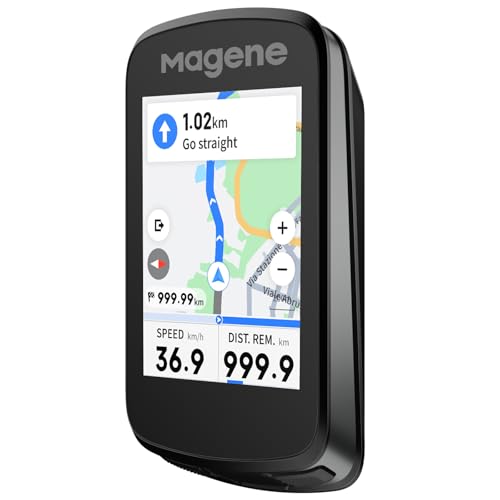
- 2.8-inch touchscreen with customizable data pages
- Climb planning, offline navigation, and rerouting
- Live Segments and advanced training support
Best For: Performance riders using structured training and power data
Best Button-Control Alternative

- 2.8-inch color screen with physical buttons
- Route navigation with automatic rerouting
- ANT+/Bluetooth/Wi-Fi and indoor training
Best For: Riders preferring tactile controls over touch input
Long-Distance Navigator

- 3.5-inch touchscreen plus tactile buttons
- 50-hour battery for extended rides
- Offline maps with route recalculation
Best For: Gravel, bikepacking, and long-distance navigation
Connected Training Pick

- Color GPX navigation with automatic rerouting
- Wi-Fi, Bluetooth, and ANT+ connectivity
- Customizable training and data displays
Best For: Everyday riding and indoor smart-trainer workouts
Feature-Rich Touchscreen
Magene C706 Smart GPS Bike Computer

- 3.3-inch color touchscreen with ambient light ring
- Dual-band GNSS and voice-guided navigation
- Climb, training, and connected-device features
Best For: Performance riding and feature-heavy cycling setups
Best Touchscreen GPS Value

- 2.4-inch color touchscreen with auto-backlight
- 36-hour battery and IPX7 waterproofing
- Route navigation with broad accessory connectivity
Best For: Riders wanting long battery life and customizable GPS data
Best Complete Sensor Bundle

- Includes heart-rate, cadence, and speed sensors
- 2.8-inch touchscreen with preloaded USA maps
- 33-hour battery with radar and live-tracking support
Best For: Training-focused riders who want a complete ready-to-ride kit
Best Offline Navigation Features

- 2.8-inch touchscreen with physical button controls
- Offline maps with re-route planning and turn prompts
- Wi-Fi syncing plus smart-trainer support
Best For: Explorers and indoor-training riders needing flexible navigation
Best Value Touchscreen Bike Computer – Magene C506
The Magene C506 is a practical choice among bike computers with touchscreen controls, combining a compact 2.4-inch color display with navigation, indoor training support, and broad sensor compatibility. Its touchscreen-plus-button layout may suit riders who want flexible controls without adding much weight to the handlebar.
Best For: Everyday cyclists who want navigation, connected training features, and a lightweight computer.
Pros:
- 2.4-inch capacitive color touchscreen with three physical buttons
- Turn-by-turn navigation, downloadable maps, and GPX route support
- ANT+ and Bluetooth support for up to nine device types
- Up to 24 hours of battery life in endurance mode
Cons:
- Smaller display than several larger-screen alternatives
- Advanced settings and analysis rely on the OnelapFit app
The C506 balances size, features, and connectivity well. It is especially appealing if you want touchscreen interaction and indoor-training tools without moving to a larger, heavier unit.
Best Large-Screen Navigation – iGPSPORT BiNavi
The iGPSPORT BiNavi stands out among bike computers with touchscreen displays for its spacious 3.5-inch color screen and navigation-focused feature set. Dual-band GPS, automatic rerouting, saved-point navigation, and music control make it a strong option for riders who spend time exploring unfamiliar roads.
Best For: Touring and adventure riders who prioritize a large map display and route guidance.
Pros:
- Large 3.5-inch capacitive color touchscreen
- Supports route imports from the iGPSPORT app, Strava, Komoot, and road-book files
- Dual-band GPS and five satellite systems improve positioning coverage
- Up to 35 hours of battery life, with music control and climb planning
Cons:
- Larger and heavier than compact bike computers
- Some navigation and music functions require pairing with a phone or app
With the biggest screen and longest stated battery life in this group, the BiNavi is geared toward route-led riding. Its feature mix is particularly useful when map visibility matters more than minimizing computer size.
Best for Training Features – Magene C606 V2
The Magene C606 V2 is one of the more advanced bike computers with touchscreen controls, pairing a 2.8-inch color display with ClimbPro-style route planning, Strava Live Segments, cycling dynamics, and smart-trainer control. It is designed for riders who want detailed performance data alongside offline navigation.
Best For: Performance-focused cyclists who use structured training, power data, or competitive segment features.
Pros:
- 2.8-inch responsive color touchscreen with customizable data pages
- Climb planning, offline navigation, rerouting, and Back-to-Start support
- Supports Strava Live Segments and compatible power-meter cycling dynamics
- IPX7 water resistance and up to 25 hours of stated battery life
Cons:
- Some advanced cycling-dynamics features require compatible power meters
- Its broad feature set may be more than casual riders need
The C606 V2 is the most training-oriented option here. Its customizable interface and smart-trainer support make it a compelling fit for riders who want to analyze and actively structure their efforts.
Best Button-Control Alternative – GEOID CC700
The GEOID CC700 offers many of the navigation and connectivity features shoppers expect from bike computers with touchscreen models, but it uses physical buttons instead. Its 2.8-inch color screen, route rerouting, fast GPS positioning, and indoor-training modes make it a useful choice for riders who prefer tactile controls.
Best For: Cyclists who want a large color display and navigation without relying on touchscreen input.
Pros:
- 2.8-inch color display with durable Asahi glass
- Color route navigation with turn reminders and automatic rerouting
- Supports GPS, BeiDou, GLONASS, QZSS, and Galileo positioning
- ANT+, Bluetooth, Wi-Fi, indoor training, and up to 108 data items
Cons:
- Uses buttons rather than touchscreen controls
- The supplied notes do not specify battery life
- Includes a one-year warranty
The CC700 is worth considering if touchscreen operation is not essential. Its physical controls, navigation tools, and wide device compatibility offer a straightforward alternative for riders who value tactile operation.
Long-Distance Navigator – Bryton Rider S810
The Bryton Rider S810 is a strong choice among bike computers with touchscreen controls, especially for riders who prioritize large-screen navigation and long battery life. Its 3.5-inch color display, tactile buttons, offline maps, and 50-hour battery are suited to extended road, gravel, and bikepacking trips.
Best For: Long-distance riders, gravel cyclists, and cyclists who need offline navigation away from cellular service.
Pros:
- Large 3.5-inch color touchscreen with adaptive light sensing and tactile buttons for wet or bumpy conditions
- Up to 50 hours of battery life for century rides and multi-day adventures
- Offline maps with turn-by-turn guidance and automatic route recalculation
- Supports ANT+ sensors, smart trainers, Strava Live Segments, and Climb Challenge 2.0
Cons:
- This Device Only version may require separately purchased sensors or accessories
- The large display may be more than casual riders need
Choose the S810 if dependable navigation and endurance matter more than keeping the setup compact. Its combination of touchscreen convenience, physical controls, offline mapping, and extensive sensor support makes it particularly well suited to serious exploration.
Connected Training Pick – GEOID CC600
The GEOID CC600 offers a practical alternative for cyclists comparing bike computers with touchscreen displays and route features. Its 2.4-inch color screen, GPX navigation with rerouting, Wi-Fi and Bluetooth connectivity, and indoor-training support make it a versatile choice for everyday rides.
Best For: Riders who want customizable data pages, wireless syncing, GPX route navigation, and smart-trainer compatibility.
Pros:
- Color display with route turn reminders, zooming, and automatic rerouting
- Wi-Fi and Bluetooth support for faster record transfers, AGNSS updates, and firmware updates
- Highly customizable data presentation with up to 10 pages, 10 data items per page, and 108 data items
- Supports ANT+ and Bluetooth sensors plus smart-trainer workouts
Cons:
- Uses physical buttons rather than touchscreen input
- Its listed 24-hour battery life is shorter than some long-distance-focused computers
The CC600 is a well-rounded option for riders who value connectivity and training flexibility. It is especially appealing if you plan to move between outdoor navigation and structured indoor workouts.
Feature-Rich Touchscreen – Magene C706 Smart GPS Bike Computer
The Magene C706 stands out among bike computers with touchscreen controls through its 3.3-inch color display, dual-band GNSS, map navigation, and voice guidance. It also adds climb planning, Strava Live Segments, smart-device control, and advanced indoor-training features for cyclists who want a broad feature set.
Best For: Performance-oriented cyclists who want touchscreen navigation, voice prompts, climb analysis, and connected equipment control.
Pros:
- 3.3-inch color touchscreen with a 12-color ambient light ring
- Dual-band GNSS and offline route planning for accurate navigation
- Voice guidance in 13 languages with climb and segment alerts
- Supports smart trainers, TrainingPeaks courses, cycling dynamics, cameras, lights, and electronic shifting systems
Cons:
- Its extensive features may be unnecessary for riders seeking basic ride recording
- Listed battery life is 25 hours, which may require charging for longer multi-day trips
The C706 is a compelling choice when navigation, training tools, and connected-cockpit features are all priorities. Its touchscreen and voice prompts can reduce the need to look down, while dual-band positioning and offline planning support more demanding routes.
Best Touchscreen GPS Value – COOSPO CS600
The COOSPO CS600 is a practical pick among bike computers with touchscreen controls, combining a responsive 2.4-inch color display with GPS and GLONASS tracking. Its route guidance, customizable data screens, and 36-hour battery make it suitable for everyday rides and longer adventures.
Best For: Riders who want touchscreen navigation, extensive ride data, and long battery life without bundled sensors.
Pros:
- Responsive 2.4-inch color touchscreen with automatic backlight adjustment.
- Supports breadcrumb routes, wireless syncing, and Strava and TrainingPeaks integration.
- Offers up to 36 hours of battery life and IPX7 waterproof protection.
- Connects with ANT+ and Bluetooth accessories, bike radar, lights, and trainers.
Cons:
- Heart-rate, cadence, and power sensors are sold separately.
- The display is smaller than the 2.8-inch screens on the other models here.
The CS600 balances navigation, connectivity, and endurance in a compact unit. It is especially appealing if you already own compatible sensors or prefer to add accessories over time.
Best Complete Sensor Bundle – Bryton Rider 650
The Bryton Rider 650 stands out among bike computers with touchscreen displays by including a heart-rate monitor, cadence sensor, and speed sensor. Its 2.8-inch color screen, preloaded USA maps, and turn-by-turn guidance create a well-equipped setup for training, touring, and navigation.
Best For: Cyclists who want a ready-to-use performance kit with sensors, detailed maps, and safety-focused features.
Pros:
- Includes smart heart-rate, cadence, and speed sensors.
- Large 2.8-inch color touchscreen with ambient-light visibility support.
- Preloaded color maps provide street names, points of interest, and turn-by-turn directions.
- Supports live tracking, rear-view radar, electronic shifting, and up to 33 hours of battery life.
Cons:
- Its larger feature set may be more than casual riders need.
- The supplied notes specify a USA map, which may limit the usefulness of preloaded mapping elsewhere.
Because the core sensors are included, the Rider 650 offers a straightforward path from unboxing to data-rich rides. It is a strong choice for riders who value complete metrics and mapped navigation in one package.
Best Offline Navigation Features – GEOID CC700 Pro
The GEOID CC700 Pro is one of the more navigation-focused bike computers with touchscreen operation, offering a 2.8-inch color display, offline maps, and automatic re-route planning. Wi-Fi syncing, indoor-training support, and broad satellite compatibility add flexibility for both outdoor exploration and structured workouts.
Best For: Riders who prioritize detailed offline mapping, route recalculation, and indoor smart-trainer functionality.
Pros:
- 2.8-inch color touchscreen supplemented by three physical buttons.
- Provides offline global map downloads, turn prompts, street names, and re-route planning.
- Wi-Fi supports faster data transfers, AGNSS syncing, and firmware updates.
- Works with smart trainers and supports ANT+, Bluetooth, Strava, and TrainingPeaks.
Cons:
- Re-route planning requires connection to the designated app.
- The supplied notes do not state a battery-life rating.
- DJI camera controls are limited to the DJI Action 4 and Action 5 Pro.
The CC700 Pro is well suited to riders who want more than basic breadcrumb guidance. Its offline mapping and re-routing features are useful for exploration, while smart-trainer compatibility extends its value beyond outdoor rides.
How We Picked the Best Bike Computers with Touchscreen
We focused on the features that matter most on the road: screen size and readability, GPS performance, mapping and rerouting, battery claims, wireless connectivity, weather resistance, and compatibility with cycling sensors. We also considered whether each computer suits casual riders, commuters, endurance cyclists, or performance-focused athletes.
Because specifications vary between models and bundles, check the current listing for included sensors, map coverage, firmware features, and battery estimates before buying.
Quick Comparison
| Best For | What to Prioritize | Models to Consider |
|---|---|---|
| Budget navigation | Color display, GPS routing, wireless syncing | Magene C506, GEOID CC600 |
| Large-screen navigation | 3.5-inch display, maps, rerouting | iGPSPORT BiNavi, Bryton Rider S810 |
| Training and climbing | Climb data, live segments, sensor support | Magene C606 V2, Magene C706 |
| Long-distance riding | Battery capacity, offline maps, weather resistance | Bryton Rider S810, Bryton Rider 650 |
| Connected value | ANT+, Bluetooth, Wi-Fi syncing | GEOID CC700, COOSPO CS600 |
Key Buying Factors for Bike Computers with Touchscreen
Display and Touchscreen Usability
A larger screen is easier to read for maps and multiple data fields, but it adds weight and may use more power. Look for a bright color display, clear text, glove-friendly controls, and physical buttons for use in rain or rough conditions.
Navigation and Mapping
Turn-by-turn guidance, offline maps, rerouting, and voice prompts can reduce the need to check a phone. Confirm whether maps cover your riding region and whether routes can be imported through the computer’s app or Wi-Fi connection.
Battery and Charging
Choose a model with enough reserve for your longest typical ride, especially when navigation, backlighting, sensors, and live tracking are active. A higher advertised runtime does not always reflect full-featured use.
Connectivity and Sensors
ANT+ and Bluetooth support lets a computer connect with heart-rate monitors, cadence sensors, power meters, speed sensors, and radar. If you already own accessories, verify protocol compatibility before purchasing.
Durability and Mounting
For frequent outdoor use, water resistance, a secure mount, readable contrast, and dependable buttons matter as much as advanced software. Consider replacement mounts and charging-port protection if you ride in challenging conditions.
Who Should Buy Which Bike Computers with Touchscreen?
Choose the Magene C506 or GEOID CC600 if you want a compact, connected computer for everyday rides and basic route guidance. Choose the iGPSPORT BiNavi or Bryton Rider S810 if map visibility and a larger touchscreen are priorities. Choose the Magene C606 V2 or C706 if structured training, climb analysis, live segments, or cycling dynamics are central to your rides. Choose the GEOID CC700 or CC700 Pro for Wi-Fi syncing and navigation features in a value-oriented package. Choose the COOSPO CS600 if you want a straightforward color touchscreen with ANT+ and Bluetooth sensor support. The Bryton Rider 650 Sensor Bundle is worth considering when included accessories and preloaded regional maps offer better overall value than buying components separately.