The best bike computers with navigation make unfamiliar routes easier to follow while keeping ride data, sensor connections, and safety features within reach. The right model depends on whether you prioritize simple guidance, detailed maps, training tools, touchscreen control, or extended battery life.
We compared these 10 options across navigation features, display design, connectivity, durability, and suitability for different types of cyclists so you can choose with fewer compromises.
Best 10 Bike Computers with Navigation Picks for 2026
Best Voice-Navigation Pick

- 3.3-inch touchscreen plus button controls
- Dual-band positioning and automatic rerouting
- Voice alerts with Strava and Komoot route support
Best For: Riders wanting large-screen, voice-guided navigation
Best Easy-Use Navigator

- 3-inch sunlight-readable touchscreen
- Road, off-road, POI, traffic, and eBike maps
- LiveTrack, incident detection, and Varia support
Best For: Recreational, touring, and eBike navigation
Best Long-Battery Value

- Up to 25 hours of battery life
- Route import, one-touch, and back-to-start navigation
- Bluetooth and ANT+ sensor connectivity
Best For: Long rides needing practical route guidance
Best for Training and Navigation

- Multi-band GNSS and detailed cycling maps
- ClimbPro, adaptive coaching, and workout guidance
- Up to 26 hours of battery life
Best For: Performance-focused cyclists who also need navigation
Best Offline Mapping Pick
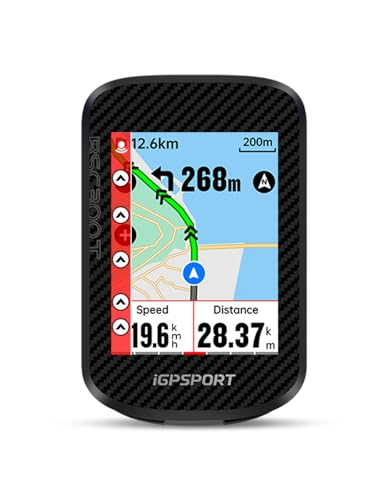
- Worldwide offline maps with turn prompts
- Off-course warnings and real-time tracking
- 130+ data fields with ANT+/Bluetooth support
Best For: Riders seeking offline navigation for road, MTB, and e-bike use
Best Re-Routing Value

- Color navigation with automatic re-routing
- Wi-Fi, ANT+, and Bluetooth connectivity
- 108 data items with customizable display pages
Best For: Cyclists wanting flexible navigation and indoor training support
Best Long-Battery Navigator

- 33-hour battery for extended rides
- Preloaded USA color maps and turn guidance
- Radar, live tracking, and training integrations
Best For: Touring and endurance riders prioritizing battery life
Most Versatile Navigation

- 3.5-inch touchscreen with route imports
- Automatic off-course rerouting
- Up to 35-hour battery life
Best For: Exploring riders who want maps, climb planning, and music control
Best Offline Map Experience

- Offline maps with turn prompts and street names
- 4GB route storage and Wi-Fi syncing
- IPX7 waterproof construction
Best For: Route-focused riders who want detailed offline navigation
Best Compact Training Pick

- Global maps, GPX uploads, and turn-by-turn guidance
- ANT+ and Bluetooth support for nine device types
- 76-gram design with up to 24-hour battery life
Best For: Data-focused riders balancing navigation and indoor training
Best Voice-Navigation Pick – iGPSPORT BSC500
For riders who want bike computers with navigation that reduce screen-glancing, the iGPSPORT BSC500 combines a large 3.3-inch touchscreen with button controls, dual-band positioning, route importing, and voice alerts. Its automatic turn-warning timing and off-course rerouting add practical support for unfamiliar rides.
Best For: Riders who want voice-guided navigation, a large display, and flexible route-planning options.
Pros:
- 3.3-inch touchscreen supports up to 12 cycling data fields per page and also works with buttons.
- Dual-band, five-satellite positioning is designed to improve accuracy and reduce interference.
- Supports routes from the iGPSPORT app, Strava, Komoot, and compatible route files.
- Provides voice navigation, adaptive turn reminders, and automatic yaw replanning.
Cons:
- At 107 g, it is heavier than the BSC200S and Garmin Edge 540 listed here.
- Some navigation and training features depend on the iGPSPORT app or compatible services.
The BSC500 is a feature-rich choice for navigation-focused cyclists. Its large screen, loudspeaker guidance, IPX7 rating, and route recovery tools make it especially practical for longer or unfamiliar rides.
Best Easy-Use Navigator – Garmin Edge Explore 2
The renewed Garmin Edge Explore 2 is one of the more approachable bike computers with navigation, offering a 3-inch sunlight-readable touchscreen and preloaded road, off-road, and indoor profiles. It also adds searchable points of interest, traffic awareness, eBike routing, and connected safety features.
Best For: Casual, touring, and eBike riders who prioritize simple touchscreen navigation and safety connectivity.
Pros:
- Glove- and rain-friendly 3-inch touchscreen is designed for direct-sunlight visibility.
- Preloaded activity profiles and ride-type-specific maps simplify setup.
- eBike compatibility can provide guidance and alerts based on battery status, assist level, and range.
- Supports LiveTrack, GroupTrack, incident detection, and Varia awareness devices when paired with compatible equipment.
Cons:
- This listing is renewed and includes a 90-day limited warranty.
- Battery life is rated at up to 16 hours, shorter than several alternatives in this roundup.
- Heart-rate, speed, and cadence monitoring require separately sold compatible sensors.
Choose the Edge Explore 2 if straightforward touchscreen operation matters more than advanced training metrics. Its eBike support, map-based routing, and safety ecosystem make it a strong option for recreational navigation.
Best Long-Battery Value – iGPSPORT BSC200S
The iGPSPORT BSC200S is a compact option for riders comparing bike computers with navigation on a practical budget. It offers route creation and imports, one-touch and back-to-start navigation, a sunlight-friendly 2.4-inch display, and up to 25 hours of battery life.
Best For: Long-distance riders who want essential route guidance, broad sensor compatibility, and extended battery life.
Pros:
- Supports routes from iGPSPORT, Strava, Ride with GPS, and Komoot.
- One-touch, back-to-start, turn, yaw, and direction guidance support everyday navigation.
- Up to 25 hours of battery life and IPX7 water resistance suit long rides.
- Works with Bluetooth and ANT+ sensors, plus compatible iGPSPORT radar and front lights.
Cons:
- The 2.4-inch button-operated screen is smaller and less interactive than touchscreen models.
- A Type-C charging cable is not included according to the supplied details.
- Advanced navigation features are more limited than those on the Garmin Edge 540.
The BSC200S emphasizes dependable basics: route guidance, long runtime, data customization, and connectivity. It is a sensible fit when you want navigation without paying for a more advanced training platform.
Best for Training and Navigation – Garmin Edge 540
The Garmin Edge 540 combines advanced navigation with performance-focused tools for cyclists who want more than basic directions. Its button-controlled 2.6-inch computer includes multi-band GNSS, ride-type-specific maps, ClimbPro, adaptive coaching, and up to 26 hours of battery life in demanding use.
Best For: Training-focused road and trail cyclists who want navigation alongside structured performance analysis.
Pros:
- Multi-band GNSS is designed to improve positioning accuracy in challenging environments.
- Ride-type-specific maps include popular roads, trails, and searchable points of interest.
- ClimbPro shows remaining ascent and grade, even when riding without a course.
- Offers suggested workouts, adaptive coaching, stamina insights, and power guidance with compatible sensors.
Cons:
- Button controls require more manual interaction than a touchscreen navigator.
- Several coaching and performance features require a compatible power meter and heart-rate monitor.
- Its 2.6-inch screen is smaller than the BSC500 and Edge Explore 2 displays.
The Edge 540 is the strongest choice here for riders who treat navigation as part of a broader training system. Its long battery life and multi-band positioning are useful, while the coaching features reward cyclists willing to add compatible sensors.
Best Offline Mapping Pick – iGPSPORT BSC300T
For riders comparing bike computers with navigation, the iGPSPORT BSC300T stands out for offline map support, route guidance, and off-course warnings. Its 2.4-inch touchscreen, physical buttons, and 20-hour battery make it a versatile choice for road, mountain, and e-bike rides.
Best For: Cyclists who want worldwide offline maps, route alerts, and broad sensor compatibility.
Pros:
- Supports global offline maps, route previews, turn prompts, and off-course warnings.
- Works with road bikes, mountain bikes, and e-bikes, including e-bike power-level displays.
- Offers more than 130 data fields and supports ANT+ and Bluetooth sensors.
- Provides real-time tracking and sharing through the iGPSPORT app, Strava, and Komoot.
Cons:
- The 2.4-inch display is smaller than the screens on the other products here.
- A USB-C cable is not included.
- Battery life is rated at 20 hours, below the longest-lasting option in this roundup.
The BSC300T is a strong navigation-focused option when offline map access and route correction matter more than having the largest display or longest battery runtime.
Best Re-Routing Value – GEOID CC700
The GEOID CC700 is a practical choice for shoppers seeking bike computers with navigation and a large color display. It combines colorful route guidance, automatic re-routing, Wi-Fi syncing, and indoor smart-trainer support in a button-operated 2.8-inch unit.
Best For: Riders who want automatic re-routing, customizable data pages, and fast wireless syncing.
Pros:
- Provides colorful navigation with turn reminders, zooming, and automatic re-routing after going off track.
- Uses Wi-Fi for AGNSS, ride-record syncing, firmware updates, and faster transfers.
- Offers up to 10 pages, 108 data items, and multiple chart and layout styles.
- Supports ANT+ and Bluetooth devices plus indoor smart-trainer workouts.
Cons:
- Its three-button interface may be less direct for riders who prefer touchscreen controls.
- Battery runtime is not specified in the supplied details.
- External GPX routes must be uploaded through the phone app.
Choose the CC700 if flexible route handling and data customization are priorities. Its IPX7 rating and broad connectivity also suit riders who want one computer for outdoor rides and indoor training.
Best Long-Battery Navigator – Bryton Rider 650
For long rides and touring, the Bryton Rider 650 is one of the most compelling bike computers with navigation in this group. It pairs a 2.8-inch color touchscreen with preloaded USA maps, turn-by-turn guidance, route-based climb information, and a claimed 33-hour battery life.
Best For: Long-distance riders who want detailed maps, extended battery life, and safety-oriented integrations.
Pros:
- Includes preloaded color OSM maps with street names, points of interest, and turn-by-turn guidance.
- Offers up to 33 hours of battery life for touring, commuting, and extended rides.
- Supports rear-view radar, live tracking, electronic shifting, and ANT+ sensors.
- Syncs rides with Strava, TrainingPeaks, and Komoot through the Bryton Active App.
Cons:
- The supplied mapping information specifies preloaded USA maps rather than worldwide coverage.
- Its 2.8-inch color screen is larger than the BSC300T but not larger than a typical smartphone.
- Some advanced features depend on compatible accessories or connected services.
The Rider 650 is a sensible pick for riders who value endurance and readable, detailed route guidance. It is especially attractive for long-distance use where frequent charging is inconvenient.
Most Versatile Navigation – iGPSPORT BiNavi
The iGPSPORT BiNavi is a strong option among bike computers with navigation for riders who want a large touchscreen, route flexibility, and long battery life. It supports routes from the iGPSPORT app, Strava, Komoot, and selected road-book files, while dual-band GPS and five satellite systems support positioning accuracy.
Best For: Riders who want touchscreen navigation, rerouting, climb planning, and music control in one device.
Pros:
- 3.5-inch color touchscreen with map navigation and saved-point routing.
- Automatically plans a new route when you go off course.
- Up to 35 hours of battery life and support for GPS, BeiDou, GLONASS, Galileo, and QZSS.
- Includes iClimb Pro, training analysis, and phone-based music control.
Cons:
- Rerouting and some route features depend on app connectivity or compatible imports.
- The supplied details do not specify the date of software support.
Choose the BiNavi if navigation versatility and endurance matter more than keeping the computer especially small. Its larger screen and broad route-import support make it suitable for exploring unfamiliar roads.
Best Offline Map Experience – GEOID CC700 Pro
The GEOID CC700 Pro is designed for cyclists who want bike computers with navigation and detailed offline maps. Its 2.8-inch color touchscreen shows turn prompts, street names, zoom controls, and dual-perspective views, while 4GB of storage supports multiple downloaded routes.
Best For: Riders who prioritize readable offline maps, quick positioning, and convenient Wi-Fi syncing.
Pros:
- Color-coded offline maps include turn prompts and street names.
- Re-route planning helps you continue after leaving the planned course.
- Wi-Fi supports AGNSS syncing, firmware updates, and rapid ride-record transfers.
- IPX7 waterproofing and compatibility with ANT+ and Bluetooth accessories.
Cons:
- Re-route planning is enabled when the computer remains connected to the designated app.
- Indoor training requires a compatible smart trainer.
- DJI controls work only with DJI Action 4 and Action 5 Pro cameras.
The CC700 Pro stands out for riders who want navigation details that remain useful away from cellular service. Its touchscreen, physical buttons, offline storage, and Wi-Fi workflow create a practical setup for route-focused riding.
Best Compact Training Pick – Magene C506
The Magene C506 combines bike computers with navigation with a compact training dashboard. It offers downloadable global maps, turn-by-turn guidance, GPX uploads, and custom routes through the OnelapFit app, while Wi-Fi and AGNSS support quick positioning and data transfers.
Best For: Performance-minded cyclists who want navigation, indoor training, and broad sensor compatibility in a lightweight unit.
Pros:
- 2.4-inch color touchscreen with three physical buttons.
- Supports global map downloads, turn-by-turn navigation, GPX files, and custom routes.
- Connects with up to nine device types through ANT+ and Bluetooth.
- Supports indoor training targets and offers up to 24 hours in endurance mode.
Cons:
- Its 2.4-inch display is smaller than the screens on the other listed options.
- Navigation route creation and training management rely on the OnelapFit app for some workflows.
- The supplied specifications list GPS as the supported satellite system.
The C506 is a good fit when you want navigation without giving up structured training features. Its 76-gram design, sensor support, smart-trainer tools, and app integrations make it especially appealing for data-focused cyclists.
How We Picked the Best Bike Computers with Navigation
We focused on the features that matter during real-world rides: route creation and following, map visibility, rerouting, GPS reliability, display usability, battery expectations, and compatibility with common cycling accessories. We also considered whether each computer supports Bluetooth or ANT+ sensors, e-bike functions, radar, indoor training equipment, or automatic ride syncing.
Because navigation needs vary widely, the list includes straightforward GPS units, touchscreen computers, training-oriented models, and options with larger color displays. Product claims such as battery life, waterproofing, and map coverage can vary by settings and use, so treat manufacturer specifications as maximum or ideal-case figures.
Quick Comparison
| Best For | What to Look For | Suitable Choices |
|---|---|---|
| Simple route guidance | Clear maps, intuitive controls, and dependable rerouting | Garmin Edge Explore 2, iGPSPORT BSC500 |
| Training and performance | Structured workouts, adaptive coaching, and sensor support | Garmin Edge 540 |
| Touchscreen navigation | Color maps, responsive controls, and readable route guidance | iGPSPORT BSC300T, BiNavi, GEOID CC700 Pro |
| Long rides | High stated battery capacity and efficient display use | Bryton Rider 650, Garmin Edge 540 |
| Value-focused navigation | Core GPS mapping without premium pricing | iGPSPORT BSC200S, Magene C506, GEOID CC700 |
Key Buying Factors for Bike Computers with Navigation
Maps and Route Guidance
Check whether the computer provides turn-by-turn directions, an actual map view, off-course warnings, automatic rerouting, or only a breadcrumb trail. Full maps are more helpful in cities and complex trail networks, while simple route lines may be sufficient for familiar roads.
Display and Controls
Touchscreens are convenient for browsing maps and changing settings, but physical buttons can be easier to operate with gloves, rain, or rough road vibration. A larger color display improves map readability, though it may use more battery and add size to the cockpit.
Battery and Charging
Compare expected runtime with your longest rides, not just your average outing. Navigation, bright screens, wireless sensors, and repeated rerouting can reduce endurance. A USB-rechargeable unit is most practical when replacement batteries are not an option.
Connectivity and Compatibility
Bluetooth and ANT+ support allow pairing with heart-rate monitors, cadence sensors, power meters, smart trainers, and some radar systems. If you ride an e-bike, confirm that the computer supports the display or control features you actually use.
Weather Resistance and Mounting
For regular outdoor riding, look for meaningful water resistance, a secure handlebar mount, and controls that remain usable in poor weather. Also check included mounting hardware and whether replacement mounts are easy to find.
Who Should Buy Which Bike Computers with Navigation?
Choose a navigation-first model such as the Garmin Edge Explore 2 if you want an approachable interface and route guidance without emphasizing advanced training metrics. The Garmin Edge 540 is better suited to performance-focused cyclists who want structured training and extensive data alongside navigation.
Touchscreen models from iGPSPORT, GEOID, Bryton, and Magene are worth considering if visual maps and on-device controls are priorities. For commuters, recreational riders, and budget-conscious buyers, the simpler iGPSPORT and GEOID options can provide the essential navigation and connectivity features without the complexity of a high-end training computer.